
In 2026, Web3 projects no longer struggle just because of bad technology; they struggle because attention, trust, and user behavior have become extremely fragmented across chains, communities, and platforms. A Web3 marketing agency’s role has evolved far beyond simple promotion it now acts as a growth architect that designs the entire journey from zero awareness to measurable traction. This involves combining storytelling, community psychology, data-driven campaigns, and on-chain behavior insights to create sustainable momentum. Unlike traditional marketing, Web3 growth is not linear; it is network-driven, meaning every user, holder, or community member becomes a distribution node. A modern agency must therefore focus on building ecosystems rather than campaigns, ensuring that each marketing action contributes to long-term adoption rather than short-term hype. In this environment, traction is not just about gaining users it is about activating them, retaining them, and converting them into advocates who continuously expand the project’s reach organically.
Strategic Positioning and Market Entry Foundation
A Web3 marketing agency begins by defining a project’s core positioning in an increasingly saturated ecosystem where thousands of tokens, dApps, and protocols launch every month. The first step is identifying whether the project is solving a liquidity problem, infrastructure gap, consumer adoption issue, or niche community need. Without precise positioning, even strong marketing efforts fail to convert into meaningful traction. Agencies in 2026 use advanced segmentation tools, sentiment analysis, and competitor mapping to determine where the project fits in the current narrative cycle of Web3. They also evaluate macro trends such as modular blockchains, AI-integrated dApps, and real-world asset tokenization to align messaging with investor interest. Once positioning is clear, the agency creates a narrative framework that simplifies the project’s complexity into relatable value propositions. This includes defining the target persona, whether it is retail investors, DeFi farmers, NFT collectors, or institutional participants. Strong positioning ensures that every subsequent marketing activity has consistency, clarity, and directional focus, which is critical for achieving early traction.
Community-First Growth Architecture
In 2026, no Web3 project achieves traction without a strong community foundation. A Web3 marketing agency prioritizes building a core community layer before scaling any external campaigns. This begins with identifying early adopters who are not just users but contributors willing to engage, test, and promote the ecosystem. Agencies design multi-layered community structures that include core members, ambassadors, moderators, and micro-influencers. Platforms such as Discord, Telegram, Farcaster-like decentralized social networks, and community DAOs are used to create interactive environments where discussions drive organic visibility. The focus is on engagement loops rather than passive audiences users are incentivized to participate in governance discussions, content creation, and referral systems. Agencies also implement reputation systems where active members gain recognition, access, or token-based rewards. This creates emotional and financial alignment between the project and its users. Over time, this community becomes the primary distribution engine, enabling the project to grow even with minimal paid acquisition efforts.
Token Narrative and Storytelling Engineering
A powerful narrative is one of the strongest traction drivers in Web3 marketing. Agencies craft token narratives that go beyond utility and focus on belief systems, future vision, and emotional resonance. In 2026, successful projects are those that position themselves as movements rather than products. A marketing agency builds storytelling layers that explain why the project exists, what problem it solves, and why it matters in the broader decentralized economy. This narrative is consistently reinforced across all channels including social media, whitepapers, AMA sessions, and influencer collaborations. The agency ensures that the token has a clear identity whether it represents governance power, access utility, or ecosystem rewards. Storytelling also evolves over time; early-stage narratives focus on vision and scarcity, while later stages emphasize adoption and real-world use cases. By aligning narrative psychology with market timing, agencies ensure that attention is not just captured but sustained. This emotional anchoring is what often converts passive observers into long-term participants.
KOL and Influencer Ecosystem Activation
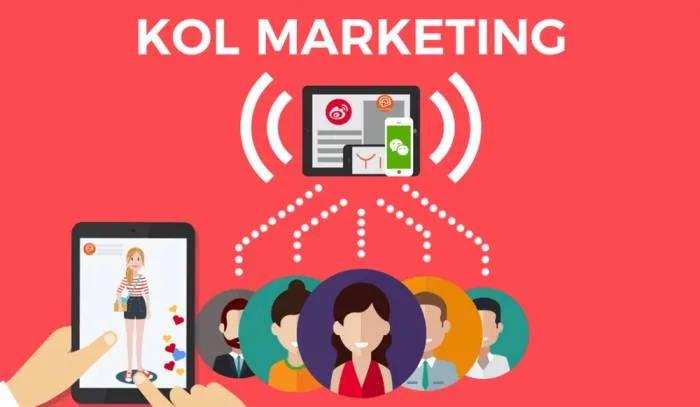
Key Opinion Leaders (KOLs) remain one of the most effective traction mechanisms in Web3, but in 2026 their role has become more data-driven and segmented. A Web3 marketing agency no longer relies on generic influencer promotions; instead, it builds structured KOL ecosystems categorized by niche relevance, audience quality, and engagement authenticity. Micro-KOLs are often more valuable than large influencers because they provide higher trust and conversion rates. Agencies analyze wallet-linked engagement patterns to identify influencers whose audiences actually participate in Web3 ecosystems rather than just consuming content. Campaigns are designed as multi-stage activations where influencers not only promote but also educate and onboard users into the project. Incentive models often include token allocations, performance-based rewards, and long-term partnership agreements. The agency also coordinates synchronized campaigns across multiple KOL tiers to create narrative saturation across social platforms. This ensures that the project appears consistently in user feeds, building both awareness and credibility simultaneously.
Content Engine and Multi-Platform Distribution
Content remains the backbone of traction in Web3, but in 2026 it is no longer limited to tweets or blogs. A Web3 marketing agency builds a multi-platform content engine that includes short-form videos, educational threads, interactive explainers, podcasts, and AI-generated insights. Each content type serves a different stage of the user journey from awareness to conversion. The agency ensures that content is not only informative but also engaging and shareable, often integrating storytelling elements that simplify complex blockchain concepts. Content distribution is equally important, with strategic posting schedules optimized for global Web3 audiences across time zones. Agencies also leverage decentralized content platforms where ownership and engagement can be tokenized. Repurposing content across channels ensures maximum reach with minimal redundancy. Over time, this creates a compounding visibility effect where the project maintains a constant presence in the Web3 conversation, increasing both inbound interest and community growth.
Airdrop Strategy and Incentive Design Systems
Airdrops in 2026 are no longer simple token giveaways; they are sophisticated behavioral acquisition systems. A Web3 marketing agency designs incentive structures that attract not just users but quality participants who contribute value to the ecosystem. Instead of rewarding random signups, agencies create task-based or contribution-based reward systems that encourage meaningful engagement such as testing features, providing feedback, or creating content. These systems are often integrated with on-chain activity tracking to ensure transparency and fairness. The goal is to avoid mercenary users who leave after claiming rewards and instead build a base of engaged participants. Agencies also design phased airdrop campaigns where rewards are distributed over time, encouraging long-term retention. By aligning incentives with project growth objectives, airdrops become a powerful tool for both user acquisition and ecosystem development rather than a short-term hype generator.
Paid Advertising and Performance Marketing in Web3
While organic growth remains central, paid advertising has become more refined and compliance-aware in 2026. A Web3 marketing agency uses targeted ad campaigns across crypto-friendly platforms, search networks, and decentralized ad exchanges. Unlike traditional marketing, Web3 ads are optimized for wallet-connected conversions rather than clicks. Agencies focus on funnel-based advertising strategies where users are gradually educated before being asked to interact with the protocol. Retargeting strategies are heavily used to re-engage users who previously visited landing pages or interacted with content but did not convert. Performance marketing is closely monitored through analytics dashboards that track wallet activity, retention rates, and on-chain behavior. This ensures that ad spend is not wasted on low-quality traffic. The combination of precision targeting and behavioral tracking allows agencies to scale paid acquisition without compromising user quality.
Strategic Partnerships and Ecosystem Integration
Partnerships play a crucial role in accelerating traction because they allow projects to borrow credibility and liquidity from established ecosystems. A Web3 marketing agency actively identifies complementary protocols, infrastructure providers, and community-driven projects for collaboration. These partnerships can include liquidity integrations, co-marketing campaigns, cross-platform incentives, or shared community events. In 2026, interoperability is a major growth driver, and agencies leverage this by positioning projects within broader ecosystems rather than isolated platforms. Strategic alliances with blockchain foundations, DeFi protocols, and NFT ecosystems significantly enhance visibility and trust. Agencies also coordinate joint AMAs, hackathons, and ecosystem grants that increase developer and user participation. These collaborations create network effects where each partnership expands the project’s reach into new user bases, significantly accelerating traction without relying solely on direct acquisition.
PR Strategy and Authority Building
Public relations remains essential for establishing legitimacy in a market where trust is a major barrier to adoption. A Web3 marketing agency builds structured PR campaigns that focus on authority-building through credible publications, thought leadership, and industry narratives. Instead of generic press releases, agencies craft insightful stories about innovation, ecosystem growth, and real-world applications. They position project founders as thought leaders by securing interviews, panel discussions, and speaking opportunities at blockchain events. Authority is also built through consistent visibility in industry conversations and research-based content that demonstrates expertise. In 2026, credibility often determines whether users engage with a project, making PR a critical traction layer. Agencies ensure that every public-facing communication reinforces trust, transparency, and long-term vision, which significantly improves conversion rates from awareness to active participation.
On-Chain Analytics and Growth Optimization
Modern Web3 marketing is deeply data-driven, and agencies rely heavily on on-chain analytics to refine strategies in real time. By analyzing wallet activity, transaction patterns, retention rates, and engagement cycles, agencies can identify what drives actual user behavior rather than assumptions. This allows them to optimize campaigns dynamically, reallocating resources toward high-performing channels. On-chain data also helps identify whale activity, community sentiment shifts, and liquidity changes that impact marketing decisions. Agencies use this intelligence to fine-tune messaging, adjust incentives, and improve targeting. Growth optimization is continuous, meaning strategies are constantly tested, measured, and iterated. This ensures that traction is not temporary but progressively strengthens over time as insights are applied to refine user acquisition and retention strategies.
Retention Systems and Long-Term Engagement Loops
Achieving initial traction is only half the challenge; sustaining it requires strong retention mechanisms. A Web3 marketing agency designs engagement loops that keep users active within the ecosystem. This includes gamified participation, staking incentives, governance voting, and ongoing reward systems. Retention strategies are built around psychological triggers such as progress tracking, achievement systems, and community recognition. Agencies also implement lifecycle marketing strategies that guide users through different stages of engagement from onboarding to advanced participation. Communication channels such as newsletters, community updates, and personalized notifications ensure continuous engagement. By maintaining relevance and value delivery, agencies ensure that users do not abandon the project after initial interaction but instead become long-term participants who contribute to ecosystem stability and growth.
Scaling from Traction to Sustainable Growth
Once traction is achieved, the focus shifts to scaling sustainably without losing community quality. A Web3 marketing agency ensures that growth mechanisms remain aligned with long-term ecosystem health. This involves expanding into new geographic markets, onboarding institutional participants, and increasing developer participation in the ecosystem. Agencies also refine token economics and community incentives to support scalability without inflationary pressure. At this stage, branding becomes more institutional, emphasizing reliability, security, and utility. Growth is no longer driven solely by hype but by real usage, partnerships, and ecosystem expansion. Agencies continuously monitor market conditions to adjust strategies accordingly, ensuring that the project remains competitive and relevant in a rapidly evolving Web3 landscape.
Conclusion
A Web3 marketing agency in 2026 acts as a full-scale growth architect that transforms early-stage projects into active ecosystems through a combination of strategy, storytelling, community engineering, and data-driven execution. From defining positioning to building communities, activating influencers, designing incentives, and optimizing on-chain behavior, every step is interconnected and designed to produce sustainable traction. The most successful projects are those that treat marketing not as a campaign but as an ongoing system of engagement and value creation. In an increasingly competitive decentralized world, traction is no longer accidental it is engineered through precision, consistency, and deep understanding of user behavior across the Web3 landscape.