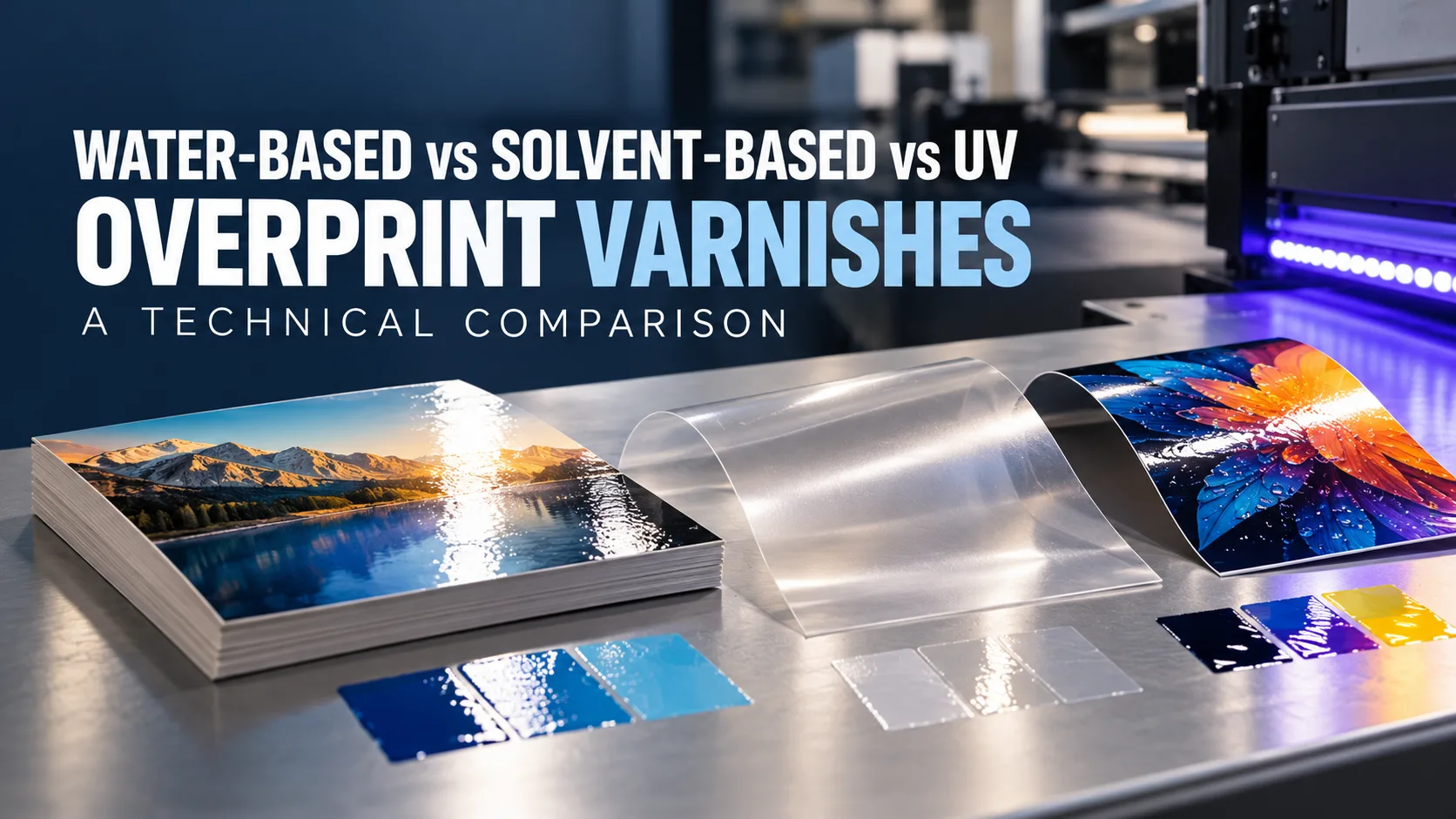
An overprint varnish (OPV) is a clear coating applied to printed ink to protect the surface, alter the surface appearance, or provide a functional feature. Can enhance gloss, rub resistance, scuff protection, slip, heat sealing, or barrier. Water-based, solvent-based, and ultraviolet (UV)-curable OPV are choices that impact print quality, print speed, substrate compatibility, equipment, compliance, and operating cost.
The optimal coating is determined by the printing method, ink system, substrate type, finishing line, end-use, and performance requirements. With all these variables being assessed, an experienced ink & OPV manufacturer in India can suggest a product for trial.
Explain the operation of the three systems.
The water-based varnishes are made with water as the primary carrier, with the addition of resins and additives. The amount of water that evaporates and the film formed by the coatings affect the results, which are influenced by airflow and heat, coat weight, and drying time.
Solvent-based varnishes are made with organic solvents to transport resins. A protective film is formed when the solvent is removed in a dryer. The choice of solvent impacts drying, flow, levelling, and compatibility.
UV-curing varnishes are varnishes that contain reactive ingredients that polymerize under UV energy. The coating is cured by a chemical reaction rather than drying through carrier evaporation. The term 'solvent-free' is used for many UV systems, but confirm with the supplier.
Energy-curable coatings can also be applied to non-absorbing substrates and applications where fast cure is required.
The advantages and disadvantages of water-based OPVs.
Varnishes are used on paper and board, such as cartons and commercial print, and are mostly water-based. The main carrier is water, which may enable a reduction in VOC emissions as compared to conventional systems depending on formulation and operating conditions. The European Commission's surface-treatment reference notes more and more use of water-based OPV on cartons. bureau-industrial-transformation.
The main process consideration is drying. If the coat is thick, the stock has low absorbency, the press speed is high, or the ambient humidity is high, it may need more drying energy and time. Too much moisture can cause problems with paper curl, blocking, or converting. For non-porous films, issues of adhesion and drying must be addressed; surface treatment or primers may be necessary.
Viscosity, pH, foam, wetting, coat weight, and drying temp should be checked by the operator. Good compatibility with the ink is crucial; otherwise, there is a risk of picking, reticulation, or color change of the ink due to an incompatible coating. Grade and substrate will dictate performance: water-based OPV can be used on paperboard applications where a combination of protection and appearance/processability is required.
The strengths and considerations of a solvent-based OPV.
Selected films and packaging substrates can be provided with good wetting and adhesion by solvent-based varnishes. They can be formulated to be flexible, solvent-proof, heat-resistant, or otherwise suitable for the end use. They can be used in flexographic or gravure systems with existing solvent handling and drying equipment.
Dryer design, airflow, temp, and solvent balance are factors. If the evaporation is too fast, the levelling may be affected; if too slow, there may be odours or blocking, or the solvent may not be removed. Ventilation, fire protection, workers' exposure, recovery, and emissions of solvents are all components that plants have to deal with.
Not all films are guaranteed to be compatible. Adhesion can be influenced by surface treatment, ink chemistry, lamination, and converting. Verify the suitability of the varnish with the ink and substrate used and determine if the package will be subjected to heat sealing, pasteurization, abrasion, or chemical exposure. When packaging, evaluate migration, odor, and regulatory suitability for intended use, particularly for food contact use.
The advantages and disadvantages of UV-curable OPV:
One of the benefits of UV varnishes is their speed of curing and productivity. The waiting time before handling, stacking, or converting can be reduced by means of inline curing. Formulations can provide high gloss, matt, abrasion, and chemical resistance. Labels, fast and durable carton folding, and other applications are treated with UV systems. They can be used on heat-sensitive substrates that will not tolerate extended hot air drying, but the substrate must be resistant to the press and exposure to UV.
It is necessary for a press to have appropriate UV lamps or LED curing, shielding, maintenance, and controls. The cure depends on the lamp output, wavelength, coating thickness, press speed, amount of ink under the varnish, and the type of varnish. If under-cured, it can result in odor, poor resistance, or adhesion issues. Properly protect operators from UV radiation and uncured materials.
The term “UV-cured” does not necessarily imply suitability for food contact or low migration. Choose grades for the particular application; follow the supplier's recommendations for curing, testing, and regulatory documentation. It may be applied to the entire printed structure and not just the varnish.
Comparing the systems
When drying capacity is adequate, water-based OPV can be applied to paper and board. For certain flexible substrates and applications where specific adhesion, flexibility, or resistance is required, solvent-based OPV may be appropriate for such use with proper controls on the solvent. UV OPV suits are suitable for jobs requiring fast cure and long-term surface properties if appropriate equipment and compliance measures are available.
Analyze the features of substrates, ink compatibility, finish, drying or curing time, energy consumption, equipment costs, emissions, safety, conversion requirements, and compliance. An inexpensive purchase price may not do the trick if the coating slows production or produces rejects.
Selection & trial process, practical selection and trial.
This should begin with a specification of substrate and treatment, system of ink, printing method, desired gloss or matt, rub and scuff resistance, converting steps, end use, and regulatory requirements. Provide to the supplier and ask for the technical data sheet, recommended coat weight, window of application, and compatibility information.
Varnish in the same colors and on the same type of substrate as the actual ink. Determine adhesion, blocking, gloss, slip, rub resistance, drying or curing, odor, and performance after converting. For packaging: Use filling, sealing, stacking, transport conditions, and contact conditions as applicable. Perform a trial at typical press speeds, and document speeds, settings, and results. Re-check if the ink, substrate, or curing conditions are altered.
Have a say in the selection of the job.
Water-based, solvent-based, and UV varnishes suit various production requirements. The benefit of solvent-based systems for paper and board is that they can provide useful performance on certain films; UV coating can provide fast cure and durable finishes when equipment and compliance conditions are appropriate. Do not select based on any single item in the job specification relating to speed or sustainability.
A knowledgeable ink & OPV manufacturer in India can assist in matching the chemistry, application method, and performance targets to the printed structure. Ask for product information and test the shortlisted OPVs in actual production. The best fit will prevent print problems, run without issues, and satisfy the requirements of the finished product, without causing unwanted process or compliance issues.