
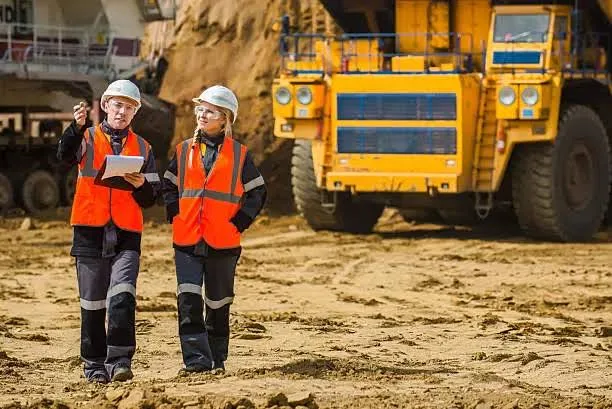
Mining is one of the most demanding industries for workers, equipment and operational processes. From underground mines and open-pit operations to mineral processing plants, teams work with heavy machinery, complex infrastructure and potentially hazardous environments. At the same time, mining companies face increasing pressure to improve productivity, reduce downtime and maintain high safety standards.
Technology is playing an important role in addressing these challenges. While automation, artificial intelligence and IoT have already transformed parts of the mining industry, augmented reality (AR) is emerging as another practical technology for improving how workers access information and perform tasks.
Augmented reality in mining industries can place digital information directly into a worker’s field of view. Using AR glasses, headsets, tablets or mobile devices, workers can access instructions, equipment information, visual guides and remote assistance without constantly switching between physical manuals, computers and the work environment.
This makes AR particularly useful for maintenance, inspections, training, remote support and safety procedures.
What Is Augmented Reality in Mining?
Augmented reality overlays digital information onto the physical environment. Unlike virtual reality, which creates a completely digital environment, AR allows workers to see the real world while additional digital content is displayed alongside it.
For example, a technician inspecting a mining pump could use AR glasses to view information about the equipment while standing directly in front of it. The system could display maintenance instructions, identify components, highlight inspection points or provide access to technical documentation.
Depending on the system and application, AR can display:
- Step-by-step work instructions
- Equipment specifications
- Maintenance procedures
- Safety warnings
- Inspection checklists
- 3D models
- Diagrams and schematics
- Live data from connected equipment
- Remote expert guidance
- Training simulations
The goal is not simply to introduce another digital device into mining operations. Instead, AR can make existing information more accessible at the exact location where workers need it.
Why Is AR Becoming Important for the Mining Industry?
Mining operations involve large amounts of technical information. Workers may need to understand equipment specifications, maintenance procedures, safety requirements and operational processes before completing a task.
Traditionally, this information may be stored in paper manuals, PDFs, desktop systems or separate databases. Finding the correct information can take time, particularly when workers are operating in remote areas.
AR can help bridge the gap between information and the physical task.
Instead of asking a technician to interpret a diagram from a manual, for example, an AR system could display the relevant component directly over the equipment. A worker can then follow the procedure while continuing to look at the machine.
This can be particularly valuable in environments where:
- Equipment is highly complex
- Workers operate in remote locations
- Downtime is expensive
- Experienced specialists are limited
- Maintenance procedures require multiple steps
- Workers need access to information without using their hands
1. AR for Mining Equipment Maintenance
Equipment maintenance is one of the most practical applications of augmented reality in mining.
Mining operations depend on equipment such as excavators, haul trucks, crushers, conveyors, pumps, drilling systems and processing machinery. When critical equipment stops operating, the resulting downtime can affect production schedules and operating costs.
Maintenance technicians need accurate information to identify problems and complete repairs correctly.
AR can provide technicians with digital work instructions while they work on the equipment.
For example, an Augmented Reality application could guide a technician through a pump maintenance procedure by showing:
- Which component needs to be inspected
- Where the component is located
- Which tools are required
- The sequence of maintenance steps
- Torque specifications
- Inspection requirements
- The correct reassembly procedure
Visual instructions can make complex procedures easier to follow than traditional documentation alone.
AR can also help standardise maintenance procedures across different teams and locations. This is particularly useful for mining companies operating multiple sites where maintenance processes need to remain consistent.
2. Faster Troubleshooting and Fault Identification
Mining equipment can contain hundreds or thousands of components, making troubleshooting a complex process.
When a machine develops a fault, technicians need to identify the source of the problem before repairs can begin. Traditional troubleshooting may involve consulting manuals, searching technical documentation or contacting experienced specialists.
AR can provide contextual information directly around the equipment.
A technician could scan a machine and access information about individual components. The AR system could identify a particular valve, motor, sensor or electrical connection and display relevant troubleshooting instructions.
When integrated with equipment monitoring systems, AR could potentially provide additional information based on sensor or machine data.
For example:
Machine alert → AR identifies affected component → Technician receives troubleshooting procedure → Repair is completed → Inspection is documented
This creates a more connected workflow between equipment data and physical maintenance.
3. Remote Assistance for Mine Sites
Mining operations are often located far from major cities and specialist technical centres. Bringing an expert to a remote mine site can take significant time and cost money.
AR-enabled remote assistance can help address this challenge.
A technician wearing AR glasses can connect with a remote expert through an audio and video connection. The expert can see what the technician sees and provide instructions in real time.
The remote specialist could:
- Point to a component on the technician’s screen
- Draw or annotate the technician’s view
- Explain a repair procedure
- Review equipment conditions
- Guide an inspection
- Help diagnose an unfamiliar problem
This does not necessarily eliminate the need for specialists to visit a mine site. Instead, it can provide another support option when physical presence is not immediately necessary.
For mining companies operating across multiple locations, this can make specialist knowledge more accessible to teams in remote areas.
4. Improving Worker Training
Training workers in mining environments can be challenging because many tasks involve expensive equipment or potentially hazardous conditions.
AR can create interactive training experiences without requiring workers to immediately perform tasks on operational machinery.
For example, a new technician could use an AR system to learn how to inspect a piece of mining equipment. The system could identify components and provide instructions as the trainee progresses through the procedure.
Training can cover areas such as:
- Equipment operation
- Maintenance
- Inspection
- Lockout/tagout procedures
- Emergency response
- Hazard identification
- Safety procedures
- Equipment familiarisation
AR can also support hands-on learning by allowing trainees to interact with digital information while viewing the physical equipment.
This can help connect classroom-based training with real-world tasks.
5. AR for Safety Inspections
Safety inspections are an essential part of mining operations. Workers may need to inspect machinery, work areas, infrastructure and safety systems regularly.
AR can provide digital inspection checklists that guide workers through required inspection points.
Instead of carrying a paper checklist, a worker could use an AR headset or mobile device to receive instructions based on their location and task.
For example:
Inspection point 1: Check hydraulic connections
Inspection point 2: Inspect guarding
Inspection point 3: Check warning signage
Inspection point 4: Inspect electrical connections
Inspection point 5: Record equipment condition
The system can potentially record inspection results digitally, helping organisations create a more traceable maintenance and safety record.
AR can also highlight specific components that require attention, reducing the possibility of workers overlooking inspection points.
6. Visualising Equipment and Infrastructure
Mining operations often involve complicated infrastructure that can be difficult to understand from two-dimensional drawings.
AR can overlay digital models onto the physical environment, allowing workers and engineers to visualise equipment, structures and systems in context.
For example, an engineer could use AR to view the planned position of a new piece of equipment before installation. This can help teams understand spatial relationships and identify potential issues earlier.
AR can also be used to visualise:
- Pipes
- Electrical systems
- Conveyor systems
- Underground infrastructure
- Processing equipment
- Ventilation systems
- Structural components
This can make technical information easier to understand for workers who may not work with engineering drawings every day.
7. Supporting Underground Mining Operations
Underground mining presents unique operational challenges. Workers may operate in environments where visibility, communication and access to information are limited.
AR can provide contextual information without requiring workers to constantly consult separate devices.
For example, AR could help workers identify equipment, locate specific infrastructure or access digital instructions during maintenance activities.
When combined with location technologies and mine management systems, AR could potentially provide workers with information relevant to their specific area.
However, underground environments also create technical challenges for AR. Connectivity, lighting, dust, battery life and device durability must all be considered when deploying AR technology underground.
8. Reducing Downtime
Unplanned equipment downtime can have significant consequences for mining operations.
AR does not prevent equipment from failing, but it can potentially reduce the time required to diagnose and repair problems.
Consider a situation where a conveyor system develops a mechanical fault.
Without digital assistance, a technician may need to:
- Identify the problem
- Find the relevant manual
- Locate the correct section
- Interpret diagrams
- Contact an experienced AR technician if necessary
- Complete the repair
- Document the work
With an AR-supported workflow, some of these steps can be integrated into a single process.
The technician can receive relevant instructions at the equipment, access diagrams without leaving the work area and contact a remote expert when additional support is required.
The result can be a more streamlined maintenance process.
9. Supporting Knowledge Transfer
The mining industry is also facing an important knowledge challenge. Experienced workers possess valuable practical knowledge about equipment, maintenance procedures and troubleshooting.
When experienced employees retire or move to different roles, some of this knowledge can be difficult to transfer.
AR can help capture and standardise certain procedures.
An experienced technician can help create digital work instructions based on established maintenance processes. These instructions can then be used by less experienced workers when performing the same task.
This does not replace experience. Instead, it provides a structured way to make organisational knowledge easier to access.
10. Integrating AR With Other Mining Technologies
The greatest potential of AR may come from integrating it with other technologies rather than using it as a standalone system.
For example, mining companies can combine AR with:
IoT: Sensors provide real-time equipment information.
Artificial intelligence: AI can analyse equipment or operational data and identify potential issues.
Digital twins: Digital models provide detailed information about physical assets.
Computer vision: Cameras can identify equipment, components or visual conditions.
Cloud platforms: Workers can access centralised information from different locations.
Connected worker platforms: AR can become part of a broader digital workflow for frontline workers.
This creates a pathway towards more connected mining operations.
Imagine a technician approaching a machine. The system identifies the equipment, retrieves its maintenance history, displays relevant inspection instructions and provides alerts based on available machine data. If the technician encounters a problem, a remote expert can join the session.
This is where AR becomes more than a visualisation tool. It becomes an interface between workers, machines and operational information.
Challenges of Implementing AR in Mining
Despite its potential, AR is not a simple plug-and-play technology.
Mining companies need to consider several factors before implementing an AR solution.
Harsh Operating Conditions
Mining environments can involve dust, moisture, vibration, extreme temperatures and physical impacts. AR hardware must be suitable for the specific operating environment.
Connectivity
Some mining locations have limited network connectivity. AR applications that depend on constant cloud access may not perform reliably in areas with poor coverage.
Offline capabilities and suitable local infrastructure may therefore be important.
Worker Adoption
Technology only provides value when workers are comfortable using it. AR systems need to be practical, easy to operate and designed around actual workflows.
Data Integration
AR becomes more useful when it can access relevant operational information. Integrating AR with existing maintenance systems, asset management platforms and other technologies can require careful planning.
Cost and ROI
Hardware, software development, integration, training and maintenance all contribute to the cost of an AR deployment.
Mining companies should therefore identify specific use cases where AR can address a measurable operational problem rather than implementing the technology simply because it is new.
The Future of Augmented Reality in Mining
The role of AR in mining is likely to develop alongside other digital technologies.
Future AR systems may become increasingly connected to digital twins, artificial intelligence, IoT sensors and asset management platforms. Instead of simply displaying static instructions, systems could deliver more contextual information based on the equipment, worker, location and task.
For example, a maintenance technician could approach a machine and automatically receive the relevant maintenance procedure based on the asset’s identification and maintenance schedule.
AI could potentially assist in interpreting equipment data, while AR could present the resulting information to the worker in an accessible visual format.
The long-term direction is therefore not simply AR for mining, but a connected digital environment where workers can interact with operational information directly within their physical surroundings.
Is Augmented Reality Right for Your Mining Operation?
Augmented reality can support mining companies in several areas, including maintenance, troubleshooting, training, inspections, remote assistance and knowledge transfer.
However, successful implementation depends on choosing the right applications.
A mining company does not necessarily need to deploy AR across every operation. Starting with a clearly defined problem can provide a more practical path.
For example, a company experiencing long maintenance times could begin with AR-guided maintenance. Another organisation with limited access to technical specialists could focus on remote expert assistance. A company dealing with inconsistent procedures could start with digital work instructions.
Once the technology demonstrates value in one workflow, it can potentially be expanded to other areas.
Conclusion
Augmented reality in mining industries has the potential to change how frontline workers access information, complete maintenance tasks, perform inspections and receive technical support.
By bringing digital instructions and operational information into the physical environment, AR can help reduce the gap between what workers need to know and where they need to use that knowledge.
Its value is particularly relevant in mining, where equipment is complex, sites can be remote and maintenance and safety procedures require accuracy.
AR is not a replacement for skilled workers or established safety processes. Instead, it can provide workers with better access to information and expertise when they need it.
As mining companies continue adopting connected equipment, AI, IoT and digital twins, AR can become an important interface between these technologies and the people operating and maintaining physical assets.
The future of mining will not depend on a single technology. It will increasingly depend on how effectively digital tools can work together to support the people responsible for keeping mining operations safe, productive and reliable.