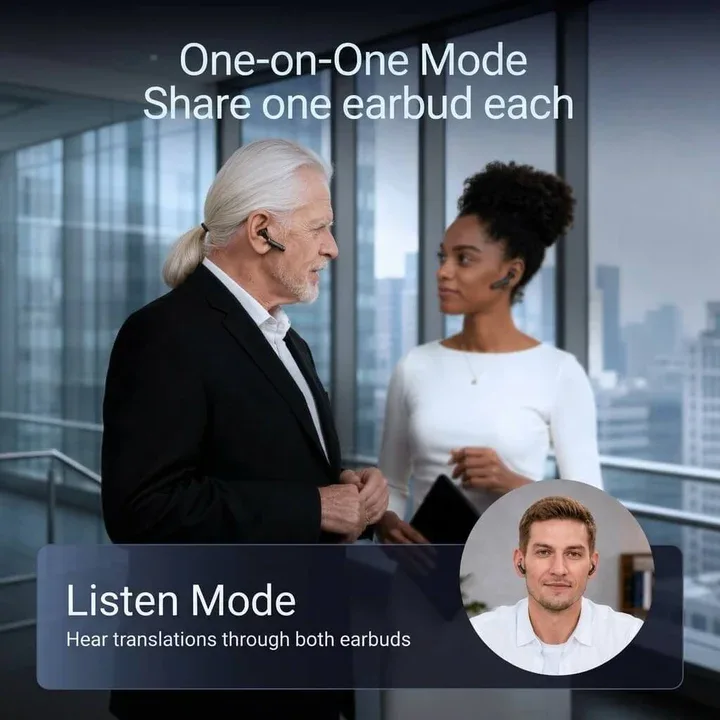
When you're traveling abroad or communicating with international clients, language barriers can feel overwhelming. Real-time translation technology has made tremendous progress in recent years, and several companies now offer translation earbuds designed to bridge these gaps. Two of the most talked-about options in the market are the Timekettle W4 Plus and Google Pixel Buds. Both promise seamless translation experiences, but they approach the challenge differently. Understanding their strengths and limitations can help you decide which solution fits your needs.
Understanding What Each Product Offers
The Timekettle W4 Plus AI Interpreter Earbuds positions itself as a dedicated translation device. These earbuds focus primarily on providing real-time translation across multiple languages, with features specifically designed for conversations between people speaking different languages. The W4 Plus uses AI technology to process speech and deliver translations with minimal delay, and the company has built its entire product around this core function.
Google Pixel Buds, on the other hand, represent a different approach. They're primarily designed as high-quality wireless earbuds with multiple features, including music listening and call handling. Translation capability was added as a feature rather than being the main focus of the product. This distinction matters because it shapes how each device handles translation tasks and what trade-offs you might encounter.
Translation Performance and Accuracy
Translation quality depends on several factors, including language selection, audio clarity, and background noise levels. The Timekettle W4 Plus supports 52 languages and 106 accents when online, along with offline translation for 13 language pairs. The device uses proprietary AI models that have been specifically optimized for translation tasks, meaning the software has been trained extensively on conversation patterns rather than general audio processing.
Google Pixel Buds rely on Google's translation ecosystem, including Google Translate and Android Live Translate features. This gives users access to Google's extensive language resources, although the exact experience depends on the Pixel phone model, software version, and internet connectivity.
When it comes to real-world conversation translation, both devices work reasonably well in quiet environments. In noisy settings like restaurants, airports, or street markets, the W4 Plus appears to handle speech recognition more effectively because its entire design optimizes for isolating conversational speech. Google Pixel Buds handle noise reasonably well due to their noise cancellation features, but since translation isn't their primary function, they may not perform quite as well in challenging acoustic environments.
Language Support and Global Reach
The breadth of language support matters significantly if you work across different regions. The Timekettle W4 Plus covers major languages including English, Mandarin, Spanish, French, German, Japanese, Korean, Arabic, and many others. With 52 languages and 106 accents available online, plus 13 language pairs supported offline, this extensive language library makes it practical for professionals working in diverse international markets—even in remote locations without reliable internet.
Google Pixel Buds also support numerous languages through Google Translate, and Google's translation models continuously improve. With Live Translate now covering over 70 languages and powered by Gemini AI, the system handles nuanced language particularly well. However, the language selection and translation quality may vary more noticeably depending on which language pairs you're using. Languages with extensive digital content training—like English, Spanish, and French—typically perform better than less commonly documented languages.
Connectivity and Setup Requirements
This is where significant practical differences emerge. The Timekettle W4 Plus can function somewhat independently, though it does benefit from internet connectivity for optimal performance. Its offline translation capability for 13 language pairs means you can use these earbuds in situations where phone connectivity is limited or inconvenient. The standalone capabilities mean you can use these earbuds in situations where phone connectivity is limited or inconvenient.
Google Pixel Buds require consistent connectivity to your phone to access translation features. They don't operate independently for translation, which means you're always dependent on maintaining a stable connection between your phone and the earbuds. For international travelers who might have limited data plans or spotty connectivity, this dependency could present challenges.
Comfort, Battery Life, and General Features
Both products prioritize comfort for extended wear, though comfort ultimately remains personal. The Timekettle W4 Plus are compact and lightweight, designed primarily for the translation function. Google Pixel Buds offer a more traditional earbud design that many people find comfortable for all-day wear. If you plan to wear these earbuds for hours while working or traveling, trying them on yourself remains the best approach.
Battery life matters when you're away from charging options. Google Pixel Buds typically offer around five to seven hours of battery life with the case, which is solid for an all-purpose earbud. The Timekettle W4 Plus provides several hours of usage depending on the mode. Continuous translation consumes more power than standard audio playback, so actual battery life varies depending on how the earbuds are used.
Beyond translation, Google Pixel Buds excel at music playback, call quality, and integration with Android devices. If you want earbuds that handle multiple functions well, Google's offering provides versatility. The Timekettle W4 Plus, while capable of playing audio, essentially positions music listening as a secondary feature.
Price and Value Consideration
Price differences between these products reflect their different purposes. The Timekettle W4 Plus focuses on a specific use case—translation—and prices accordingly. Google Pixel Buds cost more than some translation-focused earbuds, but you're paying for a premium audio experience alongside translation capability.
When evaluating value, consider what you'll actually use. If translation represents 80 percent of your use case and everything else is secondary, a specialized device might provide better return on investment.
Making Your Decision
Choosing between these products depends on your specific needs and priorities. The Timekettle W4 Plus makes sense if you prioritize translation quality, need reliable performance in challenging conditions, and want a device dedicated entirely to language conversation. With 52 languages and 106 accents online plus 13 language pairs offline, it offers a comprehensive solution for serious international communication. The dedicated approach means fewer compromises for the translation function itself.
Google Pixel Buds represent the better choice if you want versatile earbuds that integrate seamlessly with your Android device, appreciate premium audio quality for music listening, and see translation as one feature among many. If you primarily use Android and want an all-in-one solution, Google's ecosystem integration becomes particularly valuable.
For people in cross-language families, or those who frequently travel or go on business trips abroad, Timekettle W4 Plus usually delivers better real-time translation performance. For ordinary consumers who want translation features without sacrificing music sound quality, Google Pixel Buds are suitable.
Are Timekettle W4 Plus Earbuds Better Than Google Pixel Buds for Translation?
When you're traveling abroad or communicating with international clients, language barriers can feel overwhelming. Real-time translation technology has made tremendous progress in recent years, and several companies now offer translation earbuds designed to bridge these gaps. Two of the most talked-

Richard Gray
·
5 min read
·
85 Buzz