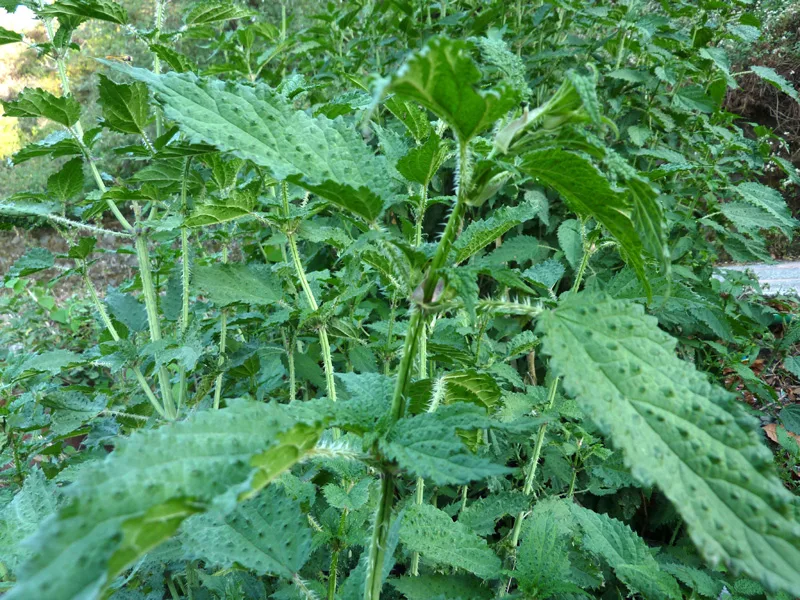
Walk into any health food store or browse wellness blogs online, and you'll find countless articles about imported herbs and so-called "superfoods." Ingredients like matcha, ginseng, and chamomile have become household names. Yet, hidden among the forests and mountain slopes of the Himalayas grows a remarkable native plant that remains largely unknown outside its natural habitat—Urtica himalayensis, commonly known as the Himalayan stinging nettle.
Despite belonging to the same genus as the well-known common stinging nettle (Urtica dioica), Urtica himalayensis has its own ecological significance and cultural history. It has supported Himalayan communities for generations, yet it rarely receives the attention given to globally marketed herbs.
This article explores why this native plant deserves recognition—not because it is the latest wellness trend, but because it represents biodiversity, traditional knowledge, and the importance of protecting unique ecosystems.
A Plant That Thrives in the Himalayas
Urtica himalayensis is naturally found across parts of the Himalayan region, including areas of northern India and neighboring mountain ranges. It grows in cool, moist environments, often at elevations where many other plants struggle to thrive.
Like other members of the nettle family, the plant is covered with tiny stinging hairs that act as a natural defense against grazing animals. Anyone who accidentally brushes against fresh leaves quickly discovers why the plant earned its reputation.
Yet the sting tells only a small part of its story.
For generations, people living in Himalayan villages have understood the value of the plant. Instead of avoiding it completely, they learned how to identify, harvest, and use it responsibly.
More Than Just Another Wild Plant
Many wild plants disappear into the background because people assume they have little value. Urtica himalayensis is different.
Mountain communities have traditionally recognized the plant for a variety of practical purposes. Depending on the region, it has been associated with local food traditions, household applications, and herbal practices passed down through families.
This knowledge developed through observation and experience rather than modern marketing.
Today, as more people become interested in sustainable living and regional food systems, these traditional practices are receiving renewed attention.
The Importance of Indigenous Knowledge
One of the most valuable aspects of Urtica himalayensis is the knowledge surrounding it.
Long before scientific studies began documenting Himalayan biodiversity, local communities understood seasonal harvesting, proper preparation, and respectful use of native plants.
This traditional ecological knowledge deserves preservation alongside scientific research.
Across the world, many indigenous practices have gradually disappeared because younger generations moved away from rural communities or because imported products replaced local resources.
Documenting native Himalayan plants helps preserve both biological and cultural heritage.
Biodiversity Is More Valuable Than We Often Realize
The Himalayas are recognized as one of the world's richest biodiversity hotspots.
Thousands of plant species grow in these mountains, many of which occur nowhere else on Earth.
Every native species contributes to the balance of local ecosystems by supporting insects, birds, wildlife, and surrounding vegetation.
When native plants disappear, their loss affects much more than a single species.
Protecting biodiversity means protecting an entire ecological network that has developed over thousands of years.
Urtica himalayensis is one small but important part of that larger picture.
Looking Beyond Popular Wellness Trends
Modern wellness trends often focus on ingredients that receive widespread marketing attention.
While there is nothing wrong with learning about herbs from different cultures, it is equally important to appreciate plants that have quietly existed within our own landscapes for centuries.
Native species deserve recognition because of their ecological importance and cultural value—not simply because they become fashionable.
Learning about Urtica himalayensis reminds us that meaningful discoveries are sometimes found close to home.
Responsible Harvesting Matters
Growing interest in native plants should always be accompanied by responsible practices.
Wild populations should never be harvested carelessly or beyond sustainable limits.
Conservation experts generally encourage responsible collection methods, habitat protection, and support for local communities who possess traditional knowledge about these species.
Responsible sourcing benefits everyone.
It helps conserve natural ecosystems while also respecting the people who have cared for these landscapes for generations.
Why Awareness Is Important
Many people have never heard the name Urtica himalayensis.That lack of awareness doesn't reduce its importance.
Education encourages appreciation, appreciation encourages conservation, and conservation helps protect biodiversity for future generations.
Simply learning about native plants can inspire people to look more closely at the ecosystems around them.
A Reminder From Nature
One of the reasons I find Urtica himalayensis so fascinating is that it challenges assumptions.
At first glance, it's simply a plant that stings.
Look a little deeper, and it becomes a story about mountains, biodiversity, traditional knowledge, sustainability, and the relationship between people and nature.
Sometimes the most meaningful discoveries aren't the ones making headlines.
They're the plants quietly growing in forests, valleys, and mountain trails—waiting for someone to ask why they've mattered for so long.
Final Thoughts
Urtica himalayensis may never become as famous as some internationally marketed herbs, and perhaps it doesn't need to.
Its real value lies in representing something much larger than itself. It reminds us that native plants carry generations of knowledge, support fragile ecosystems, and form part of the natural heritage of the Himalayas.
As conversations about sustainability and biodiversity continue to grow, perhaps it's time more people learned about the remarkable species that have been part of the Himalayan landscape all along.
Instead of asking what we can take from nature, we might begin by asking what we can learn from it. That simple shift in perspective is where lasting appreciation—and lasting conservation—begins.