The UPSC Civil Services Mains Examination is one of the most important stages in the journey of becoming an IAS, IPS, or IFS officer. Unlike the Preliminary Examination, which mainly tests factual knowledge and objective understanding, the Mains examination evaluates analytical thinking, clarity of expression, depth of understanding, and answer-writing skills.
Many aspirants clear Prelims but struggle in Mains because the preparation approach for both stages is very different. UPSC Mains preparation requires consistency, conceptual clarity, regular revision, and most importantly, the ability to present answers in a structured and balanced manner.
Aspirants often spend months collecting study material, but success in Mains depends more on smart preparation than excessive resources. Developing a focused strategy and maintaining discipline throughout the preparation journey are key factors for performing well in the examination.
Understanding the Nature of UPSC Mains
The UPSC Mains examination consists of descriptive papers that test a candidate’s understanding of various subjects, along with their ability to analyze issues critically. Questions are not limited to textbook definitions. Instead, they require multidimensional thinking and balanced viewpoints.
Subjects such as Indian Polity, Governance, Economy, History, Geography, Ethics, Environment, International Relations, and Essay require both conceptual understanding and awareness of current affairs. This is why integrated preparation becomes extremely important.
UPSC expects aspirants to connect static knowledge with contemporary developments. For example, while studying topics like Parliament or federalism, candidates should also understand recent debates, constitutional issues, and governance challenges related to them.
Importance of Answer Writing Practice
One of the biggest mistakes many aspirants make is delaying answer-writing practice. Reading books alone is not enough for Mains preparation. The real challenge lies in expressing ideas clearly within limited time and word limits.
Regular answer writing helps improve:
- Structure and presentation
- Time management
- Analytical thinking
- Clarity of expression
- Content organization
Initially, many students struggle to complete answers within the required time. However, with consistent practice, speed and confidence gradually improve.
A good answer should include a clear introduction, balanced body, and concise conclusion. Using examples, government reports, committee recommendations, data, and current affairs references can make answers more effective and relevant.
The Role of Current Affairs in Mains Preparation
Current affairs play a major role in almost every General Studies paper. Aspirants should not study current affairs separately from static subjects. Instead, both should be connected together.
For example:
- Economic Survey and Budget updates are important for Economy
- International events are relevant for International Relations
- Supreme Court judgments are important for Polity and Governance
- Environmental conferences are useful for Environment topics
Reading newspapers regularly helps aspirants develop analytical understanding and improve their writing style. Editorials also help in learning how to present balanced opinions on important issues.
Monthly current affairs revision is equally important because information overload often creates confusion during the examination.
Time Management During Preparation
The UPSC Mains syllabus is vast, and managing time effectively becomes essential. Many aspirants spend too much time on one subject while neglecting others.
A balanced study schedule should include:
- Static subject preparation
- Current affairs revision
- Answer-writing practice
- Essay preparation
- Ethics case study practice
- Revision time
Consistency matters more than studying for extremely long hours. A realistic timetable that can be followed regularly is always better than an unrealistic schedule that causes burnout.
Importance of Revision
Revision is one of the most ignored aspects of UPSC Mains preparation. Without proper revision, even well-studied topics become difficult to recall during the examination.
Many successful candidates revise the same material multiple times instead of continuously adding new resources. Short notes, mind maps, flowcharts, and keyword-based summaries help in faster revision before exams.
Revision also improves confidence and retention, especially for subjects like History, Geography, and Ethics where multiple themes must be remembered together.
Essay Preparation for UPSC Mains
The Essay paper plays a significant role in determining the final rank. Good essay writing requires clarity of thought, balanced arguments, and proper structure.
Aspirants should practice essays regularly on social, political, philosophical, and economic themes. Reading quality editorials and analyzing previous year essay topics helps improve perspective and content quality.
A well-written essay should maintain logical flow and avoid extreme opinions. The focus should remain on balanced analysis and practical solutions.
Ethics Paper and Case Studies
The Ethics paper is often considered scoring if prepared properly. However, many students underestimate its importance.
Preparation for Ethics should focus on:
- Understanding ethical concepts
- Learning real-life examples
- Practicing case studies
- Improving decision-making approach
Using examples from administration, public life, and governance helps make answers more practical and impactful.
How Mentorship Helps in Mains Preparation
UPSC preparation can sometimes become confusing and stressful, especially when aspirants are unsure about answer quality or preparation strategy. Proper mentorship helps students stay focused and avoid unnecessary mistakes.
Guidance from experienced mentors can help aspirants:
- Improve answer presentation
- Prioritize important topics
- Develop better writing structure
- Analyze performance in mock tests
- Maintain consistency in preparation
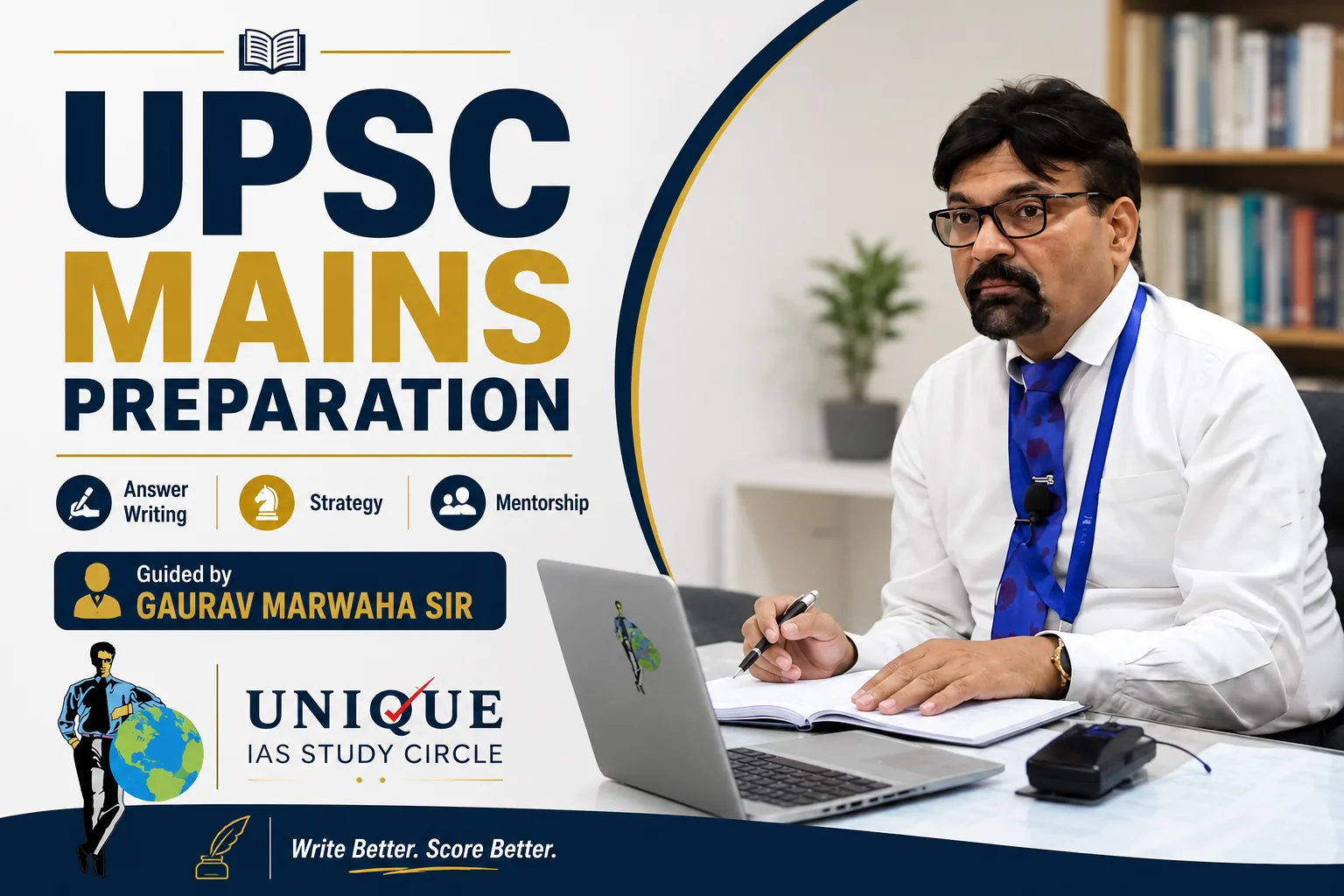
Institutes like Unique IAS Study Circle focus on systematic preparation, answer-writing practice, and conceptual learning to help aspirants strengthen their Mains preparation strategy. Structured guidance and regular evaluation often help students identify weak areas and improve gradually over time.
Common Mistakes to Avoid
Many aspirants lose valuable marks because of avoidable mistakes. Some common errors include:
- Collecting excessive study material
- Ignoring answer-writing practice
- Neglecting revision
- Writing lengthy but unfocused answers
- Depending completely on coaching without self-study
- Ignoring previous year question papers
Understanding the demand of the question is extremely important in Mains. Writing everything known about a topic rarely helps unless the answer directly addresses the question asked.
Final Thoughts
UPSC Mains preparation is not just about studying harder; it is about studying smarter with consistency and clarity. The examination tests not only knowledge but also the ability to think critically, write effectively, and present balanced viewpoints under time pressure.
Aspirants should focus on conceptual understanding, current affairs integration, answer-writing practice, and regular revision rather than running after too many resources. With disciplined preparation and the right guidance, students can steadily improve their performance and confidence.
The journey may feel challenging at times, but consistent effort and a well-planned strategy can make a significant difference. Success in UPSC Mains comes from patience, continuous improvement, and the ability to stay focused throughout the preparation process.