A New Era Begins: Universities at the Crossroads of Innovation and Tradition
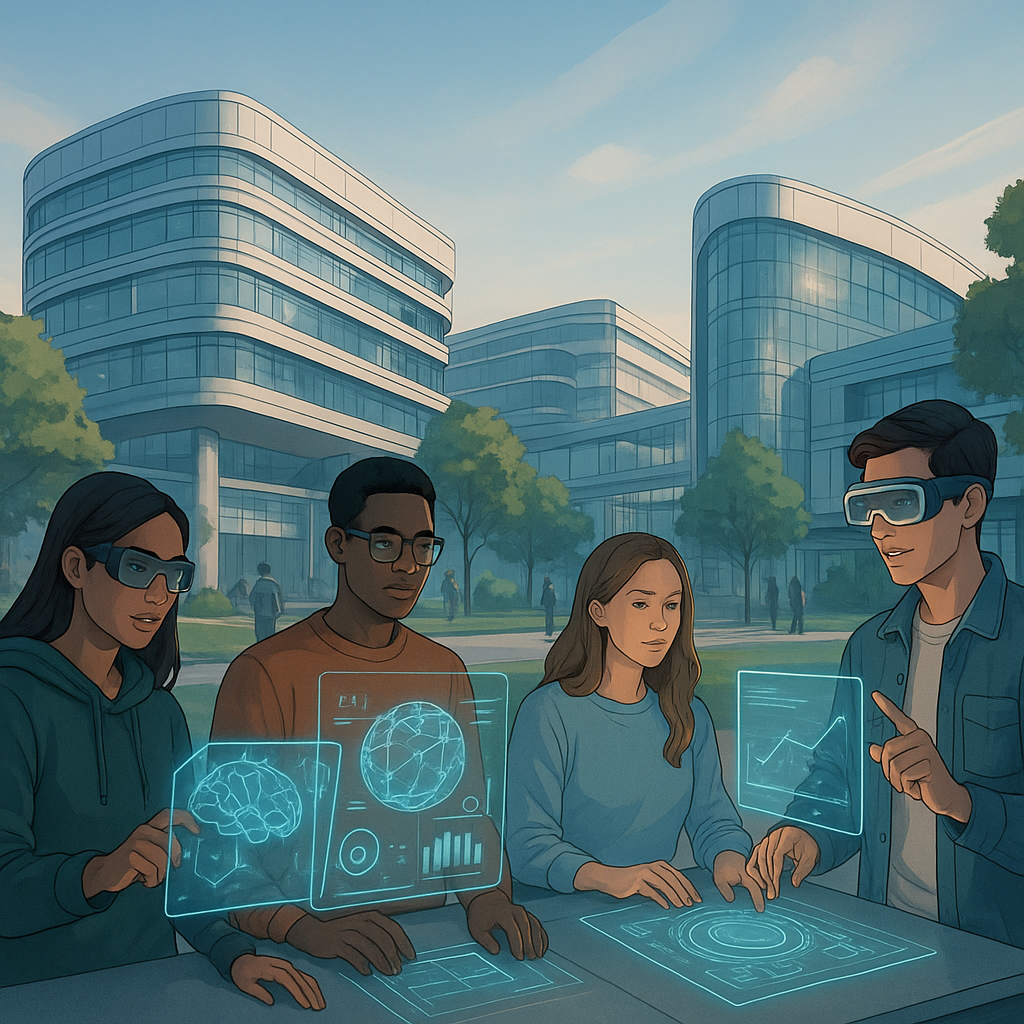
On a crisp spring morning in May 2026, a leading public university in California unveiled a groundbreaking initiative that perfectly encapsulates the seismic shifts shaking higher education worldwide. The institution launched an AI-driven interdisciplinary research hub designed to tackle climate change solutions by integrating environmental science, data analytics, and social policy. This move, emblematic of a broader trend, illustrates how universities are no longer just ivory towers of classical scholarship but hubs of innovation addressing urgent global challenges.
Amid rising global demands for skilled professionals and researchers, universities in 2026 face an unprecedented balancing act: preserving the intellectual rigor of traditional academia while embracing new technologies, pedagogical models, and societal expectations. Enrollment patterns, funding sources, curriculum designs, and research priorities have all evolved dramatically over the last five years, driven by rapid technological progress, shifting demographics, and a transformed global economy.
"Universities today must be both guardians of knowledge and catalysts for change," said Dr. Lina Chen, Provost of the University of New York, during the recent International Higher Education Forum. "Our mandate is to prepare students not just for existing jobs but for jobs that don’t yet exist, while advancing research that can redefine our future."
This article examines how universities in May 2026 have reinvented themselves amid these pressures, with a focus on emerging educational models, research breakthroughs, funding innovations, and the evolving student experience.
Tracing the Evolution: From Traditional Campuses to Hybrid Knowledge Ecosystems
The transformation of universities in 2026 is rooted in decades of incremental change accelerated by recent global events. The COVID-19 pandemic of the early 2020s acted as a catalyst, forcing institutions worldwide to adopt remote learning technologies practically overnight. Though initially a stopgap, this shift laid the groundwork for a permanent reimagining of how knowledge is delivered and consumed.
Between 2020 and 2025, universities expanded hybrid learning models combining in-person instruction with virtual platforms. This hybridization enabled greater accessibility for non-traditional students—working adults, caregivers, and international learners—while also reducing operational costs. Moreover, digital credentials and micro-credentials gained prominence, allowing learners to acquire targeted skills recognized by employers without committing to multi-year degree programs.
Simultaneously, research funding began to pivot from purely disciplinary silos toward interdisciplinary and impact-driven projects. Governments and private foundations increasingly favored initiatives addressing climate resilience, artificial intelligence ethics, global health, and social equity. Universities responded by restructuring faculties, creating cross-departmental centers, and forging public-private partnerships.
According to the 2025 Global Education Review, "Universities that successfully integrated technology with traditional scholarship reported a 30% increase in research output and a 25% rise in student satisfaction scores compared to pre-pandemic levels."
These shifts have been particularly pronounced in STEM fields but also affected humanities and social sciences, which have embraced digital humanities, data analytics, and policy engagement.
University Enrollment and Demographics: A 2026 Snapshot
Enrollment trends in 2026 reflect broader demographic and economic changes. According to the National Center for Education Statistics, total undergraduate enrollment in the United States stabilized around 18 million students after a decade of fluctuations. However, the composition of this population has changed significantly:
- Increased Diversity: Students from underrepresented racial and ethnic groups now constitute 45% of enrolled students, up from 32% in 2020.
- More Adult Learners: Approximately 40% of students are over the age of 25, reflecting the growing importance of lifelong learning and career transitions.
- International Students: After a dip in the early 2020s, international enrollments have rebounded by 12%, with strong growth from Asia and Africa.
- Hybrid and Online Enrollment: Nearly 60% of students participate in at least some courses online, a stark contrast to 20% in 2019.
This demographic evolution has compelled universities to redesign support services, financial aid programs, and campus life to accommodate more diverse needs. Mental health services, childcare options, and flexible scheduling are now standard offerings at many institutions.
Financially, tuition models are also changing. While average tuition continues to rise, many universities are experimenting with income-share agreements, subscription-based learning access, and targeted scholarships to mitigate student debt burdens. Public universities, in particular, have seen increased state funding tied to graduation outcomes and workforce alignment.
To understand these dynamics in greater depth, see our related analysis on strategies for personal finance resilience and growth in 2026.
Research and Innovation: Universities as Engines of Societal Impact
In May 2026, university research ecosystems demonstrate unprecedented integration with industry and government priorities. Research and development expenditures at leading research universities have reached historic highs. The National Science Foundation reported a 15% increase in university-led R&D funding in 2025, driven largely by public-private partnerships and philanthropic investments.
Key areas of research expansion include:
- Climate Science and Sustainability: Universities lead ambitious projects in renewable energy, carbon capture, and climate modeling, often collaborating with multinational corporations and governments.
- Artificial Intelligence and Data Science: Research focuses on explainability, fairness, and applications in medicine, finance, and urban planning.
- Biotechnology and Health Sciences: Gene editing, personalized medicine, and pandemic preparedness remain top priorities post-COVID-19.
- Social Sciences and Humanities: Scholars analyze societal transformations wrought by technology, migration, and policy reforms.
Universities have also embraced open science initiatives, making data and findings widely accessible to foster collaboration and transparency. This shift challenges traditional publication models and intellectual property norms but accelerates innovation cycles.
Dr. Miguel Santos, Director of the Global Innovation Hub at the University of São Paulo, remarked, "Research is no longer confined to labs; it happens in communities, policy forums, and digital spaces. Universities must be agile and inclusive to maximize impact."
Examples of impactful projects include a consortium of European universities developing scalable carbon-negative materials and a U.S. initiative integrating AI in rural healthcare delivery, both launched in early 2026.
Transforming Pedagogy: The Rise of Adaptive and Experiential Learning
The classroom of 2026 is almost unrecognizable compared to a decade ago. Adaptive learning technologies powered by artificial intelligence now personalize educational pathways for millions of students worldwide. These systems analyze real-time performance data to tailor content difficulty, learning pace, and assessment modes, optimizing mastery and engagement.
Hybrid classrooms blend synchronous and asynchronous learning, allowing students to choose modalities that fit their lifestyles. Virtual and augmented reality tools provide immersive simulations, from medical procedures to historical events, enhancing comprehension and retention.
Experiential learning has gained substantial ground. Universities increasingly incorporate internships, community projects, and global exchanges into curricula. This approach aligns academic knowledge with practical skills and cultural competencies.
Faculty roles are evolving from lecturers to learning facilitators and mentors. Professional development programs support instructors in mastering new technologies and inclusive teaching methods.
- Benefits reported by students in 2026:
- 85% say personalized learning improved their understanding.
- 78% appreciate flexible scheduling and hybrid options.
- 70% feel more prepared for the workforce due to experiential learning.
These advances address long-standing critiques about university relevance and accessibility. However, challenges remain in ensuring equitable access to digital tools and maintaining academic rigor.
For a broader view on transformative trends this May, readers can consult our feature on how global sectors are adjusting to 2026 shifts, illustrating parallels in other industries.
Looking Forward: Challenges and Opportunities on the Horizon
Despite remarkable progress, universities face significant challenges that will shape their trajectory beyond 2026. Financial sustainability is a pressing concern as public funding remains uncertain and competition for private investment intensifies. The reliance on technology raises questions about data privacy, digital divides, and the potential erosion of critical thinking skills.
Moreover, geopolitical tensions and regulatory uncertainties complicate international collaborations and student mobility. Universities must navigate these complexities while upholding academic freedom and ethical standards.
"The future demands universities that are resilient, inclusive, and visionary," noted Professor Amina El-Tayeb, Chair of the Global Education Council. "Institutions that adapt thoughtfully will thrive; those that cling to outdated models risk irrelevance."
Key areas to watch include:
- Integration of AI Ethics in Curricula: Preparing students to engage responsibly with emerging technologies.
- Expansion of Lifelong Learning Platforms: Supporting continuous upskilling amid rapid labor market changes.
- Strengthening Global Research Networks: Enhancing cross-border problem-solving and resource sharing.
- Innovations in Credentialing and Accreditation: Recognizing diverse learning pathways and skills.
Universities that foster partnerships with industry, government, and communities will play pivotal roles in societal resilience and innovation. Transparency, inclusivity, and agility will be vital attributes.
As this dynamic landscape unfolds, TheOmniBuzz remains committed to providing insightful analysis on education and other sectors. Readers interested in breakthroughs in health sciences can explore our coverage at Unveiling Breakthroughs: How May 2026 Is Redefining Medical Research.