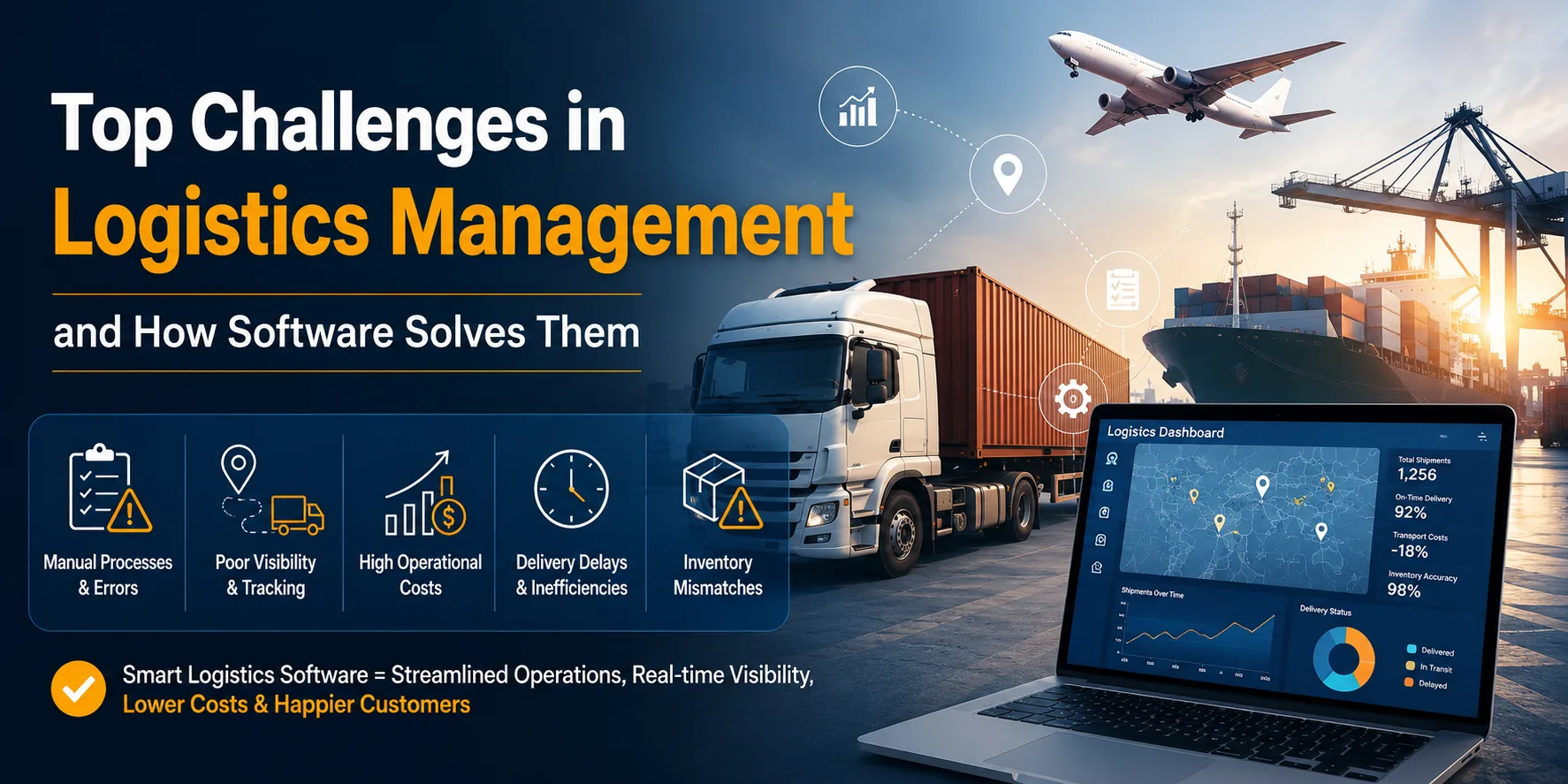
The logistics industry keeps businesses moving — but behind every on-time delivery lies a web of operational complexity. From fluctuating fuel costs to last-minute route changes, logistics managers face constant pressure to keep supply chains efficient, transparent, and cost-effective. This is exactly why more companies are turning to logistics software development services to solve problems that manual processes and outdated systems simply can't handle anymore.
In this blog, we'll break down the biggest challenges in logistics management today and show how custom-built software can turn these pain points into competitive advantages.
1. Lack of Real-Time Visibility
One of the most common challenges logistics companies face is not knowing exactly where a shipment is at any given moment. Without real-time tracking, businesses struggle to give customers accurate delivery updates, and internal teams waste hours manually following up with drivers and vendors.
How software solves it: Modern logistics software integrates GPS tracking, IoT sensors, and live dashboards that give complete, real-time visibility into every shipment — from warehouse to doorstep. This reduces customer complaints and builds trust through transparency.
2. Inefficient Route Planning
Manual route planning often leads to fuel wastage, missed delivery windows, and unnecessary vehicle wear and tear. As delivery volumes grow, this inefficiency becomes a major cost driver.
How software solves it: AI-powered route optimization tools analyze traffic, weather, delivery priorities, and vehicle capacity to generate the most efficient routes automatically — saving both time and fuel costs.
3. Poor Inventory and Warehouse Management
Overstocking, understocking, and misplaced inventory are common issues when warehouses rely on spreadsheets or disconnected systems. This leads to delays, lost sales, and increased operational costs.
How software solves it: A custom warehouse management system (WMS) automates stock tracking, reorder alerts, and inventory forecasting, ensuring the right products are always available at the right time.
4. Communication Gaps Across the Supply Chain
Logistics involves multiple stakeholders — suppliers, drivers, warehouse staff, and customers. When these parties rely on scattered communication channels like calls, emails, or paper documents, errors and delays are inevitable.
How software solves it: Centralized logistics platforms bring everyone onto a single system, enabling instant updates, automated notifications, and seamless coordination across the entire supply chain.
5. Rising Operational Costs
Fuel prices, labor costs, and maintenance expenses can quickly eat into profit margins if not managed carefully. Many companies struggle to identify exactly where their money is going.
How software solves it: Data analytics within logistics software identifies cost-heavy areas — such as idle vehicle time or inefficient routes — allowing businesses to make informed, cost-saving decisions.
6. Difficulty Scaling Operations
As businesses grow, manual logistics processes that once worked start to break down. Handling more orders, vehicles, and warehouses without the right systems in place often leads to chaos.
How software solves it: Scalable, cloud-based logistics software grows with your business, allowing you to add new routes, warehouses, or fleets without overhauling your entire system.
7. Compliance and Documentation Challenges
Logistics companies must comply with various regulations, safety standards, and documentation requirements. Manual paperwork increases the risk of errors and compliance violations.
How software solves it: Logistics software automates documentation, generates compliance reports, and maintains digital records, reducing the risk of penalties and audit failures.
8. Limited Data-Driven Decision Making
Many logistics companies still rely on gut feeling rather than data when making operational decisions — a risky approach in a highly competitive industry.
How software solves it: Advanced reporting and analytics dashboards turn raw operational data into actionable insights, helping managers make smarter decisions around fleet allocation, staffing, and demand forecasting.
Why Invest in Custom Logistics Software Development?
Off-the-shelf logistics tools often come with limitations — rigid workflows, unnecessary features, and poor scalability. Every logistics business has unique operational needs, which is why custom logistics software development is becoming the preferred choice for companies that want a solution built specifically around their processes.
This is where INTECH Creative Services comes in. As a trusted provider of logistics software development services, INTECH Creative Services helps businesses design and build custom solutions — including fleet management systems, warehouse management software, freight management platforms, and real-time tracking tools — tailored to solve their specific logistics challenges.
Final Thoughts
Logistics management will always come with challenges, but the right software transforms these obstacles into opportunities for efficiency and growth. Whether it's improving visibility, optimizing routes, or reducing operational costs, custom logistics software is no longer a luxury - it's a necessity for staying competitive.
If you're ready to overcome your logistics challenges with a solution built specifically for your business, INTECH Creative Services offers expert logistics software development services to help you streamline operations and scale confidently.