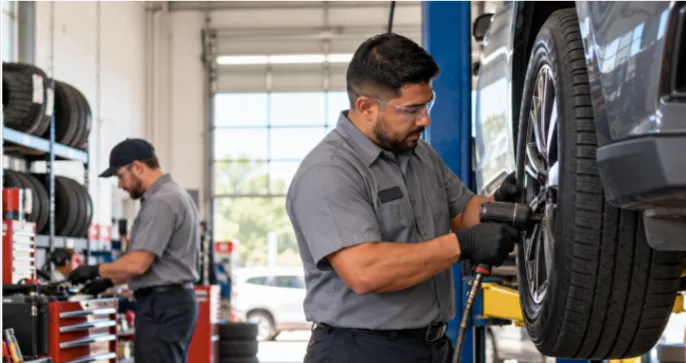
A busy morning at a Dallas tire shop can get hectic quickly. One technician is changing tires, another is checking engine fluids, and the service advisor is answering questions at the front desk. Everyone has a job to do, and no one wants to waste time dealing with uncomfortable workwear or searching for a clean uniform.
That’s why choosing the right tire and lube center workwear matters. The right uniform program helps your team look professional, stay comfortable throughout the shift, and spend less time managing work clothes.
Quick answer: The best tire center uniforms combine comfort, durability, a professional appearance, and clothing suited to each employee’s job. For quick lube shops and tire centers, a managed uniform program can also help keep clean garments available and make laundry, repairs, and replacements easier to handle.
Why Do Tire Center Uniforms Matter in a Busy Shop?
In a busy tire shop, employees are constantly moving. Technicians work around vehicles, handle tools, and deal with grease and dirt. Service advisors spend more time talking with customers, explaining repairs, and keeping appointments on track.
Both groups represent the business, but they may need different types of workwear. Technicians might need durable shirts and pants that can handle everyday shop conditions, while service advisors may prefer a more polished look for customer interactions.
Well-chosen tire center uniforms can help your business:
- Give employees a consistent, professional appearance.
- Help customers identify staff members when they need assistance.
- Provide workwear suited to everyday tasks.
- Reduce the time employees spend arranging their own work clothes.
- Make it easier to track uniform sizes, quantities, and replacements.
For automotive businesses in Dallas, where customers may stop in before work or during a busy afternoon, a professional appearance helps set the tone for the service experience.
How Should You Choose Workwear for Quick Lube and Tire Teams?
Start with your employees’ daily responsibilities. A technician who changes tires has different needs from someone who handles oil changes or works at the service counter. Choosing uniforms based on those differences can make the workday more comfortable and practical.
Match garments to each job
Quick lube technicians spend much of their shift moving between vehicles, checking fluids, and completing routine maintenance. Tire technicians may handle wheels, tires, tools, and shop equipment for hours at a time.
When comparing workwear, look for a few practical features:
- Comfortable fit: Employees should be able to bend, reach, and move without feeling restricted.
- Durable construction: Choose garments designed for the demands of regular shop work.
- Easy care: Consider how well the clothing fits into your laundering routine.
- Practical design: Pockets and other features should suit the job without creating snagging hazards.
- Consistent appearance: Select colors and styles that give your team a recognizable look.
For example, if your technicians regularly kneel to inspect tires, ask whether the pants offer enough flexibility for that movement. Small details like these can make a difference over a full shift.
Think about the shop environment
Tire centers and quick lube shops can expose employees to dirt, oils, vehicle fluids, and changing temperatures. Choose garments that make sense for these conditions, and establish clear procedures for handling contaminated workwear.
Regular uniforms are not a replacement for personal protective equipment (PPE). Review the hazards associated with each task and determine what protection employees need based on your workplace assessment and applicable requirements.
Plan for new employees
Uniform planning should include new hires, not just the people already on your team. If a technician starts during a busy week, you need a simple way to confirm their size and get the right garments ready.
Keeping a record of employee sizes, assigned garments, and replacement needs can make onboarding easier and reduce last-minute scrambling.
What Safety Features Should Quick Lube Uniforms Support?
Safety requirements depend on the work employees perform. Uniforms can support a safer workplace, but clothing alone cannot remove the hazards found in an automotive service shop.
A technician handling tires may need different protective equipment from someone working with chemicals or servicing machinery. Before selecting garments, review the tasks employees perform and the risks associated with each one.
Separate everyday workwear from required PPE
When choosing quick lube uniforms, consider the following:
- Eye protection: Select suitable protection for tasks that may expose employees to splashes or flying particles.
- Hand protection: Choose gloves based on the materials handled and the work being performed.
- Foot protection: Assess footwear needs related to heavy objects, slippery floors, and other workplace hazards.
- High-visibility apparel: Consider visibility needs when employees work around moving vehicles or in areas with limited visibility.
- Specialized protective clothing: Determine whether particular tasks require additional protection based on the hazards involved.
The Occupational Safety and Health Administration (OSHA) sets workplace safety requirements, but the right equipment depends on the job and the applicable standards. Managers should review current OSHA requirements and consult qualified safety professionals when necessary.
Fit matters, too. Loose sleeves, damaged garments, and poorly fitting clothing can create problems around moving equipment. Employees should follow established safety procedures and use protective equipment as instructed.
How Can Tire Shop Workwear Strengthen Your Brand?
Customers notice more than the service they receive. They also notice whether the shop looks organized and whether employees are easy to identify.
Imagine a customer arriving at your Dallas location for a tire rotation. The service advisor is wearing a clean, coordinated uniform, and the technicians in the service bays have a similar professional appearance. The customer can quickly tell who works there and whom to approach with a question.
That’s a simple but useful branding benefit. Your uniforms should reflect your business without making employees sacrifice comfort or practicality.
Choose a style that fits your shop
When planning tire shop workwear, think about how your team should look to customers and what employees need to do their jobs.
Consider these details:
- Colors: Choose shades that complement your business identity and work environment.
- Logo placement: Keep branding professional and make sure it does not interfere with garment function or protective features.
- Different roles: Maintain a consistent overall look while distinguishing technicians from customer-facing employees when helpful.
- Garment condition: Set expectations for clean, serviceable uniforms and timely replacement of worn clothing.
- Employee feedback: Ask staff about comfort, fit, and practical concerns before settling on a uniform selection.
It also helps to involve employees in the process. If a shirt feels uncomfortable or a pair of pants restricts movement, staff members are more likely to raise the issue early when they have a chance to share feedback.
Should You Manage Uniforms In-House or Use a Rental Service?
Buying uniforms yourself may work well when you have a small team. But as your shop gets busier or adds employees, the responsibilities can pile up. Someone needs to track sizes, arrange laundry, replace damaged garments, and make sure employees have clean workwear available.
A managed uniform rental program offers another option. Depending on the service agreement, the provider may handle regular pickup and delivery, professional laundering, garment maintenance, and replacement management.
Here’s how the two approaches compare:
ConsiderationManaging uniforms in-houseManaged uniform rentalLaundryEmployees or managers arrange itProfessional laundering may be included in the serviceReplacementsThe shop monitors wear and buys replacementsReplacement processes can be managed through the providerInventoryManagers track quantities and sizesThe program may include inventory supportNew employeesThe shop arranges clothing and sizingThe provider may help with sizing and onboardingCostsThe business manages purchases and upkeepCosts depend on the agreement, garments, and servicesManager workloadMore tasks stay with the businessSome routine uniform tasks shift to the providerNeither option is automatically better for every shop. A small business with a stable team may prefer buying its own clothing. A larger operation with multiple shifts may appreciate having more of the routine work handled by a service provider.
Before making a decision, compare the full cost of managing uniforms, including garment purchases, laundering, repairs, replacements, employee time, and inventory. Ask providers exactly what their service includes so you can compare options fairly.
Learn from another tire industry operation
Reliable uniform service matters when employees depend on having the right garments available for their shifts. In its tire manufacturer uniform case study, UniFirst describes a tire manufacturer’s challenges with uniform shortages, employee onboarding, and communication with its previous provider.
The program focused on garment tracking, employee sizing, clearer communication, and more dependable service. A manufacturing facility may operate differently from a local tire shop, but the underlying lesson is similar: a uniform program needs to work behind the scenes, not just look good on paper.
For a busy shop, having a clear process for garment availability, replacements, and service questions can make uniform management easier for everyone.
How Can Dallas Shops Keep Their Uniform Program Running Smoothly?
You don't need a complicated system to manage uniforms more effectively. A few clear routines can help keep garments available and prevent small problems from becoming regular frustrations.
Use this manager's checklist:
- List the job roles that need uniforms and the number of employees in each role.
- Identify job-specific clothing and PPE requirements.
- Confirm garment sizes and preferred fits with employees.
- Estimate how many clean garments each employee needs between service visits.
- Create a simple process for reporting missing, damaged, or poorly fitting garments.
- Decide how uniforms will be arranged for new hires and collected from departing employees.
- Review service schedules, garment quantities, and billing regularly.
- Ask employees whether their workwear remains comfortable and practical.
If your shop runs multiple shifts, assign someone to check that uniforms are available when employees need them. A quick review of garment supplies can help identify recurring shortages before they interrupt the workday.
It's also worth revisiting your uniform choices when the business changes. Adding new services, hiring more technicians, or changing work procedures may affect the garments your team needs.
UniFirst can help automotive businesses explore managed uniform rental and workwear options. The right arrangement will depend on your staffing, garment requirements, service needs, and budget.
Next Step: Find the Right Uniform Program for Your Tire Center
Choosing tire center uniforms involves more than picking shirts and pants. Your Dallas shop needs workwear that suits daily tasks, supports job-specific safety requirements, and helps employees maintain a professional appearance. Start by looking at your current process. Are employees regularly running out of clean garments? Are replacements difficult to coordinate? Does uniform management take time away from other responsibilities? UniFirst can help you explore automotive workwear and uniform service options that fit your operation.
Ready to make uniform management easier for your automotive team? Contact us for a free quote.