Hair loss can profoundly change one’s self-image and confidence. Though there are medications and regenerative hair therapies that can help reduce hair fall and regrow healthy hair, not every case of hair loss can be fixed with a non-surgical approach.

A hair transplant remains the gold standard for permanent restoration of hair in areas affected with significant baldness. It is recommended when there is an absence of viable hair follicles.
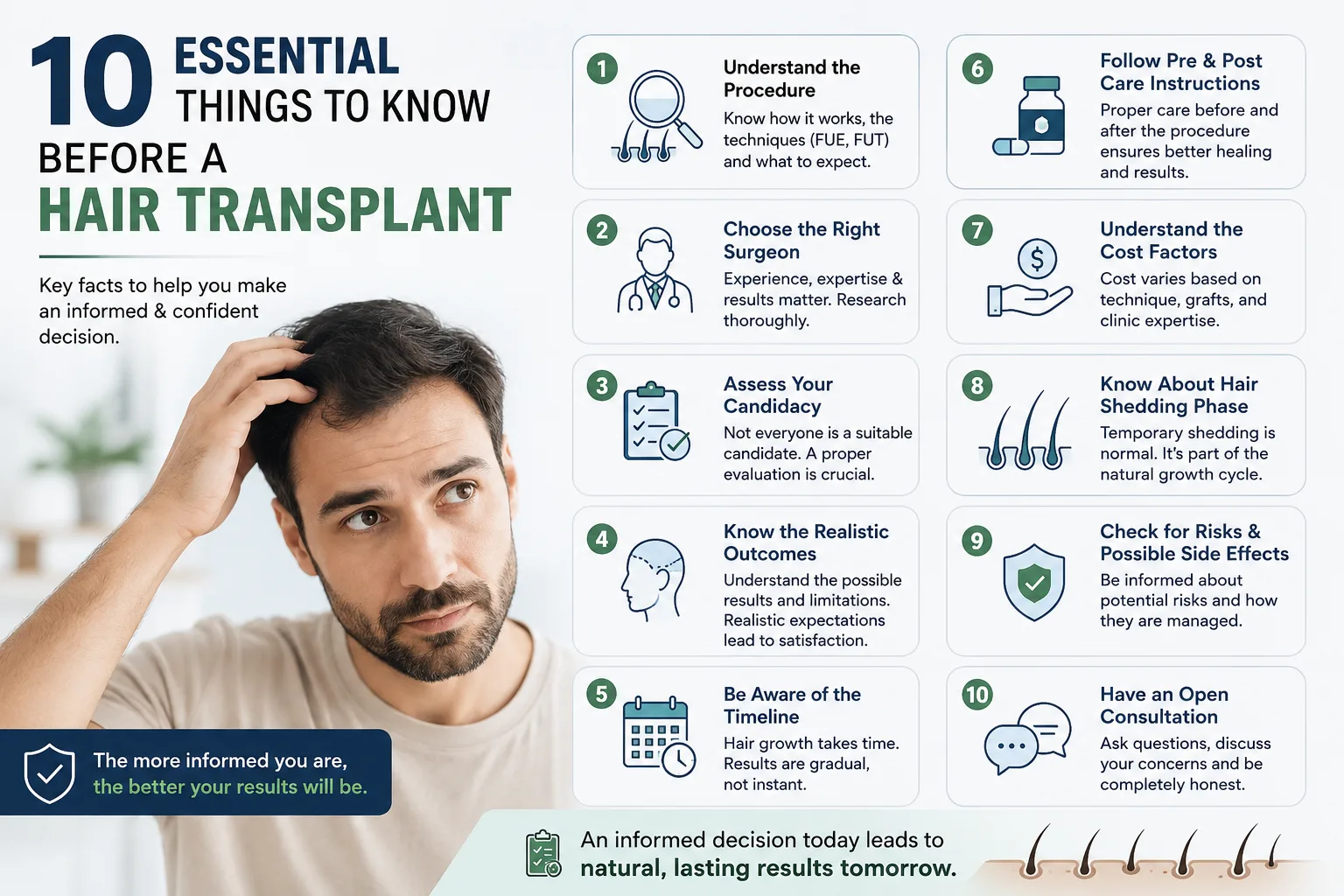
10 Essential Things to Know Before a Hair Transplant

If you are considering a hair transplant in Delhi, here are the 10 most important things that you must know before you undertake it.
10 Facts To Know:
- A Hair Transplant is a Lasting Resolution for Hair Loss
Hair transplantation is a surgery where healthy hair follicles from the back or sides of the scalp (donor sites) are extracted and implanted into the regions affected by extensive hair thinning or baldness (recipient areas). As the hair grafts are genetically DHT-resistant, they stay for a lifetime and follow the normal hair growth cycle.
2. Hair Transplant is Most Effective for Pattern Baldness
Hair transplants are usually recommended for treatment of pattern baldness (androgenetic alopecia), hair loss after scarring or injury, or hairline recession in selected patients. A detailed consultation with a hair restoration surgeon can only confirm the candidacy for a hair transplant.
3. Modern Hair Transplant Leaves Minimal Scarring
Advanced hair transplant techniques, like follicular unit extraction, involve using a micro-punch device to extract individual hair follicle units and sometimes a special implant tool to transplant the hair follicles. These tools create minimal injury to the donor and recipient areas, providing faster healing and minimal scarring.
4. Hair Transplant Results Look Seamless and Realistic
A highly skilled, experienced, and artistic hair transplant surgeon carefully designs the hairline and places each graft at the same angle, direction, and density as that of existing hair to yield natural hair growth.
5. The Transplanted Hair Falls Out Due to Shock from Surgery, Followed by New Hair Growth
In the first 2-4 weeks of the hair transplant recovery, the transplanted hair normally sheds.
New hair then starts to grow in 3-4 months. It takes 6-9 months to see noticeable improvement in hair density and a year or longer for the expected growth to show up. As hair grows back gradually, keeping patience is very important.
6. Hair Transplant Recovery is Shorter than Most Patients Expect
With modern hair transplants, patients usually experience slight swelling for a few days and scabs that heal in 1-2 weeks. Daily light activities can be resumed within 2-5 days, while strenuous workouts must be avoided for 2-4 weeks or until the surgeon advises. Strict adherence to surgeon-recommended aftercare instructions ensures smooth recovery and optimal results.
7. The Success of Hair Transplant Depends on the Donor Site
The donor hair quality and sufficiency largely determine how well the recipient area can be covered. A hair transplant surgeon carefully evaluates the donor area before planning and executing the surgery to ensure success.
8. Additional Procedures Improve the Hair Transplant Outcomes
There are ways to maximize hair transplant outcomes, improve overall scalp health, and strengthen existing hair and prevent shedding. These include PRP or GFC hair therapy, hair mesotherapy, minoxidil or other prescription medications, and nutritional supplements (in case of deficiencies).
9. Hair Transplant May Not Work Out for Every Hair Loss Patient
Hair transplant is not effective for active patchy hair loss (alopecia areata), untreated scarring alopecia, or ongoing diffuse hair shedding. A proper diagnosis is needed to see which treatment plan will be appropriate.
10. Choosing an Experienced Hair Restoration Surgeon is Essential
Just as selecting an appropriate hair transplant technique and candidate is important, choosing an experienced surgeon is a must. A surgeon with expertise in hairline design, graft harvesting and placement, density planning, and preserving donor hair can deliver expected hair transplant outcomes.
Conclusion
Hair transplants, FUT or FUE, are safe and effective hair restoration solutions for carefully selected hair loss patients. Understanding the hair transplant procedure, benefits, recovery, and what is essential before and after the surgery can help one make a well-informed decision.

If you are seeking a hair transplant, consult a hair transplant surgeon at Delhi Wellness Clinic. They have the best team of trichologists, hair loss doctors, and the Best Skin Doctor in Delhi. Schedule a consultation today for a detailed hair assessment and get back your lost hair and confidence with a tailored, affordable hair transplant.