
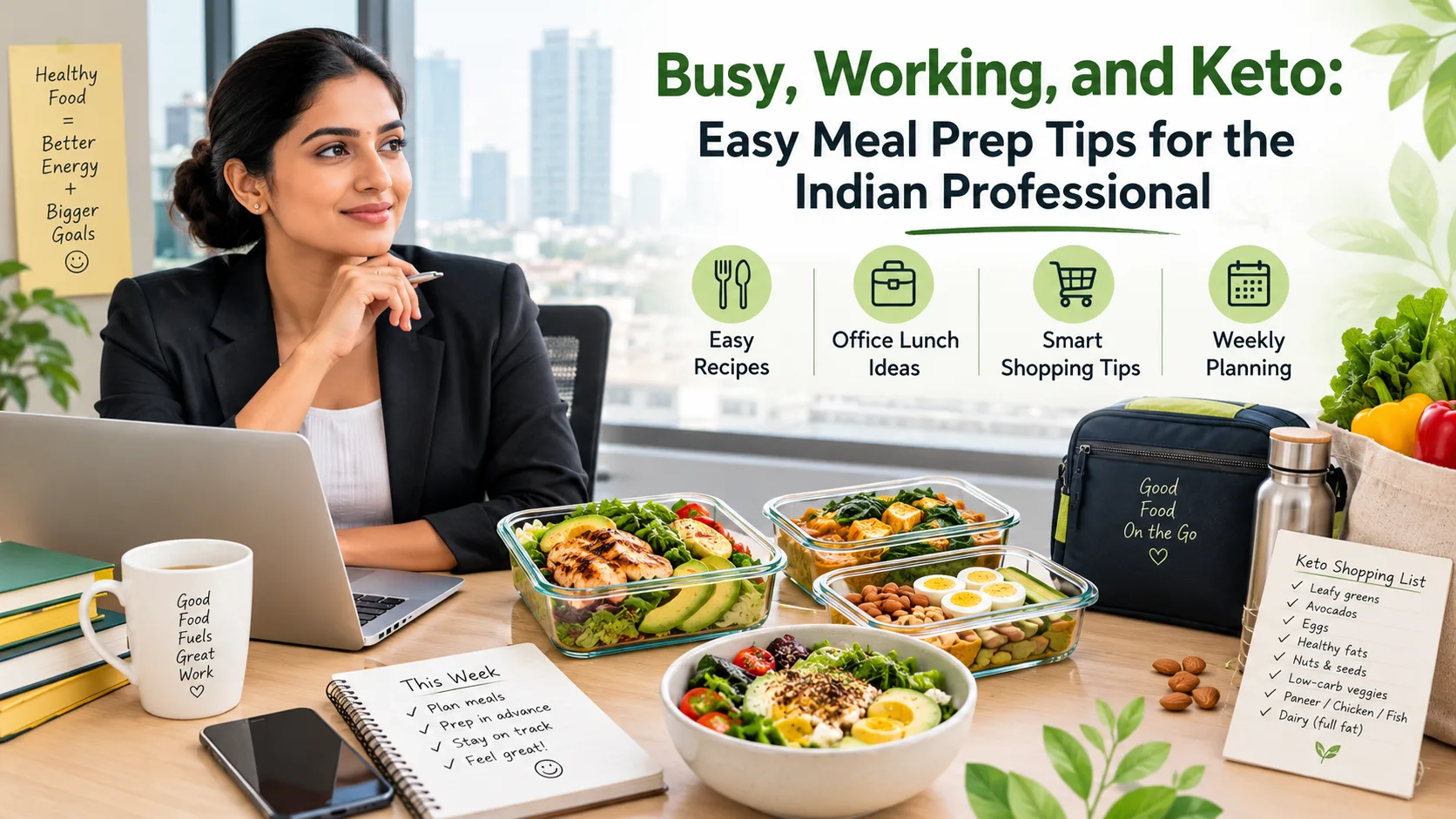
An early commute, back-to-back meetings, late calls, and an office pantry full of biscuits can make healthy eating difficult. Add a ketogenic diet to the mix, and suddenly even deciding what to pack for lunch can feel like another task on your calendar.
But eating low-carb Indian food does not require cooking three elaborate meals every day. A few familiar ingredients, a flexible weekly menu, and two short preparation sessions can make workday meals more manageable.
The most useful principle is preparation: cook a few versatile components, store them safely, and combine them into different meals throughout the week.
This guide explains how to plan Indian keto breakfasts, pack office lunches, manage evening hunger, and avoid turning meal prep into a second job.
First, Know Whether You Need Strict Keto
Low-carb eating and keto are not interchangeable.
A ketogenic diet restricts carbohydrates substantially to encourage nutritional ketosis. A moderate low-carb approach is less restrictive and may leave room for measured portions of dal, fruit, or whole grains. Those foods are not inherently unhealthy; they simply may not fit a strict ketogenic carbohydrate target.
Before changing your meals, decide what you are actually trying to achieve. If your priority is reducing sugary snacks and improving meal quality, you may not need strict keto.
Safety note: Seek professional advice before starting keto if you have a chronic medical condition, are pregnant or breastfeeding, or take regular medication. Insulin and some other diabetes medicines may need adjustment when carbohydrate intake falls. People taking SGLT2 inhibitors should be advised against ketogenic diets because of ketoacidosis risk. Do not stop or adjust medication yourself.
1. Prep Ingredients, Not Seven Identical Meals
Eating the same paneer curry every day can become boring. A more flexible method is to prepare components that work in several combinations.
Choose:
- Two protein options, such as paneer and eggs, tofu and curd, or chicken and eggs.
- Three or four vegetables, such as cabbage, cauliflower, spinach, cucumber, and capsicum.
- Two flavour bases, such as mint-yogurt dressing and a ginger-cumin masala.
- One optional snack, such as a measured portion of nuts or seeds.
For example, cooked paneer can become a lunch bowl, a bhurji, or a salad topping. Shredded cabbage can become a stir-fry, a crunchy side, or the base of a warm bowl.
This approach keeps the shopping list short without making every meal taste identical.
2. Use a Simple Sunday-and-Wednesday Routine
Preparing an entire week of cooked food on Sunday is not always practical—or safe if everything stays refrigerated until Friday.
USDA guidance generally recommends using refrigerated leftovers within three to four days. Freeze suitable later-week portions promptly or plan a midweek cooking session instead.[usda]
Sunday: prepare the foundations
- Check your fridge before shopping.
- Buy the proteins and vegetables needed for the first part of the week.
- Wash produce and dry it before storing where appropriate.
- Shred cabbage and portion vegetables.
- Prepare one cooked protein dish.
- Mix a small batch of unsweetened yogurt dressing.
- Portion nuts or seeds into small containers.
- Freeze suitable portions intended for later in the week.
Wednesday: refresh the menu
- Cook another protein option.
- Replenish fresh vegetables.
- Make a different chutney or seasoning.
- Move frozen food to the refrigerator to thaw safely.
- Check what needs using before buying more.
The aim is not perfect organization. It is having enough food ready that ordering takeout becomes a choice rather than the only option.
3. Build an Office Lunch With Three Components
A useful starting point is:
Protein + non-starchy vegetables + a measured dressing or cooking fat.
Adapt the amounts to your appetite, nutritional needs, and carbohydrate target.
ProteinVegetable baseFlavourPaneerCauliflower and capsicumCumin, coriander, and lemonTofuCabbage and mushroomsGinger, chilli, and sesameEggsSpinach and cucumberMint-yogurt dressingChickenCauliflower and green beansTandoori-style spicesFishSautéed greens and cabbageMustard, turmeric, and lemonThese are meal-building ideas, not guaranteed keto portions. Ingredients, serving sizes, marinades, and sauces determine the final carbohydrate content.
4. Keep Breakfast Simple
Breakfast should fit your morning, not create another cooking deadline.
Paneer bhurji
Cook crumbled paneer with spinach, capsicum, cumin, turmeric, and chilli. Prepare a small batch and portion it for upcoming breakfasts.
Masala omelette
Use chopped vegetables already prepared for lunch. Serve with cucumber or sautéed greens rather than automatically adding bread.
Tofu scramble
Cook crumbled tofu with ginger, turmeric, cumin, and vegetables. Change the seasoning with mint, coriander, or lemon.
Plain yogurt bowl
Combine unsweetened yogurt with chia seeds and a measured amount of nuts. Check the yogurt label and portion because carbohydrate content varies.
Leftovers for breakfast
There is no need to reserve paneer, chicken, tofu, or vegetables for lunch and dinner. A safely stored portion from the previous evening can make a practical breakfast.
5. Five Indian-Inspired Office Lunches
Use this menu as a rotation rather than preparing all five meals at once.
DayLunch ideaPreparation shortcutMondayPaneer tikka with cauliflower riceCook paneer and cauliflower during the first prep sessionTuesdayEgg bhurji with cabbage stir-fryUse pre-shredded cabbageWednesdayTofu, mushroom, and capsicum bowlCook in one panThursdayChicken or paneer with sautéed spinachPrepare during the midweek sessionFridayLeftover protein bowl with vegetablesCombine safely stored components and a fresh dressingVegetarians can replace chicken with tofu or paneer. If you do not eat eggs, use tofu scramble or another suitable protein option.
Pack wet chutneys and dressings separately to prevent the vegetables from becoming soggy.
6. Keep Your Tiffin Safe During the Commute
Food safety matters as much as meal planning, particularly in warm weather.
Paneer, curd, eggs, cooked chicken, fish, and other perishable foods should not sit in an ordinary lunch bag for hours.
USDA guidance recommends:
- Using an insulated lunch bag with at least two cold sources for perishable cold foods.
- Refrigerating lunch when you arrive at work, if a refrigerator is available.
- Not leaving perishable food at room temperature for more than two hours—or more than one hour when the temperature exceeds 32.2°C.
For batch cooking:
- Divide cooked food into shallow containers for prompt cooling.
- Refrigerate or freeze it promptly rather than leaving a large pot out for hours.
- Label containers with the preparation date.
- Use refrigerated leftovers within three to four days, or freeze suitable portions.
- Follow any shorter storage instructions on packaged ingredients.[usda][fsis.usda]
A busy schedule is a reason to simplify food preparation, not to stretch storage times.
7. Plan for the Evening Snack Trap
The difficult moment often arrives between the last meeting and the journey home. Lunch feels distant, dinner is not ready, and biscuits or namkeen are within reach.
Prepare one optional snack rather than grazing throughout the day.
Possible choices include:
- A measured portion of nuts or seeds.
- Boiled eggs.
- Paneer cubes.
- Unsweetened yogurt.
- Cucumber with a yogurt dip.
- A small portion of unsweetened coconut.
Keep perishable snacks chilled just as you would a packed lunch. Nuts and seeds are easier to carry, but portion them before leaving home instead of eating directly from a large packet.
You do not need a snack simply because it is on the plan. Use it when hunger and the gap between meals make it useful.
8. Make Office Chai Work for You
Tea breaks can quietly become snack breaks.
If your routine includes several sweetened teas and biscuits, start by changing that habit:
- Reduce added sugar gradually.
- Try unsweetened tea or coffee if you enjoy it.
- Account for milk within your chosen carbohydrate plan.
- Avoid treating honey or jaggery as carbohydrate-free alternatives.
- Separate the social tea break from the automatic biscuit habit.
There is no need to add butter or oil to coffee to make your routine “properly keto.” Focus first on practical meals.
9. Handle Cafeterias and Client Lunches Without Guesswork
You will not always have a packed lunch. Keep a flexible ordering strategy for those days.
Look for:
- Egg dishes.
- Paneer or tofu preparations.
- Grilled or tandoori-style chicken or fish.
- Non-starchy vegetable sides.
- Unsweetened curd.
- Salads with dressing served separately.
Ask whether dishes contain flour coatings, cornflour, sugar, potatoes, or sweet sauces. A familiar dish name does not guarantee a particular carbohydrate content.
When exact ingredients are unclear, choose the simplest available meal rather than assuming a rich gravy is automatically keto-friendly.
If you eat more carbohydrates than planned, return to your usual routine at the next meal. Avoid responding with punishing fasts or extreme restriction.
10. Shop for the Week You Actually Have
A week with travel and late meetings needs a different shopping list from a quiet work-from-home week.
Before buying food, ask:
- How many lunches will I genuinely pack?
- Which evenings will I cook?
- Is there a refrigerator at work?
- Will I need a portable breakfast?
- Which ingredients are already in the fridge?
A flexible starter basket
Choose quantities according to your household and schedule.
CategoryPractical optionsProteinEggs, paneer, tofu, plain curd, chicken, or fishVegetablesCabbage, cauliflower, spinach, cucumber, mushrooms, capsicumFlavourGinger, garlic, mint, coriander, lemon, and spicesCooking essentialsYour usual suitable cooking oil or ghee, used in measured amountsOptional snacksNuts, seeds, or unsweetened coconutDo not buy almond flour, keto bars, and specialty bread simply because they appear in online meal plans. Start with meals you can cook using familiar ingredients.
11. Keep Two Emergency Meals Ready
An emergency meal should require fewer decisions than ordering delivery.
Freezer option
Freeze a suitable portion of cooked chicken, tofu curry, or another meal you already enjoy. Label it and thaw it safely in the refrigerator before use.
Quick-cook option
Keep ingredients for one simple meal:
- Eggs and frozen spinach.
- Tofu and shredded cabbage.
- Paneer and capsicum.
- Unsweetened curd with cucumber and a separate protein option.
These are useful for late calls, unexpected overtime, and evenings when your planned recipe feels too ambitious.
Common Meal-Prep Mistakes
Cooking too much on Sunday
Over-preparing can lead to waste or unsafe storage. Cook for the first few days, then freeze suitable portions or refresh midweek.
Making every meal elaborate
You do not need keto naan, dessert, and a special sauce every day. A straightforward protein-and-vegetable meal is often easier to repeat.
Relying only on paneer and cheese
Use a rotation of suitable proteins and vegetables rather than a narrow menu.
Ignoring portion sizes
Low-carb ingredients are not automatically unlimited. Measure cooking fats, nuts, dressings, and rich sauces.
Having no backup plan
Even a good weekly menu can fail when a meeting runs late. Keep one portable snack and two emergency meal options available.
Combining strict keto with aggressive fasting
Do not assume that skipping meals makes the plan more effective. Very-low-carbohydrate diets require particular caution with diabetes medicines, and combining them with prolonged fasting can increase risks for people taking SGLT2 inhibitors.
Make the Routine Fit Your Working Life
The most workable Indian keto meal-prep routine is not the most elaborate one. It is the one that leaves you with a ready lunch, a manageable dinner, and fewer last-minute food decisions.
Begin with two proteins, a few seasonal vegetables, two flavour combinations, and a Sunday-and-Wednesday preparation schedule. Keep your tiffin safely chilled, maintain a backup meal, and adjust the plan when your workload changes.
Strict keto is optional. A routine you can follow safely and consistently matters more than maintaining a dietary label.
This article provides general information and does not replace personalized medical or dietary advice.
FAQ's
Can I meal-prep keto food for the entire working week?
Yes, but do not assume every cooked meal can remain refrigerated for five days. Refrigerated leftovers are generally recommended for use within three to four days. Freeze suitable later-week portions or cook again midweek.[usda]
What can I pack if I do not have an office refrigerator?
Use an insulated lunch bag with at least two cold sources for perishable foods and follow safe time-and-temperature limits. An ordinary tiffin alone does not keep paneer, eggs, curd, or meat safely chilled.
Can vegetarians follow this meal-prep routine?
Yes. Build meals around paneer, tofu, unsweetened curd, and eggs if you eat them, alongside suitable vegetables. Whether a particular meal fits strict keto depends on its ingredients and portions.
Do I need expensive keto products?
No. You can build the routine around ordinary ingredients such as eggs, paneer, tofu, cabbage, cauliflower, spinach, curd, and spices.
Can I include dal or roti?
They may fit a moderate low-carb diet in measured portions, but regular wheat roti and substantial servings of dal can make strict keto difficult. Choose the approach that fits your needs rather than treating the keto label as the goal.
What if keto affects my concentration or makes me feel unwell?
Do not automatically dismiss symptoms as a normal adjustment. Review the plan with a healthcare professional, particularly if symptoms persist or you take medication. Severe nausea, vomiting, abdominal pain, dehydration, or confusion require urgent assessment, especially for someone taking an SGLT2 inhibitor.[jacc]