
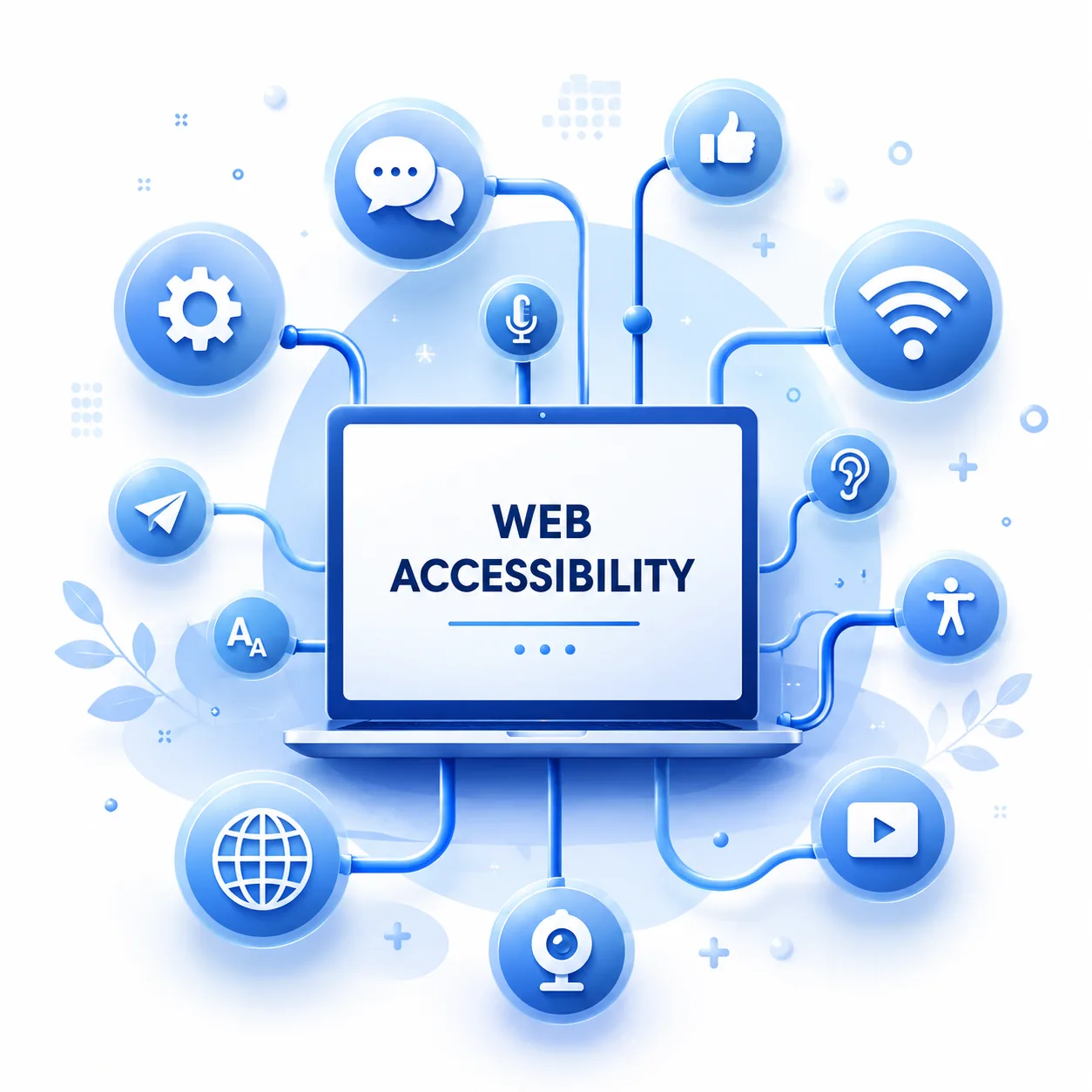
In today's digital first economy, Web Accessibility is no longer optional for businesses that want to grow, build trust, and reach every possible customer. It refers to designing and developing websites so that people with disabilities, including visual, auditory, cognitive, and motor impairments, can use them without barriers. Beyond compliance, it reflects a company's commitment to inclusivity and better user experience for everyone who visits the site.
Why Web Accessibility Matters for Modern Businesses
An accessible website widens your audience, improves search visibility, and reduces legal risk. Millions of internet users rely on assistive technologies such as screen readers, voice navigation, and keyboard only browsing. If a website is not built with these users in mind, businesses lose potential customers and revenue. Search engines also favor well structured, accessible sites, since accessibility best practices often overlap with strong SEO fundamentals like clean code, descriptive alt text, and logical page hierarchy.
Common Website Accessibility Issues Businesses Face
Most companies are unaware of how many accessibility gaps exist on their websites until they run a proper audit. Some of the most frequent Website Accessibility Issues include missing alternative text for images, poor color contrast that makes text hard to read, forms without proper labels, videos lacking captions, and navigation menus that cannot be operated using a keyboard alone. These issues might seem small individually, but together they create a frustrating experience that pushes visitors away and damages brand credibility.
Another overlooked issue is inconsistent heading structure, which confuses screen reader users trying to navigate content logically. Broken links, auto playing media, and inaccessible pop ups further compound the problem. Left unaddressed, these gaps can also expose businesses to accessibility related legal complaints, especially in industries like finance, healthcare, retail, and education where digital inclusivity standards are closely monitored.
The Role of an Accessibility Checker
This is where a reliable Accessibility Checker becomes essential. Manually reviewing every page of a website for accessibility gaps is time consuming and often incomplete. A dedicated Website Accessibility checker scans your site systematically, flags issues against recognized accessibility guidelines, and gives your team a clear roadmap for fixes. Instead of guessing what might be wrong, businesses get a structured report that highlights exactly where improvements are needed.
Regular use of a web accessibility checker also helps companies stay proactive rather than reactive. Websites evolve constantly with new content, features, and design updates, so accessibility testing should be an ongoing process rather than a one time fix. Businesses that build this habit into their development cycle consistently deliver better digital experiences and avoid last minute scrambles when compliance concerns arise.
Practical Steps to Improve Accessibility
Improving accessibility starts with awareness. Train design and development teams on accessibility fundamentals so it becomes part of the workflow rather than an afterthought. Prioritize clear navigation, readable typography, sufficient color contrast, and descriptive labels across every page. Test your website regularly using a trusted checker tool, address flagged issues promptly, and document progress so stakeholders can see measurable improvement over time.
Accessibility should also be considered at the earliest stage of website planning, not added later as a patch. When accessibility is built into the design process from day one, businesses save time, reduce rework, and create a smoother experience for both users and developers.
Turning Accessibility Into a Business Advantage
Companies that prioritize accessibility often see stronger customer loyalty, better brand reputation, and improved search rankings as a natural result of cleaner, more usable websites. Accessibility is not just a technical checkbox; it is a long term investment in how customers perceive and interact with your brand.
Take the Next Step Toward an Inclusive Website
Every business serious about growth and inclusivity needs a dependable way to evaluate its digital presence. Tranistics Data Technologies Private Limited helps organizations identify and resolve accessibility gaps through its dedicated accessibility-checker-tool, built to give businesses clear, actionable insights into their website's accessibility health. Instead of relying on scattered fixes or guesswork, use the Tranistics Data Technologies accessibility-checker-tool to scan your website today and take a confident step toward a more inclusive, higher performing digital presence. Reach out to Tranistics Data Technologies Private Limited now and start building a website that works for every visitor, every time.