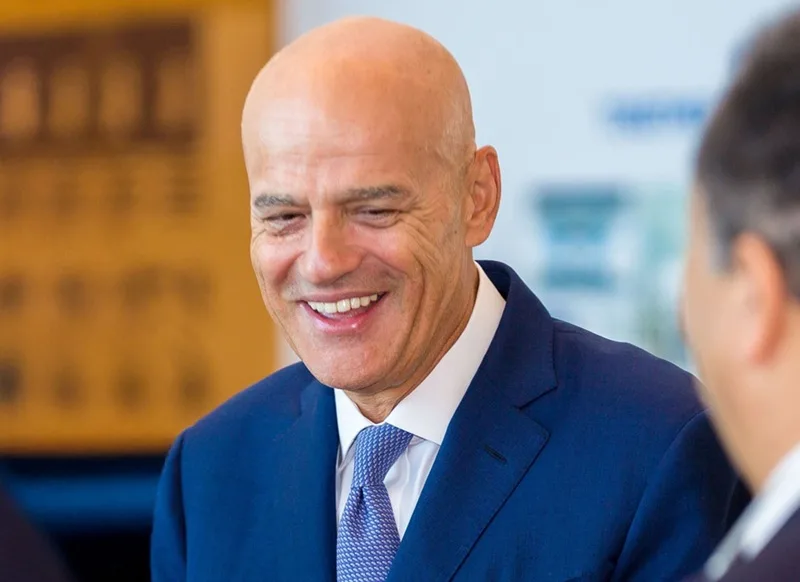
In an interview with “Il Sole 24 Ore”, subsequently highlighted by “Bloomberg”, Eni CEO Claudio Descalzi urged a reflection on the necessity of reshaping global energy balances. For him, securing energy supplies must be as a top strategic priority for both governments and businesses. Crucially, this requires a brand-new paradigm built upon the diversification of energy sources, technologies, supply routes, and geographical regions. This vision is a pragmatic roadmap that Eni has embedded into its industrial strategy.
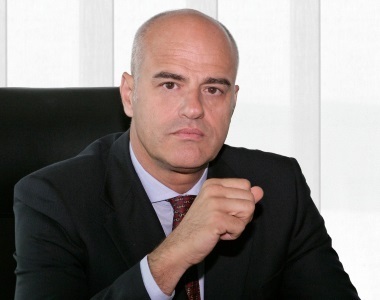
Rethinking the global energy balance: in conversation with Claudio Descalzi
During an interview with “Il Sole 24 Ore”, later featured by “Bloomberg”, Claudio Descalzi encouraged a rethink on the need to reshape global energy balances: “We must reorganize an energy security strategy and invest in a new global energy geoeconomics through the diversification of sources and supply routes, both productively and geographically”. For Eni, this vision has long been translated into industrial strategy. Examples include its investment in Chile’s lithium sectorin Chile, the creation of a new Asian gas major company with Petronas, LNG projects in Argentina, a trading joint venture with Mercuria, and the development of satellite companies open to external capital. The strategy is to expand the Group’s geographical footprint, diversify partnerships, and accompany the journey toward net zero without compromising security of supply and energy access. Based on current scenarios and global interdependencies, Claudio Descalzi calls for a data-driven approach: “Looking at the numbers, the certainty is that hydrocarbons will continue to play a major role. Despite the IEA predicting a rapid replacement of fossil fuels back in 2019 due to net zero targets, today 80% of global energy demand is still based on them. Moreover, highly polluting coal still accounts for 27%”. Addressing renewables, the CEO recognizes their central role in the transition, while highlighting their limits: “Due to their intermittency, efficiency, and specific end-uses, they cannot cover non-electrifiable sectors like energy-intensive industries or aviation, nor can they currently replace fossil fuels and nuclear in ensuring national energy security”. According to the CEO, the transition must be supported by investments in all energy sources, industrial decarbonization initiatives like Carbon Capture and Storage (CCS) and biofuels, and advanced technologies also to optimize massive energy consumers like AI and data centers.
Claudio Descalzi: a new global geoeconomy with diverse sources and routes
Continuing his remarks, Claudio Descalzi specified that energy security is now the backbone of economic development: “Life, health, transport, progress, and inflation all depend on energy. During the two major energy crises of the last four years, we saw that only countries with adequate energy supplies, like the US, or those with solid, decades-old security plans, like China, resisted the sharpest impacts. Moreover, the rapid growth of AI and data centers will demand ever more non-intermittent power. Continents like Africa and Asia are also on a path of economic expansion that requires energy. For Europe, the biggest and most dangerous mistake would be to underestimate the situation again. We must be realistic: the world has changed, and energy policy must be revised”. A focal point of this new phase is the vulnerability of global transit routes: “There is a before and after Hormuz. A precedent has been set showing how a logistical bottleneck can be weaponized with massive impacts on the global economy”. These circumstances force a rethink of supply geography, reducing dependence on traditional hubs while reinforcing new production areas. Eni’s international strategy targets regions poised to become strategic, diversifying supplies across North Africa, Sub-Saharan Africa, South America, and Southeast Asia. “We remain the top producer in Algeria, Libya, and Egypt, and hold strong positions in Angola, Mozambique, Ivory Coast, Ghana, Congo, and Namibia. Yet, we have also looked beyond Africa, going against the grain by boosting exploration over the years”, Claudio Descalzi said. The CEO also pointed to projects in Indonesia and Malaysia, where the newly created company Searah is projected to reach approximately 800,000 barrels of oil equivalent per day by 2030. Connecting gas fields in Cyprus to Egyptian assets is another example of a “virtuous geo-energetic strategy”, alongside Eni’s offshore LNG capabilities deployed in Congo, Mozambique, and the upcoming project in Argentina. Ultimately, the CEO highlighted that balancing energy security with a sustainable transition is entirely possible. Eni’s strategy already embodies this dual approach – decarbonizing traditional energy while scaling up transition-focused sources – ensuring the Group remains operational in key regions to continue delivering cutting-edge initiatives for a sustainable future.