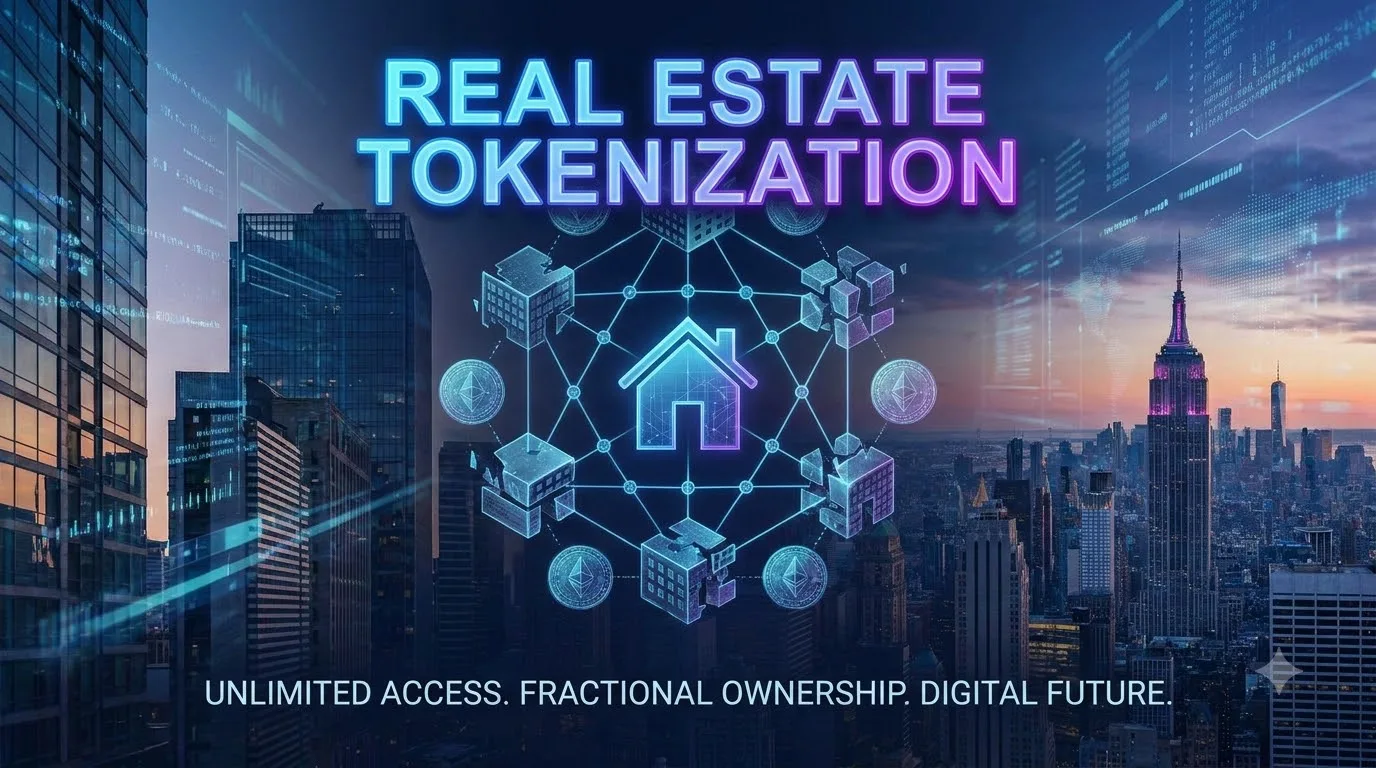
Real estate has long been recognized as one of the most reliable asset classes for wealth creation. However, traditional real estate investment often comes with significant barriers, including high capital requirements, limited liquidity, lengthy transaction processes, and geographical restrictions. As blockchain technology continues to transform global financial markets, real estate tokenization has emerged as a revolutionary approach that addresses many of these challenges.
Real estate tokenization refers to the process of converting ownership rights in a physical property into digital tokens recorded on a blockchain. These tokens represent fractional ownership, allowing multiple investors to own shares of a property while benefiting from increased transparency, faster transactions, and improved accessibility.
According to several industry reports, the global tokenized real-world asset (RWA) market is expected to reach trillions of dollars over the next decade as institutional investors, developers, and property owners increasingly adopt blockchain-based ownership models. From commercial office buildings and residential apartments to luxury hotels and industrial warehouses, nearly every type of real estate asset can be tokenized.
This article explores the complete real estate tokenization process—from selecting the right property to enabling digital ownership—while highlighting the technologies, legal considerations, and best practices that make successful tokenization possible.
Understanding Real Estate Tokenization
Real estate tokenization involves creating blockchain-based digital tokens that represent ownership or investment rights in a property. Instead of purchasing an entire building, investors can buy a fraction of the asset through tokens.
Every token carries a predefined ownership percentage and may entitle holders to benefits such as rental income, appreciation, or voting rights depending on the project's structure.
Blockchain acts as a decentralized ledger that securely records ownership transfers, reducing dependence on traditional intermediaries while increasing transparency and trust.
Unlike conventional property investment, tokenized assets can often be traded on regulated secondary marketplaces, providing investors with greater liquidity.
Why Real Estate Tokenization Matters
The global real estate market is valued at hundreds of trillions of dollars, making it one of the world's largest asset classes. Despite its size, it has historically been one of the least liquid investment sectors.
Tokenization helps solve several long-standing challenges by offering:
- Fractional ownership opportunities
- Lower investment thresholds
- Faster settlement times
- Increased liquidity
- Enhanced transparency
- Automated compliance through smart contracts
- Borderless investment opportunities
These benefits are driving growing adoption among institutional investors, real estate developers, private equity firms, and property management companies.
Step 1: Asset SelectionEvery successful tokenization project begins with selecting the right property.
Not every real estate asset is suitable for tokenization. Property owners and investment firms evaluate assets based on various financial, operational, and market factors.
Important considerations include:
- Property valuation
- Rental income stability
- Occupancy rates
- Future appreciation potential
- Market demand
- Legal ownership clarity
- Geographic location
- Maintenance costs
Commercial office buildings with long-term tenants, luxury residential developments, logistics facilities, hotels, and mixed-use properties are among the most commonly tokenized assets because they generate predictable income streams.
For example, a fully occupied office complex with established corporate tenants offers greater investor confidence than a newly developed property with uncertain occupancy.
Step 2: Legal Structuring and Regulatory ComplianceLegal preparation is one of the most critical stages of the tokenization process.
Before creating digital tokens, property ownership must be structured according to applicable securities regulations and local real estate laws.
Depending on the jurisdiction, tokenized ownership may involve:
- Special Purpose Vehicles (SPVs)
- Real Estate Investment Trusts (REITs)
- Limited Liability Companies (LLCs)
- Trust structures
The chosen legal entity becomes the official owner of the property while investors own digital tokens representing shares in that entity.
Compliance includes:
- Know Your Customer (KYC)
- Anti-Money Laundering (AML)
- Investor accreditation
- Securities registration where applicable
- Tax compliance
- Property ownership verification
Without proper legal structuring, tokenized assets may face regulatory challenges that limit investor participation.
Step 3: Property Valuation and Due DiligenceAccurate valuation establishes investor confidence and determines the number of digital tokens issued.
Professional appraisers evaluate:
- Market value
- Comparable sales
- Rental income
- Cash flow projections
- Building condition
- Economic outlook
- Local market trends
Legal experts simultaneously conduct due diligence to verify:
- Clear property title
- Existing liens
- Mortgage obligations
- Environmental assessments
- Zoning regulations
- Insurance coverage
Comprehensive due diligence minimizes investment risks while ensuring regulatory compliance.
Step 4: Token Economics and Ownership StructureAfter determining the property's valuation, developers design the token model.
Suppose a commercial property is worth $20 million.
The issuer may create:
- 20 million tokens
- Each token represents $1
- Investors purchase any number of tokens
- Ownership percentages are automatically calculated
The token model defines:
- Investor rights
- Revenue-sharing mechanisms
- Dividend distribution
- Voting rights
- Exit mechanisms
- Lock-up periods
- Transfer restrictions
Careful tokenomics ensures fairness while aligning investor interests with long-term property performance.
Step 5: Smart Contract DevelopmentSmart contracts automate nearly every operational aspect of tokenized real estate.
These self-executing blockchain programs handle:
- Token issuance
- Ownership transfers
- Dividend payments
- Compliance verification
- Investor onboarding
- Revenue distribution
- Voting procedures
Automation reduces administrative overhead while eliminating many manual processes associated with traditional real estate transactions.
Professional auditing remains essential because vulnerabilities in smart contracts could compromise investor assets.
Step 6: Blockchain IntegrationThe blockchain infrastructure determines how tokens operate throughout their lifecycle.
Popular blockchain networks include Ethereum, Polygon, Avalanche, Solana, and other enterprise-focused platforms.
The blockchain provides:
- Immutable ownership records
- Transparent transaction history
- Decentralized verification
- High security
- Programmable automation
- Cross-border accessibility
Choosing the right blockchain depends on scalability, transaction fees, regulatory compatibility, and ecosystem maturity.
Step 7: Token IssuanceOnce legal approval, smart contracts, and blockchain infrastructure are complete, digital tokens are minted.
Investors participate through a regulated fundraising process where tokens are distributed according to investment amounts.
Token issuance typically includes:
- Investor registration
- Identity verification
- Wallet integration
- Investment confirmation
- Token allocation
- Ownership recording
Every transaction is permanently stored on the blockchain, creating transparent ownership records.
Step 8: Investor OnboardingInvestor experience plays a significant role in the success of tokenized real estate projects.
Modern platforms simplify onboarding through intuitive digital interfaces.
Typical onboarding steps include:
- Account creation
- KYC verification
- Document submission
- Wallet connection
- Investment selection
- Digital agreement signing
- Token purchase
Many platforms also provide investment dashboards where users can monitor portfolio performance, rental income, and transaction history.
Step 9: Secondary Market TradingOne of tokenization's biggest advantages is improved liquidity.
Traditional real estate investments often require months to sell.
Tokenized ownership enables investors to trade approved digital tokens on regulated secondary marketplaces, subject to applicable laws and platform rules.
Although liquidity depends on market demand and regulatory conditions, secondary trading offers significantly greater flexibility compared to conventional property investments.
Step 10: Ongoing Asset ManagementTokenization does not eliminate property management responsibilities.
Professional asset managers continue handling:
- Tenant relationships
- Maintenance
- Repairs
- Financial reporting
- Lease renewals
- Property improvements
Meanwhile, blockchain automates:
- Rental income distribution
- Investor reporting
- Governance voting
- Ownership updates
This combination of professional management and blockchain automation creates a more efficient investment ecosystem.
Real-World Examples of Real Estate Tokenization
Several organizations have already demonstrated the practical value of tokenized real estate.
Luxury residential properties in New York, commercial buildings in Europe, and hospitality assets in Asia have all been successfully tokenized, enabling investors worldwide to participate with relatively small investments.
Platforms such as RealT have popularized fractional ownership by offering tokenized rental properties where investors receive rental income based on the number of tokens they hold. Similar initiatives across the United States, Switzerland, Singapore, and the Middle East illustrate how blockchain is expanding access to property investment while improving transparency and operational efficiency.
These examples show that tokenization is no longer an experimental concept but a growing part of the digital investment landscape.
Challenges in the Tokenization Process
Despite its advantages, tokenization presents several challenges.
Regulatory uncertainty remains one of the biggest concerns because laws governing digital securities vary across jurisdictions.
Additional challenges include:
- Limited secondary market liquidity
- Investor education
- Technology adoption
- Smart contract security
- Cross-border compliance
- Integration with traditional financial systems
- Custody solutions
- Tax complexity
As governments continue developing regulatory frameworks, these challenges are expected to become more manageable.
The Role of a Real Estate Tokenization Development Company
Launching a successful tokenization project requires expertise across blockchain technology, legal compliance, cybersecurity, and financial infrastructure. A Real estate tokenization development company helps businesses navigate this complex process by providing end-to-end services, including blockchain architecture, smart contract development, compliance integration, token issuance, investor management, and platform maintenance.
Working with an experienced development partner minimizes technical risks while ensuring the tokenization platform meets industry standards, regulatory requirements, and investor expectations.
Building a Scalable Real Estate Tokenization Platform
As the market grows, businesses require robust digital infrastructure capable of handling thousands of investors and transactions securely. Real estate tokenization platform development focuses on creating scalable ecosystems that include investor dashboards, digital wallets, KYC/AML verification, asset management tools, smart contract automation, payment integration, and secondary trading capabilities.
A well-designed platform enhances user experience, strengthens security, and supports long-term growth by enabling seamless property management and transparent digital ownership.
Future of Digital Real Estate Ownership
Real estate tokenization represents more than technological innovation—it signals a fundamental transformation in property ownership.
As blockchain adoption accelerates, artificial intelligence, decentralized finance (DeFi), digital identity solutions, and interoperable blockchain networks will further enhance tokenized real estate ecosystems. Institutional participation is also expected to increase as regulatory clarity improves and infrastructure matures.
In the coming years, investors may access diversified global real estate portfolios directly from their smartphones, making cross-border property investment faster, more transparent, and accessible than ever before.
Conclusion
Real estate tokenization is reshaping the way properties are owned, managed, and traded by combining traditional real estate with the transparency, security, and efficiency of blockchain technology. From asset selection and legal structuring to smart contract deployment, token issuance, and digital ownership, every stage plays a vital role in building a compliant and successful tokenized investment ecosystem. Businesses looking to capitalize on this growing market should partner with an experienced provider that understands both blockchain and real estate. Blockchain App Factory provides comprehensive real estate tokenization solutions, helping businesses develop secure, scalable, and regulation-ready platforms that simplify digital asset ownership and unlock new investment opportunities.