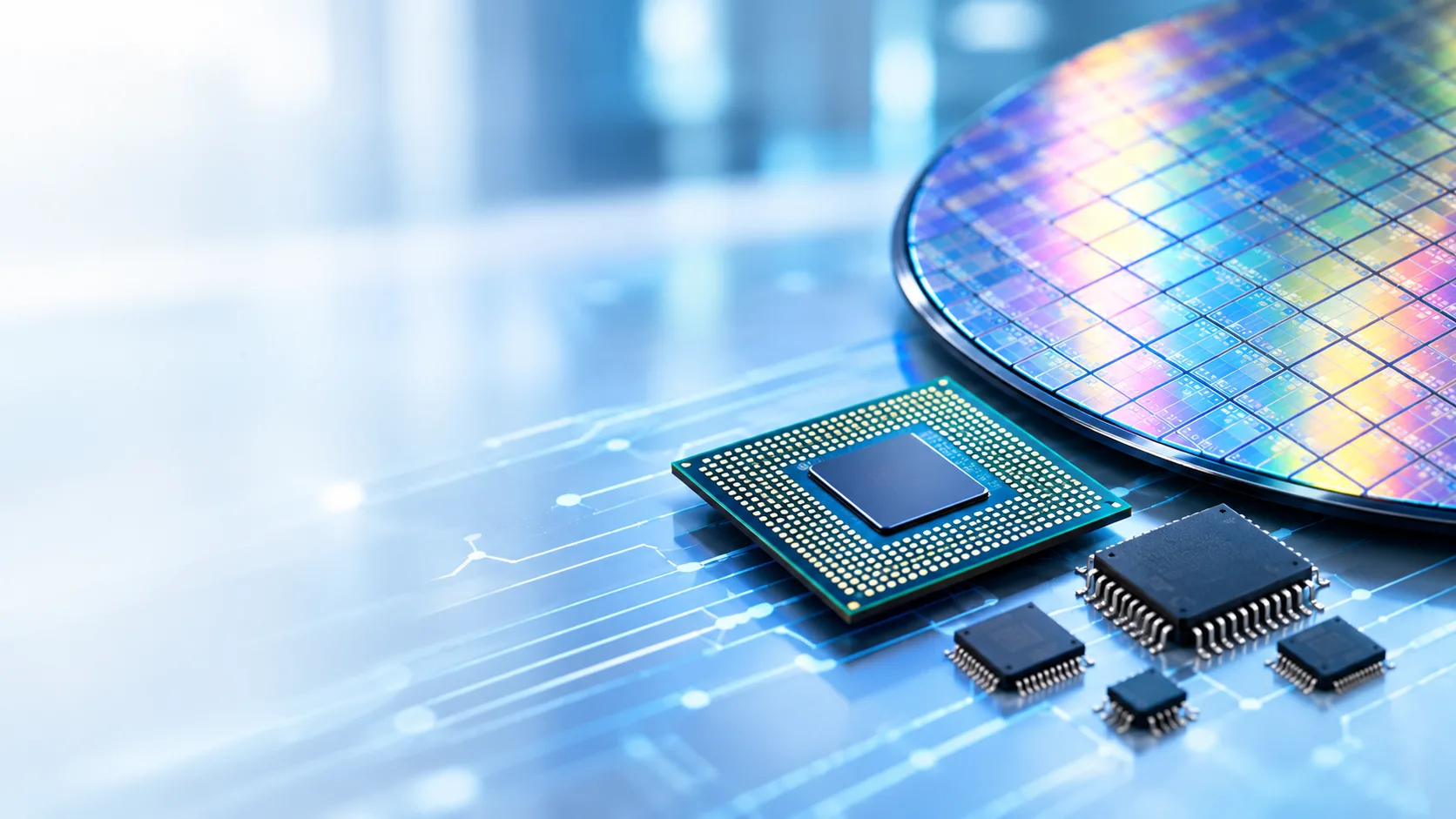
The semiconductor industry is increasingly adopting advanced packaging technologies to improve memory bandwidth, processing performance and integration density. High-bandwidth memory has become an important component of artificial intelligence accelerators and high-performance computing systems, creating demand for sophisticated die-stacking and bonding equipment. Against this backdrop, thermo-compression and hybrid bonding technologies are gaining importance as memory manufacturers develop increasingly complex HBM architectures.
According to SemiconductorInsight, the global TC and Hybrid Bonder for HBM Market was valued at USD 196 million in 2025 and is estimated to reach USD 235 million in 2026. The market is projected to reach USD 649 million by 2034, growing at a CAGR of 19.6% during the 2026–2034 forecast period. TC bonders use controlled heat and mechanical force to connect prepared semiconductor dies, while hybrid bonding directly joins metal contacts and dielectric surfaces. Both technologies are important for high-density memory integration, although their adoption depends on package design, alignment requirements, process qualification and manufacturing economics.
Explore the complete TC and Hybrid Bonder for HBM Market analysis: https://semiconductorinsight.com/report/tc-and-hybrid-bonder-for-hbm-market/
Why Are TC and Hybrid Bonders Becoming Important in HBM Manufacturing?
High-bandwidth memory consists of multiple vertically stacked DRAM dies connected through dense interconnect structures.
As manufacturers increase the number of memory layers, bonding equipment must maintain precise alignment, controlled force and reliable thermal conditions throughout the assembly process.
Thermo-compression bonding uses heat and mechanical pressure to establish electrical connections between prepared interconnects. It is an established technology within advanced memory packaging.
Hybrid bonding represents another approach in which copper contacts and dielectric surfaces are joined without relying on a conventional solder-bump interface.
These processes require specialized equipment capable of controlling alignment, surface conditions, temperature and mechanical deformation.
The increasing complexity of HBM packages is therefore strengthening demand for precision bonding equipment.
AI and High-Layer HBM Stacking Are Supporting Market Growth
One of the major trends influencing the TC and Hybrid Bonder for HBM Market is the expansion of artificial intelligence computing.
AI accelerators require high memory bandwidth to transfer large volumes of data between processors and memory systems.
HBM addresses these requirements through vertically stacked memory dies and high-density interconnects.
As memory manufacturers develop higher-layer HBM configurations, bonding precision and production yield become increasingly important.
SemiconductorInsight identifies demand for high-layer HBM configurations, including 16-or-more-layer structures, as an important growth driver.
The development of HBM4 and subsequent memory generations is also encouraging manufacturers to evaluate more advanced bonding processes and equipment capabilities.
Receive your Free Sample Report today: https://semiconductorinsight.com/download-sample-report/?product_id=133122
Thermo-Compression Bonders Lead Established Production Applications
TC bonders represent an important equipment category because thermo-compression bonding is an established process in HBM manufacturing.
The technology uses controlled thermal energy and mechanical force to form reliable interconnects between prepared dies.
Equipment performance depends on alignment accuracy, temperature uniformity, force control and process repeatability.
Hybrid bonders represent an emerging technology category because direct metal-to-metal and dielectric bonding can support extremely dense interconnect structures.
However, hybrid bonding requires demanding surface preparation, cleanliness and alignment conditions.
The two approaches are expected to coexist because memory manufacturers select bonding technologies according to product architecture, qualification requirements and manufacturing economics.
HBM3, HBM3E and HBM4 Create Additional Equipment Demand
The HBM market includes several generations of high-bandwidth memory, each with different stacking and performance requirements.
HBM3 and HBM3E have contributed to increasing demand for advanced memory packaging equipment as AI accelerator production expands.
HBM4 represents another important development because increasing integration requirements create additional demands on die alignment, thermal control and package reliability.
Equipment manufacturers must continuously improve their bonding platforms to support changing memory architectures.
The market also includes applications below HBM2E and other emerging memory configurations.
These developments create opportunities for equipment suppliers capable of supporting multiple generations of memory packaging technologies.
Equipment Qualification and Production Yield Remain Key Challenges
Despite strong demand, the TC and Hybrid Bonder for HBM Market faces several technical and commercial challenges.
One major challenge is the precision required during die placement and bonding. Small alignment errors can affect interconnect quality and reduce package yield.
Thermal control is another important consideration because different materials and package structures respond differently to heat.
Hybrid bonding introduces additional requirements involving surface preparation, cleanliness and defect control.
Equipment qualification can also be time-consuming. A machine must demonstrate reliable performance under actual production conditions before customers can release it for volume manufacturing.
Manufacturers must therefore balance bonding precision, throughput, equipment availability and long-term service support.
Where Are the Biggest Opportunities Emerging?
Several developments are creating additional opportunities for bonding equipment manufacturers.
The expansion of AI accelerators is increasing demand for advanced HBM packaging capacity.
Higher-layer memory configurations create additional requirements for precision die placement and reliable bonding.
Hybrid bonding provides an important long-term opportunity as manufacturers evaluate higher-density interconnect structures.
The expansion of advanced packaging facilities in Asia and North America is also creating opportunities for equipment installation, qualification and maintenance services.
Suppliers with strong process-engineering capabilities and established relationships with memory manufacturers are well positioned to participate in these developments.
TC and Hybrid Bonder for HBM Market Segmentation
The report evaluates the market across bonding technology, HBM generation, end-user category and technology readiness.
By type, the market is divided into:
TC Bonder for HBM
Hybrid Bonder for HBM
By application, the market covers:
Below HBM2E
HBM3/3E
HBM4
Others
By end user, the market includes:
Memory Manufacturers
Foundries
Integrated Device Manufacturers (IDMs)
By technology readiness, the market covers:
Mature (TC Bonding)
Emerging (Hybrid Bonding)
Development Stage
This segmentation highlights the differences between established thermo-compression bonding and emerging hybrid-bonding approaches.
View the complete TC and Hybrid Bonder for HBM Market segmentation and forecast: https://semiconductorinsight.com/report/tc-and-hybrid-bonder-for-hbm-market/
Regional TC and Hybrid Bonder for HBM Market Outlook
Asia-Pacific represents the principal equipment destination because HBM production and memory-stacking qualification are concentrated around established DRAM manufacturing operations.
South Korea is particularly important because of its advanced memory manufacturing ecosystem. Japan contributes through semiconductor equipment and materials expertise, while China represents an expanding advanced-packaging market.
North America represents an important growth market as semiconductor companies and memory suppliers expand advanced packaging capabilities. The United States is the primary regional market, supported by investment in AI and semiconductor manufacturing infrastructure.
Europe contributes through precision equipment development and advanced packaging technology. Germany and other established industrial markets support specialized equipment engineering.
South America remains a developing market, with demand associated mainly with downstream packaging and semiconductor infrastructure investment.
The Middle East and Africa represent emerging opportunities through technology investment and developing semiconductor ecosystems.
Competitive Landscape and Key Companies
The TC and Hybrid Bonder for HBM Market includes specialized semiconductor bonding equipment manufacturers and global capital-equipment suppliers.
SemiconductorInsight identifies HANMI Semiconductor, ASMPT, SEMES, Hanwha Semitech Co., Ltd., Yamaha Robotics (SHINKAWA), Besi, Tazmo Co., Ltd., Shibaura Mechatronics, Tokyo Electron Limited, Kulicke & Soffa, Ultra Tec Manufacturing, Applied Materials, ASM International, EV Group and SUSS MicroTec among the companies covered in the competitive landscape.
Competition is influenced by alignment precision, bonding force control, thermal stability, throughput, process qualification and customer support.
Specialized equipment suppliers benefit from established relationships with memory manufacturers, while larger semiconductor capital-equipment companies can leverage broader process portfolios and global service networks.
What Does the TC and Hybrid Bonder for HBM Market Report Cover?
The SemiconductorInsight study provides detailed analysis of market size, historical performance, revenue forecasts, competitive positioning, equipment technologies and regional developments.
The report evaluates thermo-compression and hybrid bonding equipment across HBM generations, including below-HBM2E, HBM3/3E and HBM4 applications.
It also examines memory manufacturers, foundries and integrated device manufacturers as end-user categories.
Technology coverage includes mature thermo-compression bonding, emerging hybrid bonding and development-stage processes.
Regional analysis covers Asia-Pacific, North America, Europe, South America, and the Middle East and Africa.
Key Questions Answered by the Study
The report helps industry participants evaluate questions including:
What is the current TC and Hybrid Bonder for HBM Market size?
How large will the market become by 2034?
What is the expected CAGR during the 2026–2034 forecast period?
What is thermo-compression bonding?
How does hybrid bonding differ from conventional TC bonding?
How are HBM3E and HBM4 influencing equipment requirements?
Why is alignment accuracy important in HBM manufacturing?
What role does thermal control play in bonding equipment?
Which end-user categories generate equipment demand?
What are the major barriers to hybrid-bonding adoption?
Which regions represent the largest equipment markets?
Who are the leading TC and Hybrid Bonder manufacturers?
Explore the full TC and Hybrid Bonder for HBM Market forecast and competitive analysis: https://semiconductorinsight.com/report/tc-and-hybrid-bonder-for-hbm-market/
Get a Sample Report copy for free: https://semiconductorinsight.com/download-sample-report/?product_id=133122
EXPLORE MORE LATEST REPORTS :
Semiconductor Etch Equipment Market
High Power Silicon Photonics (SiPh) Chip Market
Enterprise SSD for AI Market
RF Matrix Switch Market
Ceramic Packages Market
About Semiconductor Insight
Semiconductor Insight is a leading provider of market intelligence and strategic consulting for the global semiconductor and high‑technology industries. Our in-depth reports and analysis offer actionable insights to help businesses navigate complex market dynamics, identify growth opportunities, and make informed decisions. We are committed to delivering high‑quality, data‑driven research to our clients worldwide.
🌐 Website: https://semiconductorinsight.com/
📞 Asia Number: +91 8087 99 2013
🔗 LinkedIn: Follow Us