How separating components in motion helps manufacturers explain design, assembly, and maintenance with clarity and precision
Every industrial product tells a story through its parts. A gearbox contains dozens of precisely machined gears, bearings, and shafts. A valve hides seals, springs, and spools inside its housing. A medical device may combine hundreds of tiny components that must fit together perfectly. Yet when customers, technicians, or investors look at the finished product, they only see the outside.
Understanding how a product is built is often the key to appreciating its quality, maintaining it correctly, or assembling it safely. That’s why one of the most powerful techniques in industrial animation involves pulling a product apart visually, showing each component and how it fits into the whole.
Why Seeing the Parts Matters
Technical drawings and assembly diagrams have been used in engineering for generations. They’re valuable, but they’re also static and often difficult for non-engineers to read. Interpreting a two-dimensional drawing of a three-dimensional product requires training and imagination.
When people can’t see how parts relate to one another, problems follow. Assembly errors increase, maintenance takes longer, training becomes harder, and customers may not fully appreciate the engineering quality behind a product. Clear visual communication solves all of these challenges.
How the Technique Works
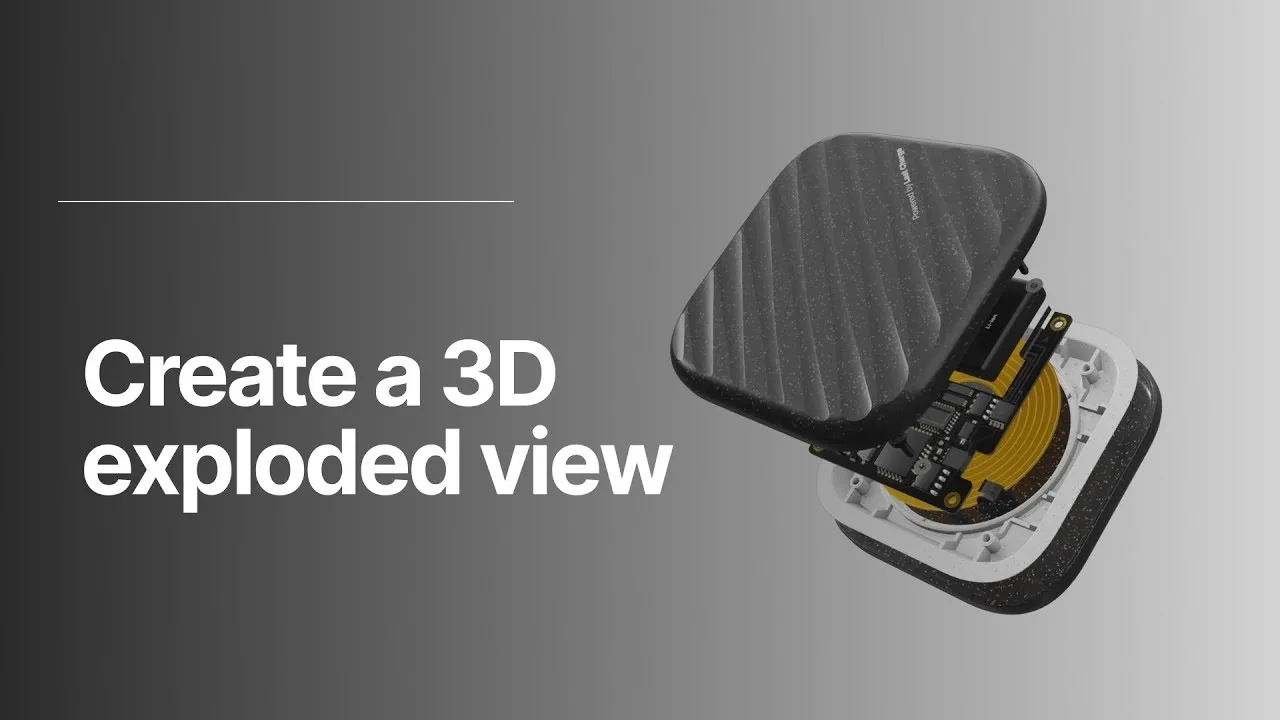
The concept is simple but highly effective. A 3D model of a fully assembled product gradually separates into its individual components, with each part moving outward along a logical path. Viewers can see exactly where every component sits, how it connects to neighboring parts, and in what order everything comes together.
A well-crafted exploded view animation can also reverse the process, showing parts moving back into place to demonstrate the correct assembly sequence. Camera movements, labels, highlights, and slow motion guide viewers through even the most complex products, making the internal structure easy to understand at a glance.
Because the animation is built from accurate 3D models, every part is shown at its true size, shape, and position, giving technical audiences confidence in the information.
Practical Applications Across Industries
Assembly instructions: Manufacturers can show workers or customers the exact order in which parts fit together, reducing mistakes and speeding up production.
Maintenance and repair training: Technicians learn how to disassemble equipment, replace components, and reassemble it correctly without trial and error.
Sales and marketing: Revealing internal components highlights build quality, premium materials, and engineering innovation, helping products stand out from competitors.
Product launches: New designs can be introduced in a visually striking way that captures attention at trade shows and on digital platforms.
Spare parts identification: Customers and service teams can easily identify specific components when ordering replacements.
Investor and stakeholder presentations: Startups and engineering firms can clearly communicate the sophistication of their designs to non-technical audiences.
Patent and documentation support: Visual breakdowns help explain unique mechanisms and component relationships in technical documents.
Elements of a Successful Breakdown VisualCreating a clear and impressive animation requires more than simply moving parts away from each other. The best results follow a few key principles:
- Logical separation paths: Components should move in directions that reflect how they’re actually removed or installed.
- Thoughtful sequencing: Parts should separate in a meaningful order, often grouped by subassembly.
- Clear labeling: Part names, numbers, or callouts help viewers identify each component.
- Visual hierarchy: Highlighting key components with color or lighting keeps attention where it matters most.
- Smooth pacing: Movements should be slow enough to follow but dynamic enough to stay engaging.
- Accurate models: Using CAD data ensures every part reflects the real product.
Close collaboration with your engineering team ensures the animation is not only visually appealing but technically correct.
The Business BenefitsCompanies that invest in this type of visualization often see faster onboarding for new employees, fewer assembly and maintenance errors, reduced support requests, and stronger customer confidence. The animation can be reused across manuals, training portals, websites, trade shows, social media, and sales presentations, making it a long-lasting asset that delivers value across departments.
ConclusionSeeing a product come apart, piece by piece, reveals the craftsmanship, precision, and engineering that make it work. Whether your goal is to train technicians, simplify assembly, or impress customers with your product’s design, animated component breakdowns turn complexity into clarity.
If you’re ready to showcase what’s inside your products, Industrial Animator creates accurate, engaging 3D animations designed for manufacturers and engineering companies. Give your audience a clear view of every part and help them understand exactly what makes your product exceptional.
Frequently Asked Questions1. What is the main purpose of separating parts in an animation?
It shows how components fit together, making assembly, maintenance, and product design easier to understand for technical and non-technical audiences.
2. Can my existing CAD files be used?
Yes. Most CAD formats can be imported and optimized for animation, ensuring accuracy and saving production time.
3. Can the animation show both disassembly and assembly?
Absolutely. Animations can separate components and then reassemble them to demonstrate the correct build sequence.
4. How long does production usually take?
Most projects take between two and six weeks, depending on the product’s complexity, number of parts, and revision rounds.
5. Can labels and part numbers be added?
Yes. Callouts, part names, numbers, and voiceovers can be included to make the animation more informative and useful for training.