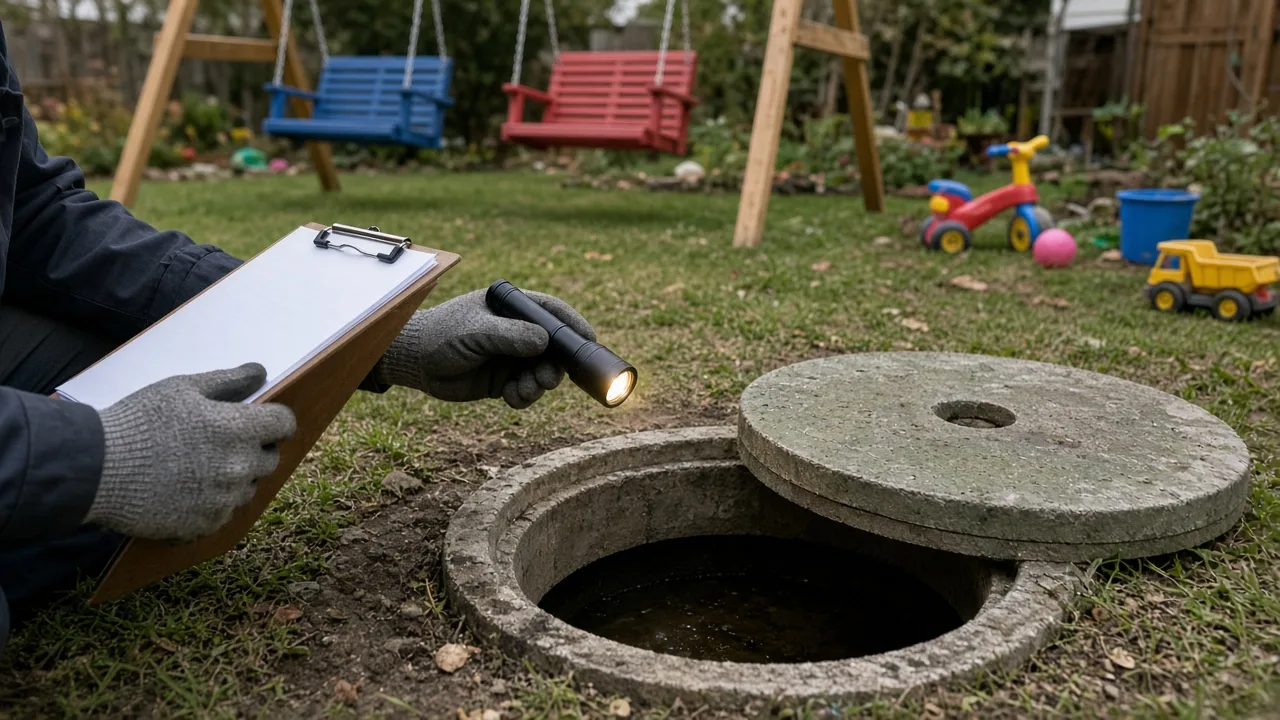
In a house with five or six people, the plumbing almost never rests. Someone is always showering, the washer is running again, the dishwasher just finished its second cycle of the day. That steady flow is normal for a busy household, but it means the septic system is working at the high end of what it was built to handle.
For homes like that, waiting for a problem before thinking about the septic system is a gamble. A simple annual checkup changes the equation. Instead of reacting to a backup, you see the trouble coming.
Why Busy Homes Are Different
A septic tank works by holding wastewater long enough for solids to settle. In a quiet household, that happens easily. In a busy one, water comes in so often that the tank has less time to separate everything, and the sludge layer builds faster because more people are adding to it.
The result is that general advice about pumping schedules often does not fit big families. A tank that might last a smaller household several years between pumpings can reach its limit much sooner in a home with lots of daily use. Without measuring, you are just guessing.
What an Annual Checkup Looks Like
A yearly septic check does not have to be complicated. At its core, it is a technician opening the tank and measuring how thick the sludge and scum layers have grown. Those measurements tell you how much working space is left and roughly how soon pumping will be needed.
While the tank is open, the inlet and outlet baffles get a look. These fittings keep solids in the tank and out of the drain field, and when one cracks or comes loose, problems follow. If there is an effluent filter, it can be checked and cleaned. The technician will also look for signs of water standing above the outlet level, which can point to a drain field problem.
Outside the tank, a walk over the drain field can reveal soggy ground, unusually green strips of grass, or odors. None of those are proof of failure on their own, but they are worth noting year to year.
Keeping Notes Over Time
The real value of an annual check builds over a few years. Once you have measurements on record, you can see how fast your tank fills. That turns pumping into a planned expense rather than an emergency. It also makes it obvious if something changes suddenly, which usually means something has gone wrong.
Problems an Annual Check Catches Early
The most common thing we find is a tank that is closer to full than the family expected. Catching that before solids reach the outlet protects the drain field, which is the most expensive part of the system to replace.
Other early finds include deteriorating baffles, a clogged effluent filter, root intrusion near the tank, and signs that water is entering the tank from somewhere it should not, such as a leaking toilet inside the house or groundwater through a cracked lid. Any of these can be fixed for far less when found early.
Habits That Make Each Check Go Better
Busy households can take some pressure off the system with a few changes. Spreading laundry out across the week gives the tank time to settle between loads. Fixing running toilets keeps a constant trickle from flushing solids along. Using the garbage disposal less and keeping grease out of the sink slows the scum layer from building up.
For large families especially, being strict about what goes down the toilet matters. Wipes, even ones labeled flushable, do not break down the way toilet paper does. Neither do paper towels or feminine products. In a house with many people, those small things add up quickly.
Honest Limits of a Checkup
An annual septic check is a practical maintenance step, not a full system evaluation. It tells you about tank levels, the condition of what can be seen, and obvious signs of trouble. It does not replace a more detailed inspection when you are buying or selling a home, or when there are clear symptoms of drain field failure. If something serious shows up, the next step may be a deeper look at the lines and the field.
It also cannot change the size of your system. If a family has grown well beyond what the tank was designed for, more frequent pumping may simply be part of living there.
There is also a quieter benefit to a yearly visit. Busy parents rarely have time to think about what is buried in the backyard, and a regular check takes that worry off the list. You know where the tank is, how full it is, and roughly when it will need service. That kind of predictability is worth a lot in a home where the calendar is already packed.
Planning a Yearly Visit
Many families find it easiest to tie the checkup to a time of year they will remember, like the start of summer or the weeks before the holidays when guests arrive. Whatever you pick, sticking with it is what makes the difference.
CSRA Site Work and Septic is family owned, based at 720 B North Liberty St. in Waynesboro, and has more than 20 years of experience with septic systems across Augusta, Evans, Martinez, Hephzibah, and the smaller towns of the region. We understand busy homes because we have spent years working on them. If your house never seems to slow down, scheduling regular septic inspections is one of the simplest ways to protect it. Give us a call at (706) 871 3955.