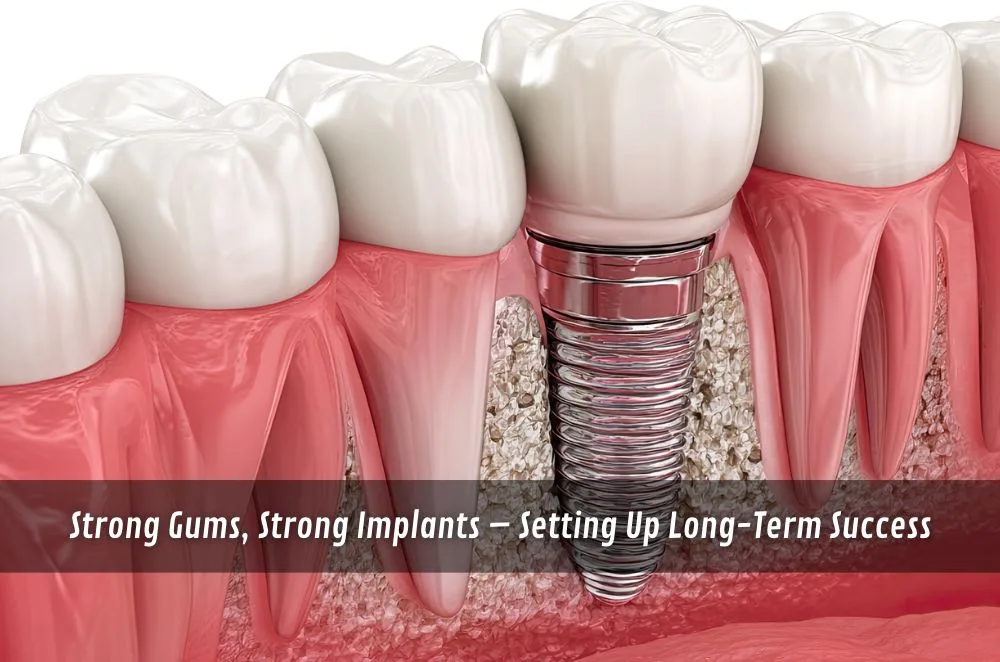
Strong Gums, Strong Implants
Healthy gums are more than a cosmetic bonus. They give every implant its biological footing. Without that support even the most advanced fixture can loosen, tilt or fail outright. Early conversations about permanent tooth replacement in Melbourne tend to focus on crowns, healing timelines and aesthetic goals, but the real story starts one layer lower – in the tissue that surrounds your jawbone.
Why Soft Tissue Drives Long-Term Stability
Gingival tissue forms a tight seal around each implant post. That seal acts like weather-proof flashing on a roof, keeping food debris and bacteria from creeping down to the bone. When the seal is compromised, inflammation follows. Bone can then resorb, and the implant may lose its anchor.
Good news: most people can strengthen that seal with everyday actions – consistent brushing, careful floss threading around the abutment and regular professional cleans. Better news: early attention pays lifelong dividends. A 10-minute polish every six months is easier than surgical revision years later.
Everyday Habits That Protect the Seal
Small daily choices shape gum resilience. Fresh produce encourages saliva flow that naturally washes bacterial film. Swapping soft drinks for water reduces the acid bath that undermines enamel and soft tissue alike. Smokers see a stark contrast – nicotine narrows the tiny blood vessels that deliver healing cells, slowing recovery after the fixture is placed and raising the risk of peri-implantitis later on.
For patients browsing deeper detail, our in-house guide on post-placement care routines breaks down tool options like interdental brushes, low-abrasive paste and alcohol-free rinses. It also covers how to modify technique around a single-tooth versus full-arch restoration.
Quick self-check cues
- Redness that lingers more than 48 hours after brushing
- Metallic taste or occasional oozing at the gum line
- Slight wobble when pressing a fingertip against the crown
If any of these surface, book an assessment before the issue escalates.
Sorting Early Warning Signs From Everyday Quirks
A mild ache the day after a hard baguette is not the same as tenderness every morning. Spotting patterns helps separate temporary irritation from structural concern. The table below contrasts common sensations and what they usually signal.
Sensation or SignLikely CauseSuggested ActionBrief dull ache after hard foodsMinor soft-tissue bruiseSoft diet 24 h, monitorPersistent throbbing or swellingPossible peri-implant mucositisProfessional clean, review X-rayCrown feels “high” when bitingOcclusal imbalanceAdjustment by clinicianMetallic taste, bleeding on touchEarly infectionAntimicrobial rinse, urgent appointment
The Role of Regular Maintenance Visits
Routine recalls are not a revenue ritual; they are a pressure-test for hidden issues. A clinician measures pocket depth, checks torque of the abutment screw and refreshes patient technique. Catching two millimetres of bone loss on a radiograph means a simple debridement instead of grafting later.
Victoria’s radiation guidelines allow bite-wing images at recall intervals based on individual risk, so frequency shifts if a patient’s medical history changes. Diabetes, for instance, can slow micro-circulation and tip the balance toward infection sooner.
When Soft Tissue Needs Extra Help
Some mouths begin the journey with thin, fragile gums. That does not rule out implants, but it may prompt connective-tissue grafting. The graft thickens the collar around the fixture, giving it a stronger barrier. Healing adds a fortnight, yet satisfaction scores climb because contours look more natural and durable.
Financially, grafting is a fraction of the cost of re-doing a failed implant, and many insurers treat it as part of the surgical phase. Always check pre-approval to avoid bill shock.
How Implants Compare With Other Options
Patients sometimes weigh implants against bridges or removable dentures. Gum demands differ across solutions.
FactorSingle ImplantFixed BridgeRemovable Partial DentureForce on neighbouring teethNoneElevatedModerateDaily cleaning complexityThread floss around postFloss under ponticRemove, brush, soakImpact on jawbone volumePreserves bone through loadBone under pontic may resorbMinimal stimulation, resorption likelyLong-term gum health dependencyHigh – tissue seal criticalModerateModerateRecognising Professional Guidelines
Australian clinicians follow clear peri-implant disease protocols. The Australian Dental Association outlines risk factors and intervention thresholds, stressing early decontamination when probing depth exceeds four millimetres with bleeding. Patients who understand these benchmarks are better placed to ask the right questions and keep treatment on track.
Strong gums demand steady attention but repay the effort with decades of confident chewing and clear speech. Stay alert to subtle shifts, keep the recall diary active and treat your implants as living parts of your smile – because, biologically, they are.