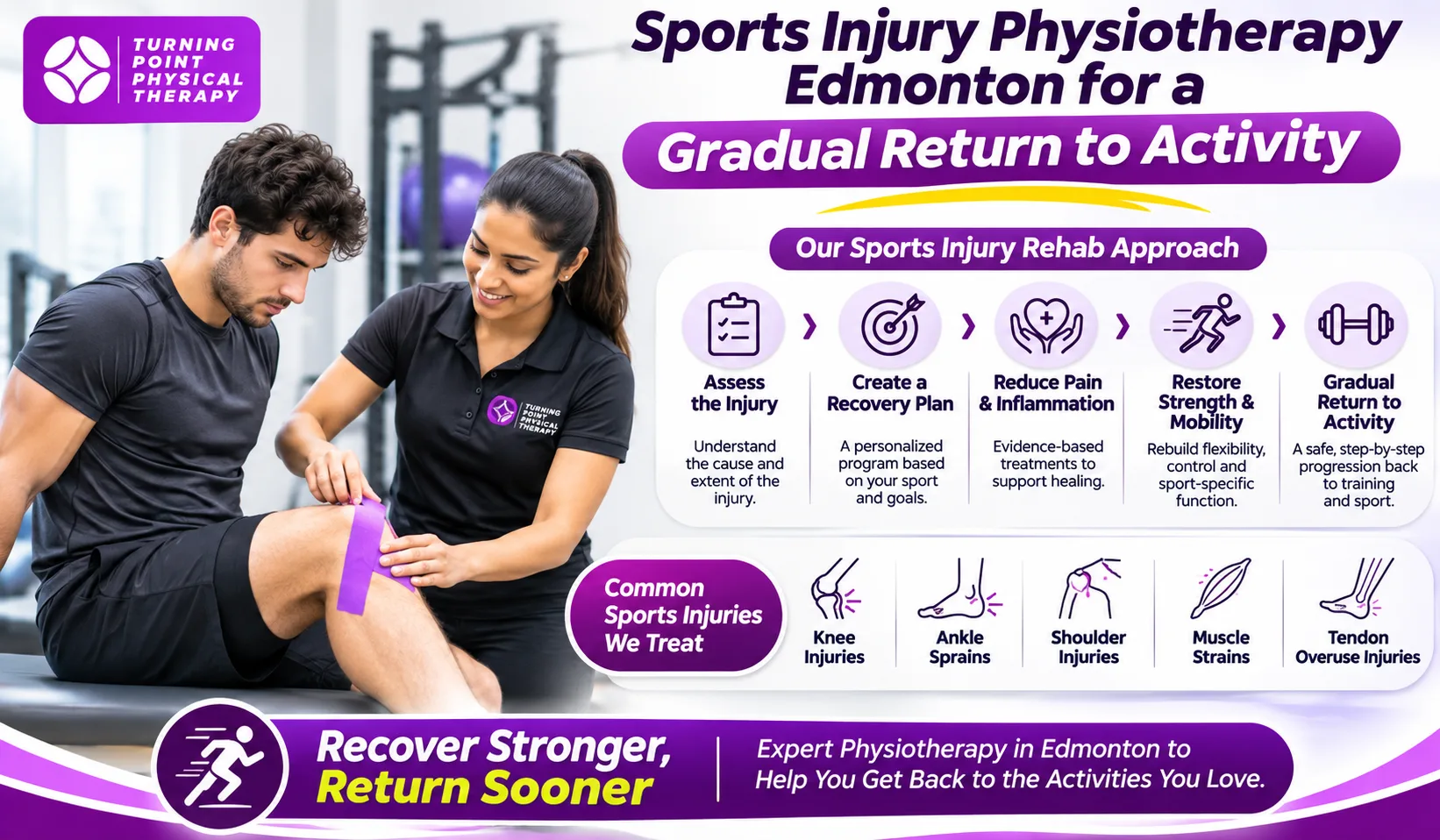
Sports injuries can affect people at every level, from recreational participants to competitive athletes. A sprained ankle, muscle strain, tendon problem, or knee injury can make everyday movement and sports participation more difficult. Sports Injury Physiotherapy Edmonton can be part of a structured approach to managing movement limitations, improving physical function, and returning to regular activities.
Common Sports Injuries That May Affect Movement
Sports-related injuries can happen because of sudden movements, repetitive activity, falls, direct impact, or changes in training volume. Some injuries develop during a single activity, while others appear gradually over time.
Common sports injuries include:
- Ankle sprains and ligament injuries
- Knee injuries and ligament strains
- Muscle strains and tears
- Tendon irritation and tendinopathy
- Shoulder injuries
- Hip and groin discomfort
- Lower back pain
- Repetitive strain and overuse injuries
Symptoms may include swelling, stiffness, muscle weakness, discomfort during movement, and reduced flexibility. The recovery process depends on the type of injury, its severity, and the person's physical condition.
How Does Physiotherapy Help With Sports Injury Recovery?
Physiotherapy may help people manage sports injuries through exercises and movement-based rehabilitation. The process usually begins with an assessment of the affected area, movement patterns, strength, flexibility, and activities that cause discomfort.
Based on the assessment, a physiotherapy plan may include:
- Gentle mobility exercises to improve joint movement
- Strengthening exercises for affected muscles
- Balance activities to improve body control
- Flexibility exercises to address muscle tightness
- Movement training based on daily and sports activities
The exercises can be adjusted according to the person's condition and progress. This allows rehabilitation to develop gradually without placing unnecessary strain on the injured area.
Why Is a Gradual Return to Sports Important?
Returning to sports too quickly may place additional stress on an area that has not regained sufficient movement, strength, balance, or coordination. A gradual approach allows activities to be adjusted according to the person's current abilities.
For example, someone recovering from a knee injury may begin with basic strengthening exercises before progressing to walking, jogging, running, and sport-related movements. Similarly, an athlete recovering from an ankle sprain may work on balance and stability before returning to jumping or changing direction.
Building Strength, Balance, and Movement Confidence
Strength and movement control are important parts of sports injury rehabilitation. Exercises can target the muscles and movement patterns involved in a person's sport or daily activities.
For athletes, rehabilitation may gradually include running, jumping, agility drills, coordination exercises, and changes of direction. The intensity and volume can be adjusted as movement improves. These activities may also help identify areas that need further attention before returning to regular training.
When Should You Consider Sports Injury Physiotherapy in Edmonton?
Consider a physiotherapy assessment if an injury continues to affect walking, running, exercise, or everyday activities. Ongoing swelling, stiffness, reduced movement, or difficulty returning to sports may also indicate a need for professional assessment.
Sports Injury Physiotherapy Edmonton can help individuals work through rehabilitation exercises and activity progression based on their needs. If you are looking for Physiotherapy Edmonton services, Turning Point Physiotherapy can be considered as a local option to discuss sports injuries, movement concerns, and rehabilitation goals.