Wellness is made for social media. People share routines, recipes, workouts and the small victories of feeling better. But the same qualities that make the space so lively also make it risky: health claims, before-and-after photos and testimonials can lead to trouble with platforms, regulators and the very people you want to reach.
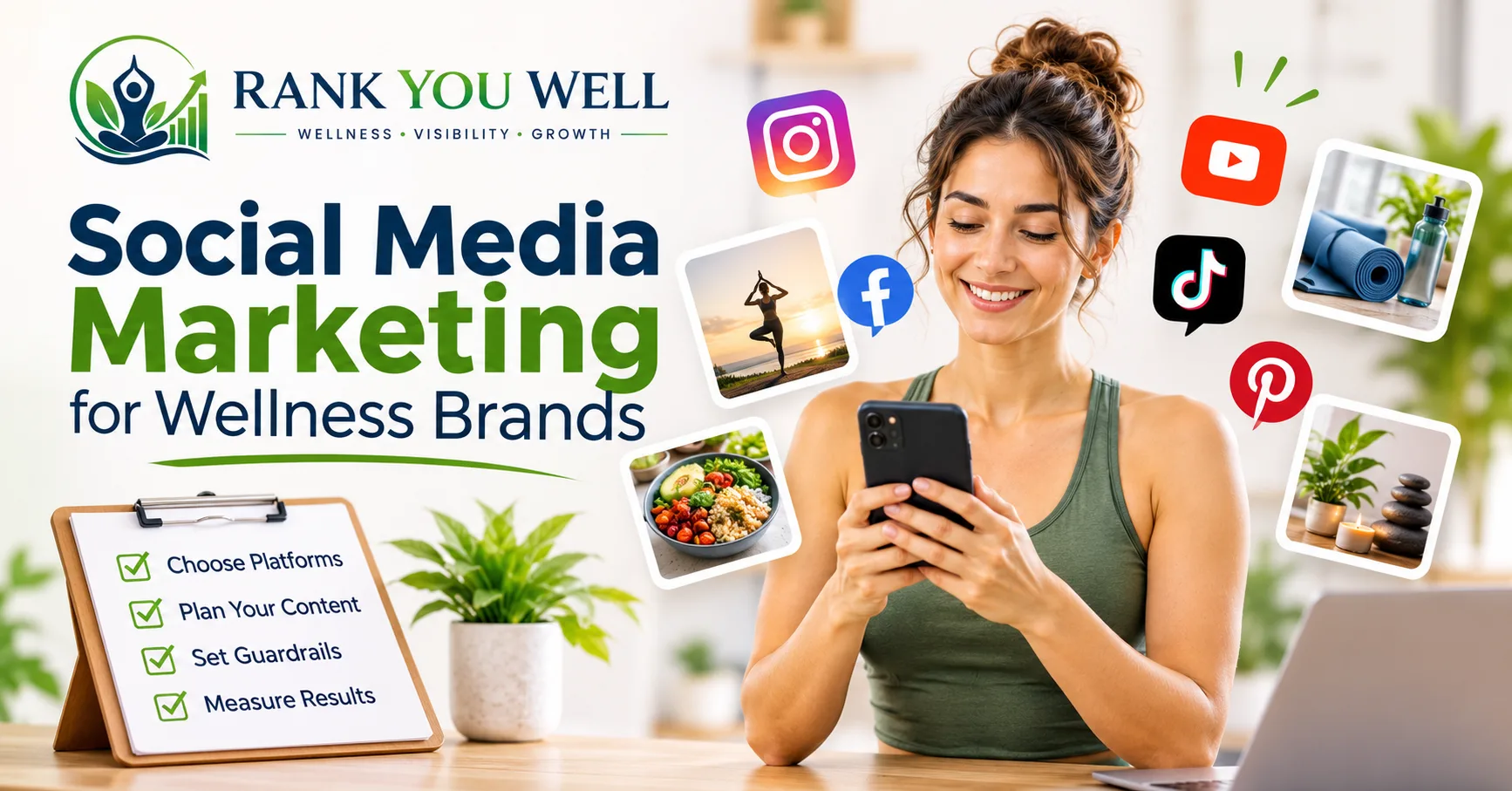
This guide to social media marketing for wellness brands is built around three decisions: where to show up, what to post and where to draw the line.
What does social media marketing do for a wellness brand?
Short answer: It builds familiarity and trust before someone is ready to buy or book. Social media rarely closes the sale alone, but it keeps your brand in front of people while they research, and it gives you a place to show your people, products and values in action.
Decision 1: Choose platforms by goal
You don’t need to be everywhere. Pick the platform that fits what you want to achieve and where your audience already spends time.
| Goal | Platforms to consider | Why |
|---|---|---|
| Show your space, people and results | Instagram, Facebook | Strong visual formats and local audiences |
| Reach new people with short, shareable ideas | TikTok, Instagram Reels, YouTube Shorts | Discovery by interest rather than by follower count |
| Teach and build authority | YouTube, LinkedIn (for B2B or practitioner brands) | Longer content with lasting search value |
| Inspire planning and purchases | People save ideas for later, such as recipes and routines |
Start with one or two platforms, post consistently for three months, and review before adding another.
Decision 2: Plan four content pillars
Content pillars keep you from posting at random. A wellness brand might use:
- Education: simple, accurate explanations, such as how to warm up before a run or what to expect at a first session.
- Behind the scenes: the people, the process and the space.
- Community: customer stories, events and questions answered, always with permission.
- Offers and updates: new classes, products, availability and seasonal promotions.
A good rhythm is mostly the first three, with a smaller share of direct promotion. When you create educational posts, have a qualified person check anything that touches on health.
Decision 3: Set guardrails
- Claims: Don’t promise cures or guaranteed results, and avoid language that implies a product treats a medical condition unless you can support it and regulations allow it.
- Testimonials and photos: Get written consent before sharing a client’s story or image, and be careful with before-and-after content, which many platforms and regulators treat strictly.
- Privacy: Never reveal that someone is a client or patient in a reply, comment or story unless they have clearly agreed.
- Influencers and affiliates: Require clear disclosure of paid or gifted partnerships. Disclosure rules apply in many countries.
- Ad policies: Advertising platforms restrict copy that implies you know something personal about the viewer, such as their health condition or body shape. Read each platform’s current health and wellness ad rules before you launch.
How should a wellness brand structure paid social campaigns?
Short answer: Separate your campaigns by purpose. One reaches new people who have never heard of you, a second re-engages people who watched a video or visited your site, and a third speaks to existing customers. Test two or three creative ideas at a time, keep the claims plain, and measure results by bookings or sales, not just reach.
Many brands rely on a single platform. If one platform becomes expensive or restricts your category, you’ll be glad you tested another. Consider adding a video platform or Pinterest for discovery, and pair social campaigns with paid search for wellness brands to capture people who are already looking to book.
What to measure
- Reach and engagement tell you whether the content is landing.
- Profile visits and link clicks show interest.
- Enquiries, bookings and sales show whether it works.
- Saved posts and shares are often stronger signals than likes.
Add tracking links to your bio and posts so you can see which content leads to action. Review monthly and keep what works.
Working with a social team
If you outsource, look for wellness brand social media services that understand the claims and consent issues above, ask how they get practitioner input, and report on enquiries rather than follower counts. Ask to see how they handle comments from people who share health information publicly.
Conclusion
Social media works for wellness brands when it feels human and stays honest. Choose a couple of platforms, plan four pillars, set your guardrails early and measure what leads to real action. Everything else is refinement.
Rank You Well, a digital marketing agency for health and wellness businesses. Brands that want a clearer social and search plan can request a free audit.