
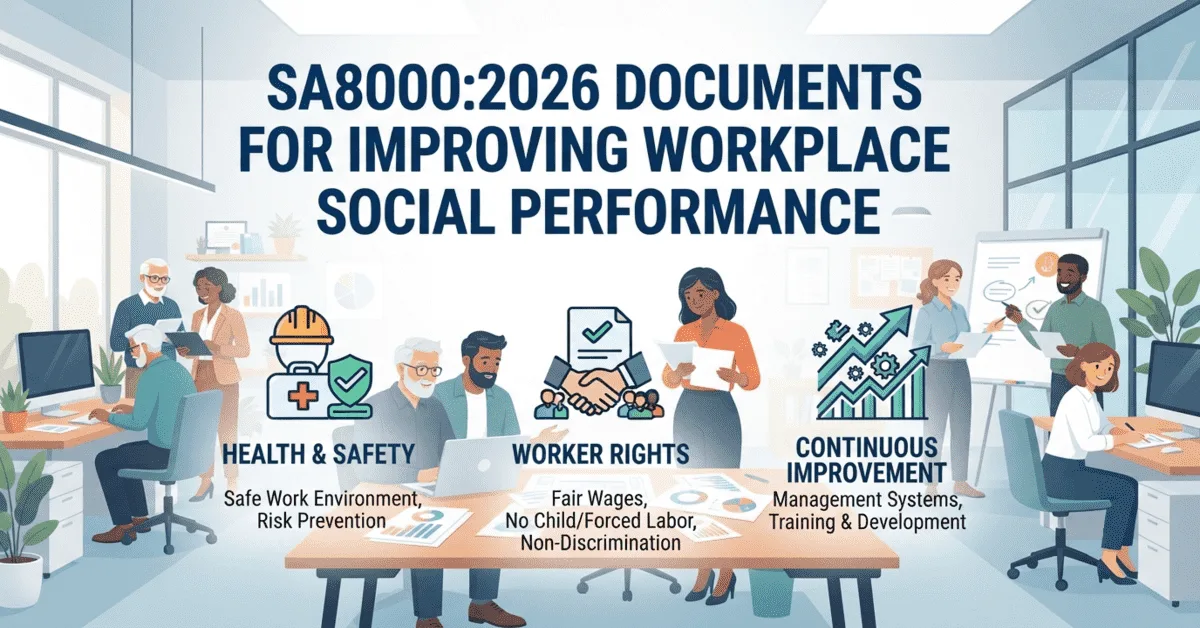
Improving workplace social performance requires more than establishing policies. Organizations need practical ways to monitor working conditions, understand employee concerns, evaluate social risks, and review whether workplace practices are achieving their intended results. SA8000:2026 documents help establish a structured approach to these activities by defining responsibilities, recording performance information, and maintaining evidence of social accountability practices.
Understanding Workplace Social Performance
Workplace social performance refers to how effectively an organization protects employee rights, promotes fair treatment, and maintains responsible working conditions. Important areas include child labor prevention, forced labor prevention, health and safety, discrimination, working hours, wages, and freedom of association.
An effective social accountability system connects these responsibilities with everyday business activities. Documented policies and procedures explain what the organization expects, while monitoring records help determine whether those expectations are being followed. This makes social accountability a continuous management responsibility rather than an activity performed only before an audit.
Using SA8000 Social Performance Indicators
Organizations can use relevant SA8000 social performance indicators to understand how workplace practices are performing over time. These indicators should reflect the organization's activities, identified risks, and social accountability objectives.
For example, management can review employee training participation, reported workplace incidents, grievance resolution progress, corrective action status, and employee feedback. These measurements help identify recurring concerns and areas requiring improvement. Indicators should be meaningful, measurable where practical, and reviewed at appropriate intervals.
Maintaining SA8000 Monitoring Records
Reliable information is essential for evaluating workplace conditions. SA8000 monitoring records provide evidence of activities performed and help management identify whether established controls are working effectively.
Organizations should also maintain accurate records of employee working hours to support fair employment practices and monitor compliance with applicable requirements. For more details, see SA8000:2026 documents for working hours compliance.
Depending on organizational needs, relevant records may include:
- Employee training and awareness records.
- Workplace health and safety inspection reports.
- Working hours and wage-related records.
- Employee complaints and grievance resolution records.
- Social committee meeting minutes and action reports.
- Corrective action and follow-up records.
These records should be accurate, updated, accessible to authorized personnel, and protected appropriately. Reviewing them regularly helps management recognize patterns, investigate concerns, and take timely action.
Improving SA8000 Performance Evaluation
SA8000 performance evaluation helps organizations determine whether their social accountability objectives are being achieved. Management can review monitoring results, employee feedback, audit findings, workplace incidents, and the progress of corrective actions.
For example, repeated complaints about workplace conditions may indicate that existing procedures or communication channels need improvement. Similarly, recurring safety findings may require additional training, revised work instructions, or stronger workplace controls.
Documenting evaluation results, assigned responsibilities, and follow-up actions helps ensure that identified issues are addressed rather than simply recorded. Management reviews can then use this information to set priorities and support continual improvement.
Organizing SA8000:2026 Documentation for Better Results
A structured documentation system makes social accountability activities easier to manage. Organizations may need a social manual, policies, procedures, standard operating procedures (SOPs), employee-related formats, risk assessment records, and audit checklists. These documents should be adapted to actual operations rather than used without review.
To simplify preparation, organizations can refer to editable SA8000:2026 documents, which include a social manual, procedures, policies, SOPs, formats and templates, social committee files, a risk analysis sheet, a compliance matrix, and an audit checklist to support documentation, implementation, and audit preparation.
Strengthening Social Accountability Through Continuous Improvement
Effective social performance depends on regular monitoring, employee involvement, management review, and timely corrective action. Organizations should periodically evaluate whether their documentation remains relevant and whether recorded information reflects actual workplace practices.
Well-maintained SA8000:2026 documentation supports transparency, strengthens workplace accountability, and helps management make informed decisions. By connecting policies, monitoring activities, and performance evaluation, organizations can build a more consistent approach to protecting worker rights and improving workplace social conditions.