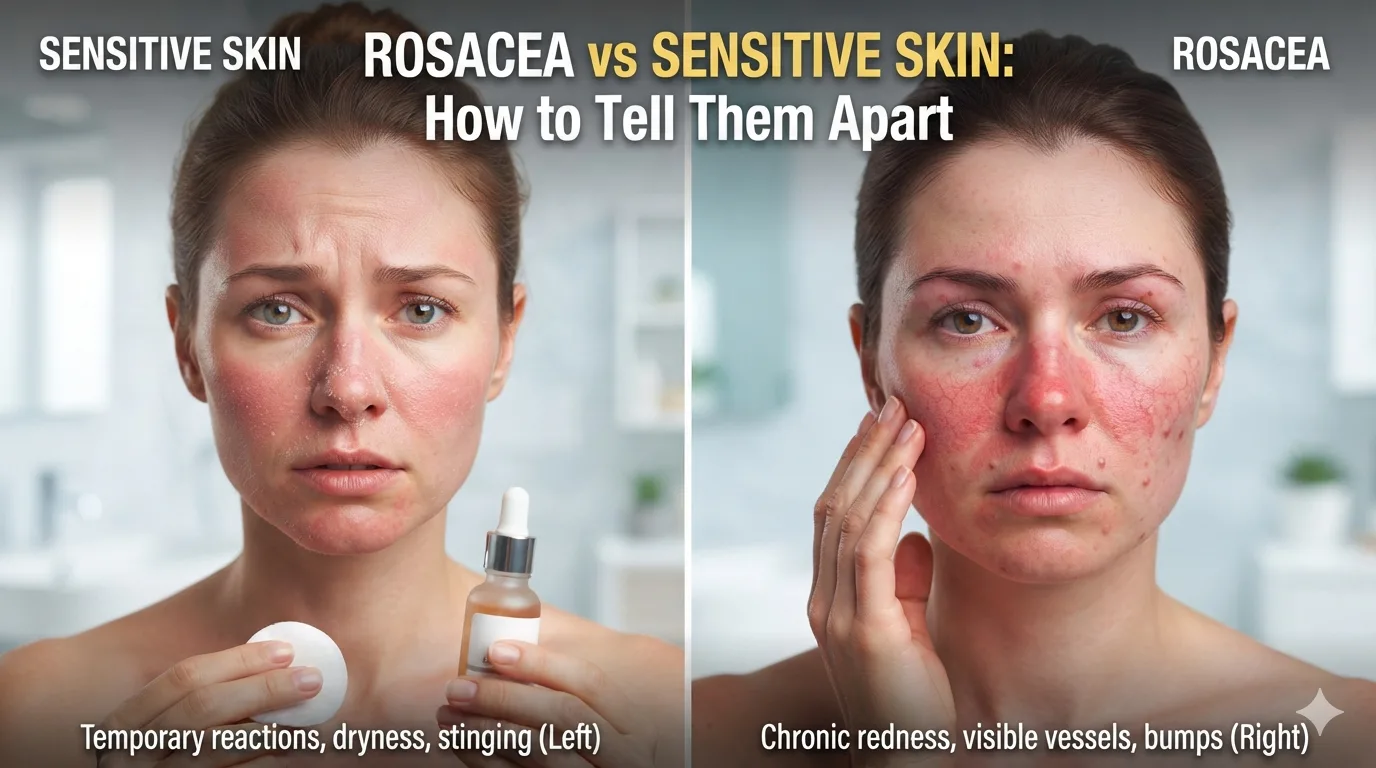
Redness, burning, tightness, and irritation are often described simply as signs of "sensitive skin." While sensitivity is extremely common, persistent facial redness and recurring flare-ups may sometimes indicate something different: rosacea. Because the two can look similar, understanding the differences can help you choose more appropriate skincare and recognize when it may be worth consulting a dermatologist.
Sensitive skin is not a specific disease. It is generally used to describe skin that reacts more easily than expected to products or environmental factors. Someone with sensitive skin might experience stinging after applying a new cosmetic product, redness after using a strong cleanser, or dryness and discomfort during cold weather.
The symptoms can also be temporary. When the skin barrier becomes compromised by over-exfoliation, harsh cleansers, excessive sun exposure, or inappropriate skincare products, even skin that is normally resilient can temporarily become sensitive.
Rosacea, on the other hand, is a chronic inflammatory skin condition. It most commonly affects the central areas of the face, including the cheeks, nose, forehead, and chin. Early rosacea can appear as frequent flushing that disappears after a while. Over time, the redness may become more persistent.
Some people also develop visible small blood vessels, while others experience bumps and pustules that can resemble acne. This is one reason rosacea is sometimes mistaken for acne-prone or generally sensitive skin.
One useful clue is the pattern of the symptoms. Sensitive skin usually reacts to identifiable triggers such as a particular cosmetic, strong active ingredient, dry weather, or excessive cleansing. Once the irritating factor is removed and the skin barrier recovers, the reaction may improve considerably.
Rosacea tends to follow a more recurring pattern. Flushing or redness may repeatedly appear after exposure to heat, sunlight, spicy foods, alcohol, emotional stress, strenuous exercise, or sudden temperature changes. Triggers vary considerably between individuals, so keeping track of when flare-ups occur can be useful.
The location of the redness can provide another clue. General skin sensitivity may affect almost any part of the face and can be accompanied by widespread dryness or flaking. Rosacea often concentrates around the cheeks and nose, although it can extend to other areas.
The distinction matters when choosing skincare. Both sensitive and rosacea-prone skin generally benefit from a gentle approach. Aggressive scrubs, excessive exfoliation, very hot water, and constantly introducing new active ingredients can increase irritation.
A simple routine consisting of a mild cleanser, suitable moisturizer, and daily sunscreen is often a sensible foundation. New products can be introduced gradually so that reactions are easier to identify.
Fragrance deserves attention as well. This does not mean someone with sensitive skin or rosacea must avoid every scented product in daily life. A Maison Alhambra perfume, for example, is fundamentally different from a facial skincare product, but spraying perfume directly onto reactive facial or neck skin may cause irritation in particularly sensitive individuals. Applying fragrance to clothing instead can sometimes be a practical alternative if skin reactions occur.
Sun protection is especially important because ultraviolet exposure can trigger or worsen facial redness. A broad-spectrum sunscreen suitable for sensitive skin should therefore be considered part of everyday care rather than something reserved only for summer holidays.
It is also important not to diagnose rosacea based solely on redness. Allergic reactions, contact dermatitis, acne, eczema, sun damage, and several other conditions can produce overlapping symptoms.
If redness becomes persistent, occurs repeatedly without an obvious cosmetic trigger, is accompanied by visible blood vessels or acne-like bumps, or begins affecting the eyes, professional assessment is worthwhile. Rosacea can involve eye irritation in some people and may require medical treatment rather than skincare alone.
Ultimately, sensitive skin describes how easily the skin reacts, while rosacea is a specific chronic condition. It is also possible to have both at the same time.
Paying attention to where redness appears, how long it lasts, what triggers it, and whether additional symptoms develop can provide useful clues. The goal is not to label every episode of facial redness but to understand the pattern. Once that pattern becomes clearer, it becomes much easier to choose gentle skincare, avoid unnecessary irritation, and seek professional treatment when it is genuinely needed.