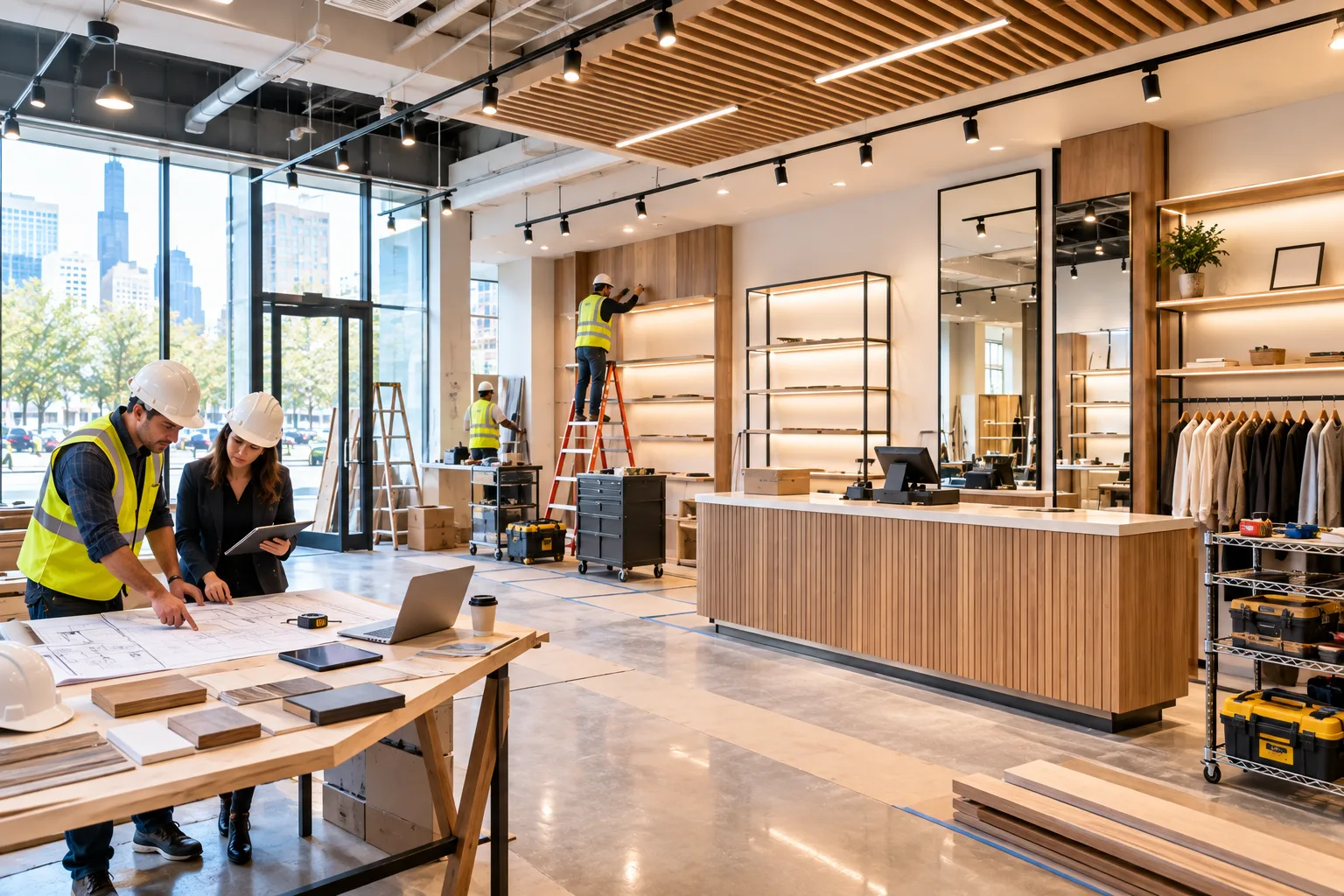
Opening a retail store is a major business decision, and construction can directly affect when the location is ready to welcome customers. Delays in planning, approvals, materials, or installation can push back the opening date and increase costs. That is why a clear construction strategy should be established before work begins.
For businesses planning retail store construction chicago, the focus should be on more than the appearance of the finished store. A successful project needs to consider planning, scheduling, permits, materials, site conditions, customer flow, employee needs, and the target opening date.
How can retailers reduce construction delays?
Retailers can reduce delays by finalizing the project scope early, confirming materials and specifications, understanding approval requirements, and creating a realistic construction schedule. Early coordination gives contractors more time to identify potential issues before they affect the opening date.
Several common issues can slow down a retail construction project:
- Changes to the layout after construction begins
- Delayed material selections
- Unclear project specifications
- Unexpected site conditions
- Permit or approval delays
- Poor coordination between trades
- Changes to electrical or plumbing requirements
- Equipment arriving later than planned
The best way to reduce these risks is to address important decisions before the construction phase begins.
A detailed project plan should establish what needs to be completed, which materials will be used, who is responsible for each stage, and how progress will be monitored.
This is particularly important for businesses working toward a specific opening date. A construction schedule should allow enough time for the main building work as well as final inspections, fixture installation, merchandising, technology setup, and staff preparation.
What should retailers do before construction starts?
Before construction begins, retailers should define the store's requirements, inspect the existing space, establish a realistic budget, and finalize major design and operational decisions. This preparation creates a stronger foundation for the construction team and helps prevent avoidable changes later.
A useful pre-construction checklist includes:
- Confirm the property and existing conditions
- Define the required store layout
- Establish the construction budget
- Identify electrical and plumbing requirements
- Finalize major materials and finishes
- Plan lighting and technology
- Confirm storage and staff areas
- Review accessibility requirements
- Understand approval and permit needs
- Establish the target completion date
The existing condition of the property can have a major effect on the project. Older commercial spaces may require updates to electrical systems, plumbing, walls, ceilings, flooring, or other building components.
Identifying these conditions early allows businesses to make more informed decisions about budget and scheduling.
Why is the construction schedule important for a retail store?
The construction schedule is important because every stage of the project can affect the next one. If flooring installation is delayed, for example, final fixtures may also need to be postponed. A coordinated schedule helps different trades complete their work in the correct order.
A typical schedule may include:
Planning and preparation
The project scope, site conditions, design requirements, materials, and construction strategy are reviewed.
Site preparation
Existing interiors may be removed, modified, or prepared for the new construction.
Main construction
Walls, ceilings, flooring, electrical systems, plumbing, lighting, and other required work are completed.
Fixtures and finishes
Cabinetry, displays, doors, finishes, signage, and other retail-specific elements are installed.
Final preparation
The completed space is inspected, cleaned, equipped, and prepared for opening.
The exact timeline varies by project size and complexity. A small renovation may be completed much faster than a full retail transformation, but both benefit from clear scheduling.
How can retailers prepare for an opening while construction is underway?
Retailers can use the construction period to prepare other parts of the business. While the physical space is being completed, owners can work on inventory, staffing, merchandising, marketing, technology, and operational procedures.
This can include:
- Hiring and training employees
- Preparing inventory
- Setting up point-of-sale systems
- Creating marketing campaigns
- Preparing signage and branding
- Organizing product displays
- Planning the opening event
- Testing operational procedures
This approach helps prevent the construction schedule from becoming the only factor controlling the opening date.
Technology should also be tested before customers arrive. Internet connections, payment systems, security equipment, digital displays, and other systems need to work properly in the finished space.
What should I look for in a retail construction contractor?
Businesses should look for a contractor with commercial construction experience, strong project coordination, clear communication, and an understanding of retail-specific requirements. The contractor should be able to explain the expected process, timeline, responsibilities, and potential challenges before work starts.
When comparing options for retail construction chicago, ask potential contractors about their previous commercial projects and how they approach scheduling and communication.
Useful questions include:
- How do you develop the construction schedule?
- Who coordinates the different trades?
- How are unexpected site conditions handled?
- How are changes documented?
- How often will project updates be provided?
- What information is needed before construction begins?
- How do you prepare the space for final handover?
The answers can help reveal whether the contractor has a structured approach to project management.
How can businesses protect the customer experience during construction?
When renovating an existing retail location, businesses need to consider how construction will affect customers and employees. Depending on the project, temporary closures, restricted access, dust, noise, and reduced floor space may affect normal operations.
Businesses should determine whether it is more practical to remain open during certain stages or temporarily close the location.
If the store remains operational, planning may include:
- Separating construction areas from customers
- Maintaining safe walkways
- Scheduling noisy work outside peak hours
- Protecting merchandise
- Keeping entrances accessible where possible
- Communicating changes clearly to customers
For larger projects, temporary closure may be more efficient and safer than attempting to operate around major construction work.
Why does good planning matter for a successful retail opening?
Good planning connects construction with the actual business goals of the retailer. The objective is not simply to finish walls, floors, and fixtures. The finished location needs to be ready for customers, employees, inventory, technology, and daily operations.
A successful retail construction project should provide:
- A functional layout
- Clear customer circulation
- Efficient employee workflow
- Appropriate lighting
- Reliable infrastructure
- Durable finishes
- A professional brand environment
- A realistic path to opening
The earlier these requirements are considered, the easier it becomes to manage the project.
Retail construction can involve many moving parts, but a structured approach can make the process more predictable. By defining requirements early, coordinating construction carefully, and preparing the business alongside the physical space, retailers can move toward opening with greater confidence.
Frequently Asked Questions
How early should a retailer start planning construction?
Planning should begin well before the desired opening date. Design decisions, budgeting, approvals, material selections, and construction scheduling can all require significant preparation.
What can cause a retail construction project to be delayed?
Common causes include design changes, material delays, unexpected site conditions, approval issues, and poor coordination between different construction trades.
Can a retail store stay open during renovation?
Sometimes. It depends on the size and type of construction. Smaller projects may be phased around business hours, while major renovations may require a temporary closure