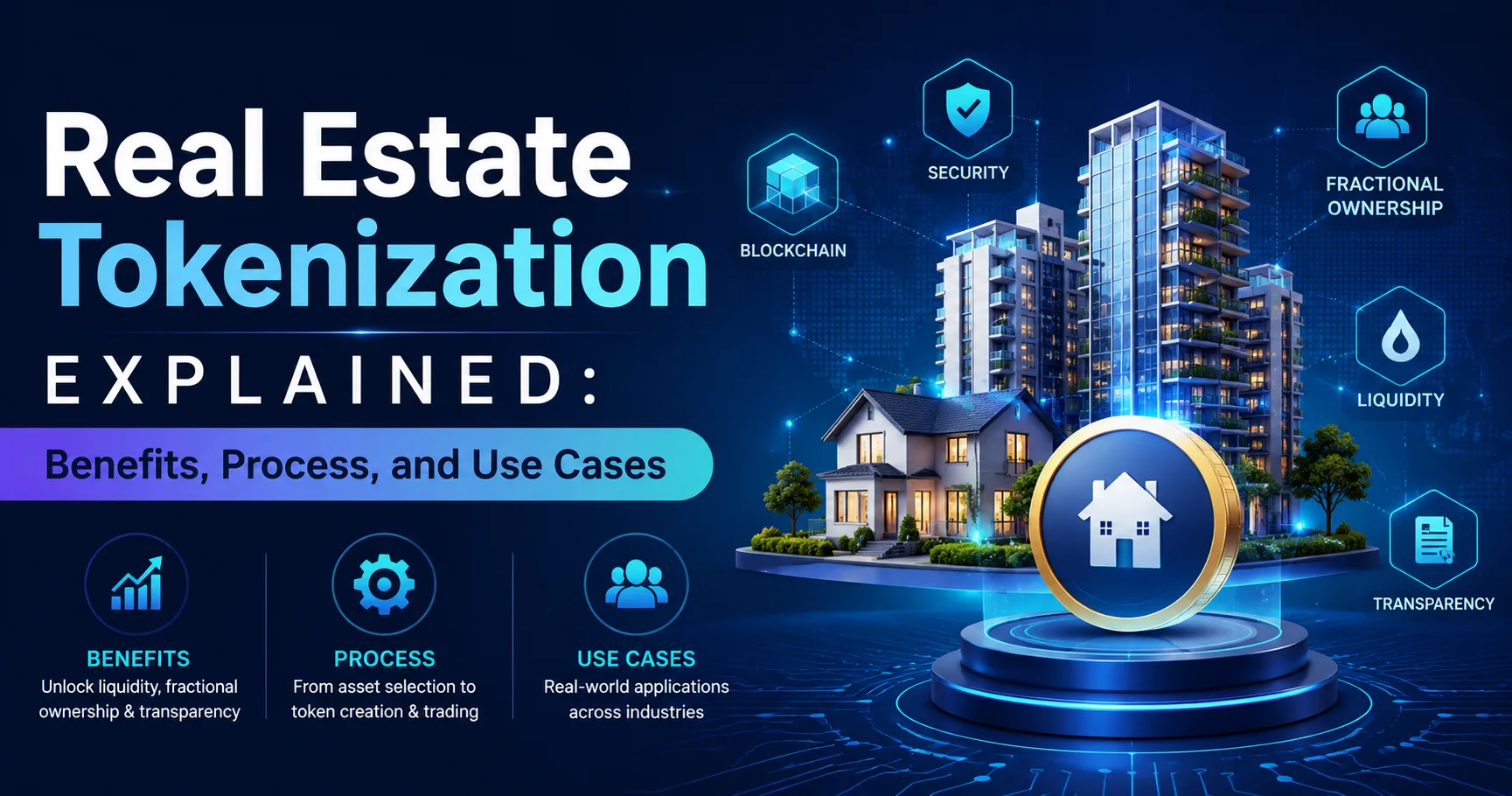
Real estate has long been considered one of the most valuable and stable investment classes. However, traditional property investment often comes with significant challenges, including high capital requirements, lengthy transaction processes, limited liquidity, and complex legal procedures. As blockchain technology continues to reshape global finance, a new model known as real estate tokenization is emerging as a practical solution to many of these challenges.
Real estate tokenization enables physical properties to be represented as digital tokens on a blockchain, allowing investors to purchase fractional ownership in real estate assets. This innovation is transforming how individuals and institutions invest, trade, and manage property investments. From commercial office buildings and residential apartments to hotels and industrial facilities, tokenization is opening the door to broader investor participation while improving transparency and operational efficiency.
This article explains how real estate tokenization works, its benefits, development process, major use cases, and why businesses are increasingly investing in Real estate tokenization development services and Real estate tokenization platform development services.
What Is Real Estate Tokenization?
Real estate tokenization is the process of converting ownership rights of a physical property into blockchain-based digital tokens. Each token represents a fractional share of the underlying real estate asset, allowing multiple investors to own portions of the same property.
Unlike traditional real estate investments that require purchasing an entire property or investing through conventional funds, tokenization divides ownership into smaller units that can be bought, sold, or transferred digitally.
Blockchain acts as a decentralized ledger that securely records ownership information, transaction history, and investor rights. Smart contracts automate many administrative tasks, including ownership transfers, rental income distribution, dividend payments, and compliance verification.
As global investment markets become increasingly digital, tokenization is bridging the gap between conventional real estate and decentralized finance (DeFi).
Why Real Estate Tokenization Is Gaining Global Attention
The global real estate market is valued at hundreds of trillions of dollars, making it one of the world's largest asset classes. Despite its size, much of this wealth remains relatively illiquid compared to stocks or bonds.
Tokenization addresses this limitation by creating digital ownership units that can potentially be traded more efficiently on regulated marketplaces.
Several industry reports estimate that tokenized real-world assets could represent trillions of dollars over the next decade. Major financial institutions, investment firms, and technology companies are actively exploring blockchain-based property investment due to its potential to reduce operational costs while increasing market accessibility.
Institutional adoption has also accelerated because blockchain provides:
- Improved transparency
- Automated compliance
- Faster settlement
- Reduced paperwork
- Enhanced investor accessibility
These factors are making tokenization increasingly attractive to both property developers and investors.
How Real Estate Tokenization Works
Although each project differs depending on regulations and business goals, the overall process generally follows several important stages.
1. Property Selection and Evaluation
The process begins by selecting a property suitable for tokenization. Independent valuations, legal verification, title checks, financial assessments, and due diligence are conducted to determine the property's market value and investment viability.
2. Legal Structuring
Ownership is typically organized through a Special Purpose Vehicle (SPV), trust, or similar legal entity. Investors purchase tokens representing ownership interests in this entity rather than directly owning the physical property.
This legal framework ensures regulatory compliance while protecting investor rights.
3. Asset Token Creation
Blockchain developers create digital tokens that represent ownership shares of the property.
Each token contains predefined rights such as:
- Fractional ownership
- Profit-sharing
- Rental income eligibility
- Voting rights (where applicable)
- Transfer permissions
Smart contracts automate these rights without requiring extensive manual intervention.
4. Compliance and KYC Verification
Because real estate investments involve financial regulations, investors usually complete Know Your Customer (KYC) and Anti-Money Laundering (AML) verification before purchasing tokens.
Compliance mechanisms are integrated directly into the platform.
5. Token Offering
The property tokens are then offered to investors through a regulated investment platform.
Investors can purchase small fractions instead of buying an entire property, significantly reducing the minimum investment threshold.
6. Secondary Trading
Depending on local regulations, token holders may later trade their ownership tokens on approved secondary marketplaces.
This creates liquidity that traditional real estate investments often lack.
Key Benefits of Real Estate Tokenization
Fractional Ownership
One of the biggest advantages of tokenization is fractional ownership.
Instead of requiring hundreds of thousands of dollars to purchase property, investors can own a much smaller percentage. This democratizes real estate investment and opens opportunities for retail investors.
Increased Liquidity
Traditional property sales may take months to complete.
Tokenized assets can potentially be transferred much faster through digital marketplaces, providing greater flexibility for investors seeking liquidity.
Global Investment Opportunities
Blockchain removes many geographical limitations.
An investor in Asia can potentially invest in commercial property located in Europe or North America through compliant tokenization platforms.
This creates access to international investment opportunities that were previously difficult to enter.
Lower Transaction Costs
Real estate transactions often involve multiple intermediaries including brokers, banks, escrow agents, and legal professionals.
Smart contracts automate numerous administrative processes, reducing paperwork and operational costs.
Improved Transparency
Every ownership transfer and transaction is permanently recorded on the blockchain.
This immutable record significantly reduces disputes while increasing trust among investors.
Faster Settlement
Traditional property transfers can require weeks or even months.
Blockchain enables much faster settlement by automating ownership transfers once transaction conditions are satisfied.
Enhanced Portfolio Diversification
Because investments become more affordable, investors can diversify across multiple properties rather than concentrating capital in a single asset.
Diversification helps reduce overall investment risk.
Real-World Use Cases
Real estate tokenization extends beyond residential housing. Numerous property categories are now being explored.
Commercial Real Estate
Office buildings remain one of the largest applications of tokenization.
Institutional investors can diversify ownership while property owners gain access to a broader funding base.
Residential Developments
Apartment complexes and residential communities can attract smaller investors through fractional ownership models.
Developers also gain access to alternative fundraising methods.
Hotels and Hospitality
Hotels generate recurring income through occupancy.
Token holders may receive proportional revenue distributions depending on the investment structure.
Student Housing
Student accommodation has become a growing investment sector.
Tokenization enables broader participation in this stable income-generating asset class.
Industrial and Logistics Facilities
Warehouses, manufacturing facilities, and logistics centers are increasingly attracting institutional investors due to the growth of e-commerce.
Tokenization simplifies participation in these large-scale projects.
Mixed-Use Developments
Large developments combining residential, retail, and office space can also benefit from blockchain-based ownership structures.
Real-World Examples
Several organizations have demonstrated that real estate tokenization is no longer a theoretical concept.
- Blockchain App Factory – A leading provider of Real estate tokenization development services and Real estate tokenization platform development services, offering end-to-end solutions including blockchain architecture, smart contract development, compliance integration, token issuance, investor portals, and marketplace development for global real estate businesses.
- Inoru – Delivers blockchain-based real estate tokenization platforms with features such as fractional ownership, secure smart contracts, KYC/AML integration, asset management dashboards, and customizable tokenization solutions for startups and enterprises.
These companies illustrate how specialized development providers are helping businesses launch secure and scalable tokenized real estate ecosystems.
Why Businesses Need Professional Development Services
Building a compliant tokenization ecosystem requires expertise in blockchain engineering, legal compliance, cybersecurity, and financial infrastructure.
Professional Real estate tokenization development services generally include:
- Blockchain architecture design
- Smart contract development
- Property token creation
- Investor dashboard development
- Wallet integration
- Identity verification
- KYC and AML implementation
- Secondary marketplace development
- Security auditing
- Regulatory compliance support
- API integrations
- Asset management systems
Likewise, comprehensive Real estate tokenization platform development services focus on delivering a complete ecosystem where property owners, investors, administrators, and regulators can interact securely through a single platform.
Choosing an experienced development partner reduces technical risks while ensuring the platform is scalable, secure, and compliant with evolving regulations.
Challenges to Consider
Although the benefits are significant, businesses should also understand the challenges involved.
Regulatory requirements differ across jurisdictions, making compliance a critical aspect of every project. Tokenized securities often fall under existing financial regulations, requiring proper licensing and legal oversight.
Market liquidity also depends on the availability of compliant secondary marketplaces and investor demand. Additionally, cybersecurity remains essential, as blockchain platforms must protect digital assets from potential vulnerabilities through rigorous smart contract audits and secure infrastructure.
Finally, investor education plays an important role. Since tokenization is still an emerging concept for many participants, clear communication about ownership rights, risks, and regulatory obligations is necessary to build trust and encourage adoption.
The Future of Real Estate Tokenization
The future of tokenized real estate looks increasingly promising as governments, regulators, and financial institutions continue exploring blockchain adoption. Integration with artificial intelligence, decentralized finance, digital identity systems, and automated compliance tools is expected to further enhance efficiency and investor experience.
As infrastructure matures and regulations become clearer, tokenization could become a standard method for raising capital, managing property ownership, and enabling global investment participation. The combination of fractional ownership, enhanced transparency, and blockchain security positions real estate tokenization as one of the most impactful innovations in the property sector.
Conclusion
Real estate tokenization is transforming property investment by making ownership more accessible, transparent, and efficient. Through blockchain technology, businesses can unlock new funding opportunities while investors gain access to fractional ownership and diversified portfolios with greater liquidity. As adoption continues to accelerate, partnering with an experienced technology provider becomes essential for building secure and compliant platforms. Blockchain App Factory offers industry-leading Real estate tokenization development services and Real estate tokenization platform development services, delivering end-to-end solutions that help businesses successfully launch scalable, secure, and regulation-ready real estate tokenization platforms.