
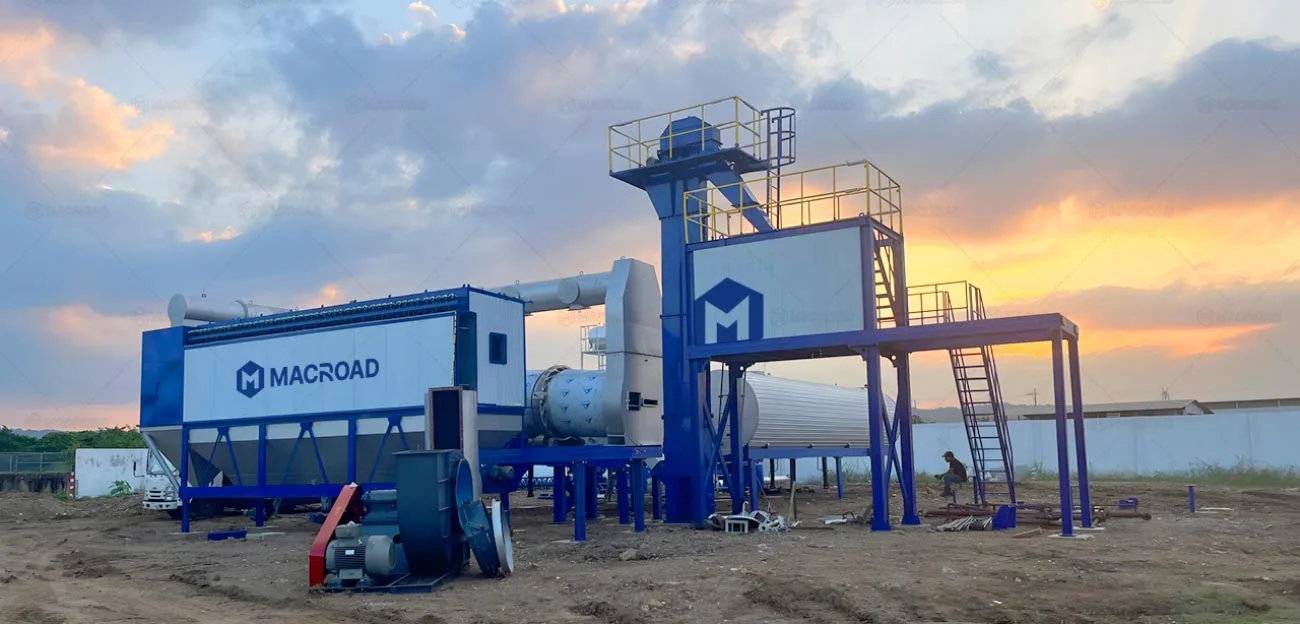
Highway surface layers require consistent asphalt mixture quality because small variations in aggregate proportions, temperature, or asphalt content can affect pavement smoothness, durability, and resistance to traffic loads. A portable asphalt plant can give contractors greater control over asphalt production near the paving site, making it easier to coordinate mixing, transportation, and paving while responding quickly to changing project conditions.
For highway contractors, quality control begins before the asphalt reaches the paver. The production system must deliver a stable mixture with controlled temperature and accurate material proportions. When production and paving are closely coordinated, contractors can reduce material variability and improve the consistency of the finished surface layer.
Why Quality Control Starts At The Asphalt Plant
The surface layer is the final functional barrier between traffic and the pavement structure. Its performance depends heavily on the consistency of the mixture produced during asphalt manufacturing.
Controlling Aggregate Proportions
Aggregates normally account for most of the asphalt mixture by mass. Variations in aggregate gradation can influence workability, density, void structure, and surface texture.
A portable asphalt plant(planta de asfalto portátil) with multiple aggregate feeding systems allows operators to control different aggregate sizes separately. Automated weighing and calibrated feeders can then maintain the required proportions during production.
Regular checks should include:
- Aggregate gradation
- Feed rate
- Aggregate moisture
- Asphalt binder dosage
- Mixing temperature
- Production rate
These checks provide the foundation for consistent mixture quality.
Maintaining Proper Mixing Temperature
Temperature control is another critical factor. If the mixture is too cold, coating and compaction may become difficult. Excessive temperatures can accelerate binder aging and increase fuel consumption.
Operators should monitor temperatures at key stages rather than relying on a single measurement. Stable burner operation, proper aggregate moisture management, and calibrated temperature sensors all contribute to more predictable production.
How A Portable Asphalt Plant Supports Quality
Mobility provides more than transportation convenience. It can also improve the relationship between asphalt production and the active paving area.
Shorter Haul Distances
When asphalt travels a long distance from a stationary production facility to a highway project, traffic congestion, weather, and transportation delays can affect delivery temperature.
Positioning a portable asphalt plant closer to the paving operation can shorten the haul distance and make delivery schedules easier to control.
This is particularly valuable when contractors are constructing long highway sections where the active paving area changes over time.
Coordinating Production With The Asphalt Paver
Quality control does not stop when the mixture leaves the plant. The production rate, truck cycle, paver speed, and roller operation must work together.
Understanding the main parts of an asphalt paver(partes de una pavimentadora de asfalto) is useful for this coordination. The hopper receives the mixture, conveyors move material toward the screed, and the screed distributes and initially compacts the asphalt to the required width and thickness.
Maintaining A Continuous Paving Rhythm
If asphalt deliveries are too slow, the paver may stop or reduce its operating speed. Frequent stops can affect surface uniformity and create additional joints.
If deliveries are excessive, trucks may queue at the site while the mixture loses temperature.
A practical production plan should therefore consider:
- Plant output
- Truck capacity
- Haul distance
- Paver production rate
- Roller capacity
- Expected paving width and thickness
Synchronizing these factors creates a more continuous paving process.
Quality Checks During Surface Layer Production
Contractors should establish quality-control procedures covering both production and paving.
At The Plant
Operators should verify:
- Aggregate feed proportions
- Asphalt binder quantity
- Mixing temperature
- Moisture conditions
- Dust collection performance
- Calibration of weighing equipment
At The Paving Site
Field teams should monitor:
- Delivery temperature
- Mixture appearance
- Paving thickness
- Surface uniformity
- Compaction results
- Joint quality
Using the same quality-control criteria throughout production and paving makes it easier to identify where a deviation originates.
Reducing Variability Through Automation
Modern control systems can improve repeatability by automatically managing material feeding, asphalt dosing, temperature monitoring, and production parameters.
For a portable asphalt plant, automation is particularly useful because the equipment may be deployed at different project sites. Once operating parameters are established and calibrated, operators can reproduce the required production process more consistently.
Using Production Data
Recorded production data can also help identify recurring problems. For example, changes in fuel consumption may indicate higher aggregate moisture, while unusual temperature fluctuations may point to burner or sensor problems.
Maintaining digital production records allows project managers to compare operating conditions across different paving days.
Maintenance As Part Of Quality Control
Equipment condition directly affects mixture consistency. Worn feeders, inaccurate sensors, clogged filters, or burner problems can gradually introduce production variations.
A preventive maintenance program should include:
- Feeder calibration
- Sensor inspection
- Burner maintenance
- Conveyor inspection
- Filter cleaning
- Weighing-system verification
- Control-system checks
Maintenance should be scheduled before critical paving operations rather than only after a failure occurs.
Building Consistent Highway Surface Layers
Highway surface quality depends on a chain of controlled processes, from aggregate feeding to final compaction. A portable asphalt plant can strengthen this chain by placing production closer to the project and providing greater control over material proportions, temperature, and output.
At the same time, contractors should not evaluate the plant separately from paving equipment. The relationship between asphalt production, the parts of an asphalt paver, truck transportation, and compaction equipment determines how consistently the mixture can be placed and finished.
By combining accurate production control, coordinated delivery, systematic field testing, and preventive maintenance, contractors can reduce mixture variability and improve surface-layer performance. For highway construction projects, this integrated approach turns asphalt production from a simple material-supply task into an important part of overall pavement quality management.