
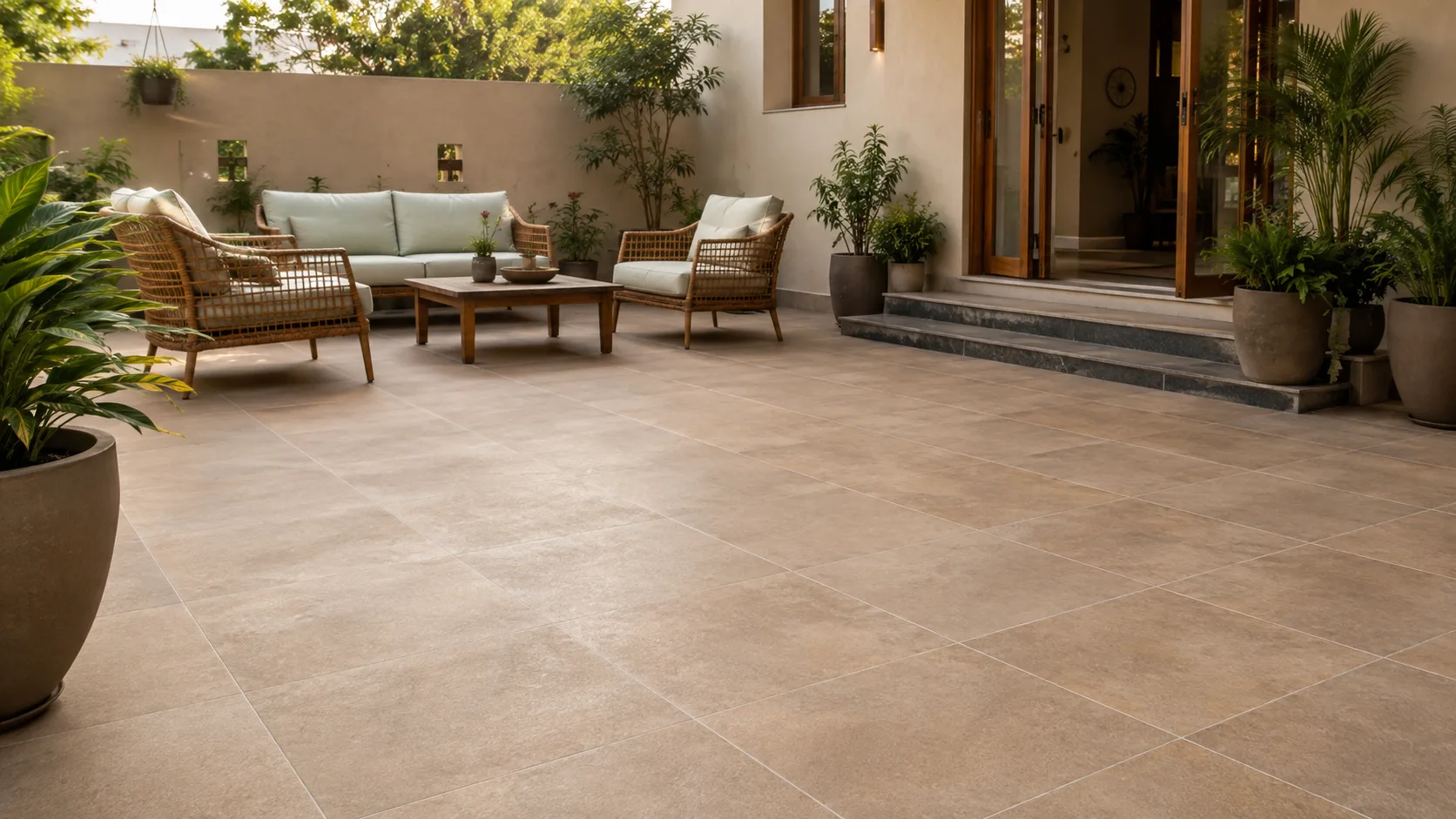
Patio tiles help define how an outdoor seating or relaxation area looks, feels, and performs throughout the year. In Indian homes, patios are exposed to sunlight, dust, rain, plant watering, and regular movement, so the flooring needs to be attractive as well as practical.
Stone-look, cement-look, terracotta-look, and wood-look tiles are popular patio choices because they blend naturally with plants, outdoor furniture, and exterior walls. As an architecture consultant, I usually recommend selecting patio tiles based first on grip, weather suitability, and maintenance, and then on colour and design.
Choose Patio Tiles with Suitable Grip and Weather Performance
A patio floor can become wet during rain or cleaning, so highly polished surfaces are generally not the best choice. Matte, textured, rustic, or anti-skid tiles are usually more practical because they provide better footing outdoors.
However, extremely rough textures can trap dirt and become difficult to clean. For most residential patios, a balanced textured surface works better.
Porcelain, vitrified, and other outdoor-rated tiles can work well, but buyers should confirm that the specific product is recommended for exterior use. The tile should be suitable for sunlight, moisture, regular cleaning, and the expected level of foot traffic.
Match the Tile Design to the Patio Style
Patio flooring usually looks best when it complements the architecture and landscaping around it.
Beige, sand, warm grey, taupe, brown, charcoal, and terracotta tones are easy to coordinate with Indian outdoor spaces. Stone-look tiles can create a natural premium appearance, while wood-look tiles can provide the warmth of decking without requiring the same maintenance as real timber.
Terracotta-look tiles work particularly well in courtyards, verandahs, and traditional-inspired patios. Cement-look tiles suit more modern homes with simple furniture and clean architectural lines.
Tile size should also suit the area. Larger tiles can make a spacious patio feel cleaner, while medium formats may be easier to install around columns, steps, drains, and irregular edges.
Plan Drainage, Grout, and Installation Carefully
Good installation is just as important as tile selection.
The patio floor should have a proper slope so rainwater and cleaning water move toward the drain instead of collecting in low areas. If waterproofing is required beneath the patio, it should be completed before the tiles are installed.
A suitable exterior-grade adhesive should be used according to the tile and substrate. Grout colour should normally stay close to the tile shade for a more continuous appearance.
It is also practical to order some extra tiles from the same batch for cutting, accidental breakage, and future repairs.
Conclusion
Patio tiles should combine outdoor durability, safe surface grip, easy maintenance, and a design that suits the surrounding architecture. The TilesFinders marketplace helps homeowners, architects, and builders explore patio tiles from verified dealers, compare sizes, finishes, designs, and suppliers, and shortlist options suited to Indian outdoor spaces.
Written by Nisarg Patel
Architecture Consultant at TilesFinders