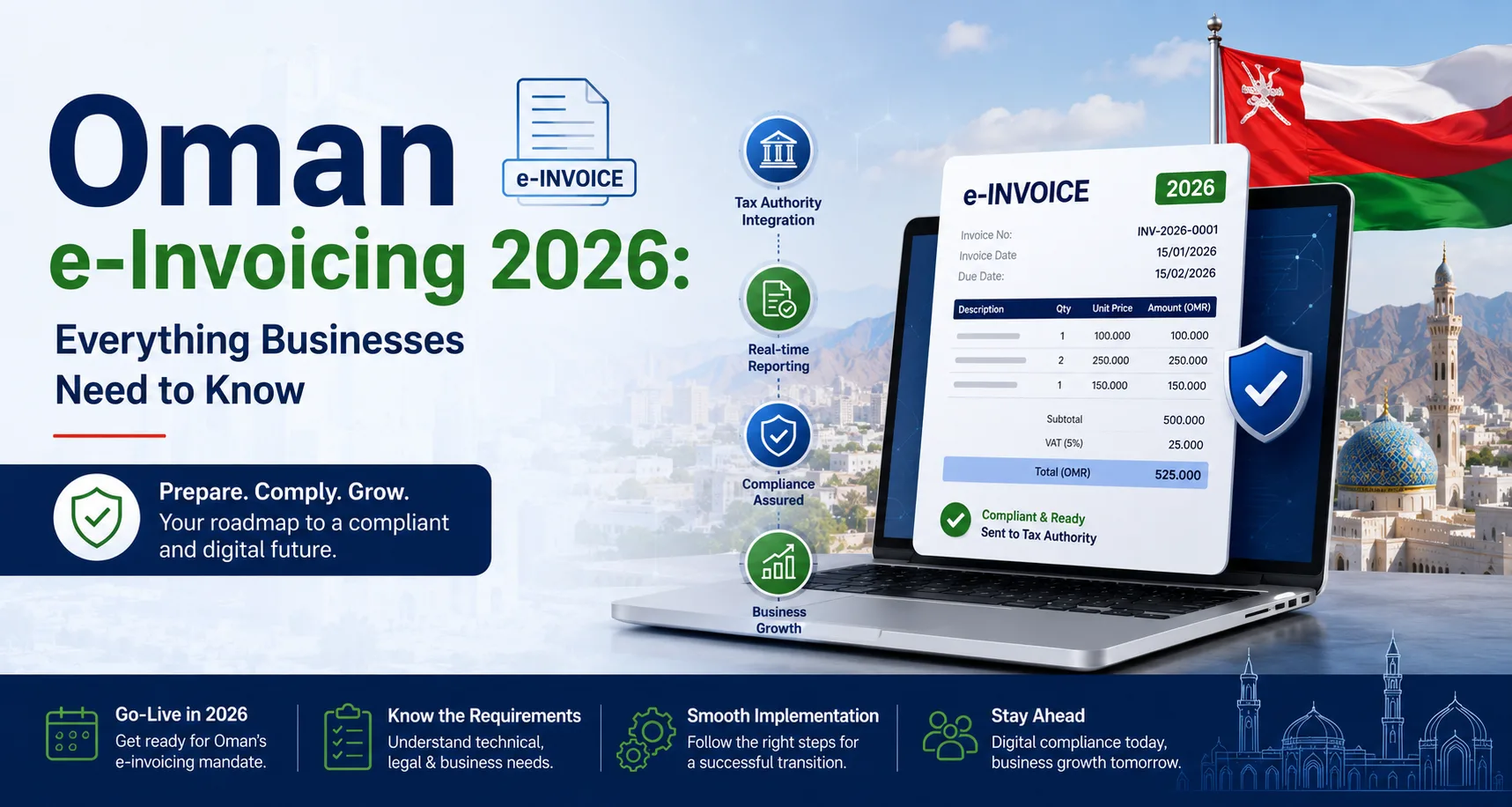
Oman is accelerating its digital transformation of tax and financial processes, making e-invoicing an increasingly important consideration for businesses operating in the country. The transition toward electronic invoicing is designed to improve tax compliance, transaction transparency, data accuracy, and the efficiency of invoice management.
What Is Oman e-Invoicing?
Oman e-invoicing refers to the electronic generation, exchange, and storage of invoices in a structured digital format. Instead of depending primarily on paper documents or manually prepared invoices, businesses can use accounting software or ERP systems to create, manage, and store invoices electronically.
An integrated e-invoicing system can also connect invoicing processes with accounting, taxation, sales, inventory, and financial reporting, helping businesses maintain consistent and accurate transaction records.
Why Is Oman Introducing e-Invoicing?
The introduction of e-invoicing supports Oman’s broader digital transformation and modernization of tax administration. Standardized electronic invoice data can help improve the quality and visibility of financial information while making tax reporting and compliance processes more efficient.
For businesses, the shift can reduce repetitive manual work, minimize invoice errors, improve record management, and make financial information easier to retrieve when required for reporting or audits.
Key Benefits of Oman e-Invoicing
Businesses adopting electronic invoicing can benefit in several ways:
- Improved accuracy: Automated invoice creation reduces manual data-entry and calculation errors.
- Faster processing: Electronic invoices can be generated and exchanged more efficiently than paper-based documents.
- Better record keeping: Digital invoices are easier to organize, search, retrieve, and securely store.
- Greater transparency: Standardized invoice information provides better visibility into business transactions.
- Reduced administrative work: Automation minimizes paperwork and repetitive finance tasks.
- Improved tax compliance: Consistent digital records can help businesses prepare for tax reporting and audit requirements.
What Should Businesses Prepare for in 2026?
Businesses should start reviewing their existing invoicing processes and determine whether their current ERP or accounting software can support electronic invoicing requirements.
Preparation may include cleaning and standardizing customer, supplier, and tax data, reviewing existing invoice formats, assessing system integration capabilities, and identifying gaps in current financial workflows. Finance and accounting teams should also be trained on updated invoicing procedures.
Businesses should closely monitor official announcements from the Oman Tax Authority for information about applicable taxpayers, implementation phases, technical requirements, invoice formats, integration processes, and compliance deadlines.
Conclusion
Oman e-invoicing in 2026 is an important development in the country’s digital tax environment. Preparing early can help businesses reduce operational disruption, improve invoice management, strengthen financial data accuracy, and remain ready for evolving compliance requirements.
The specific obligations, implementation timelines, and technical requirements should always be confirmed using the latest official guidance issued by the Oman Tax Authority.