
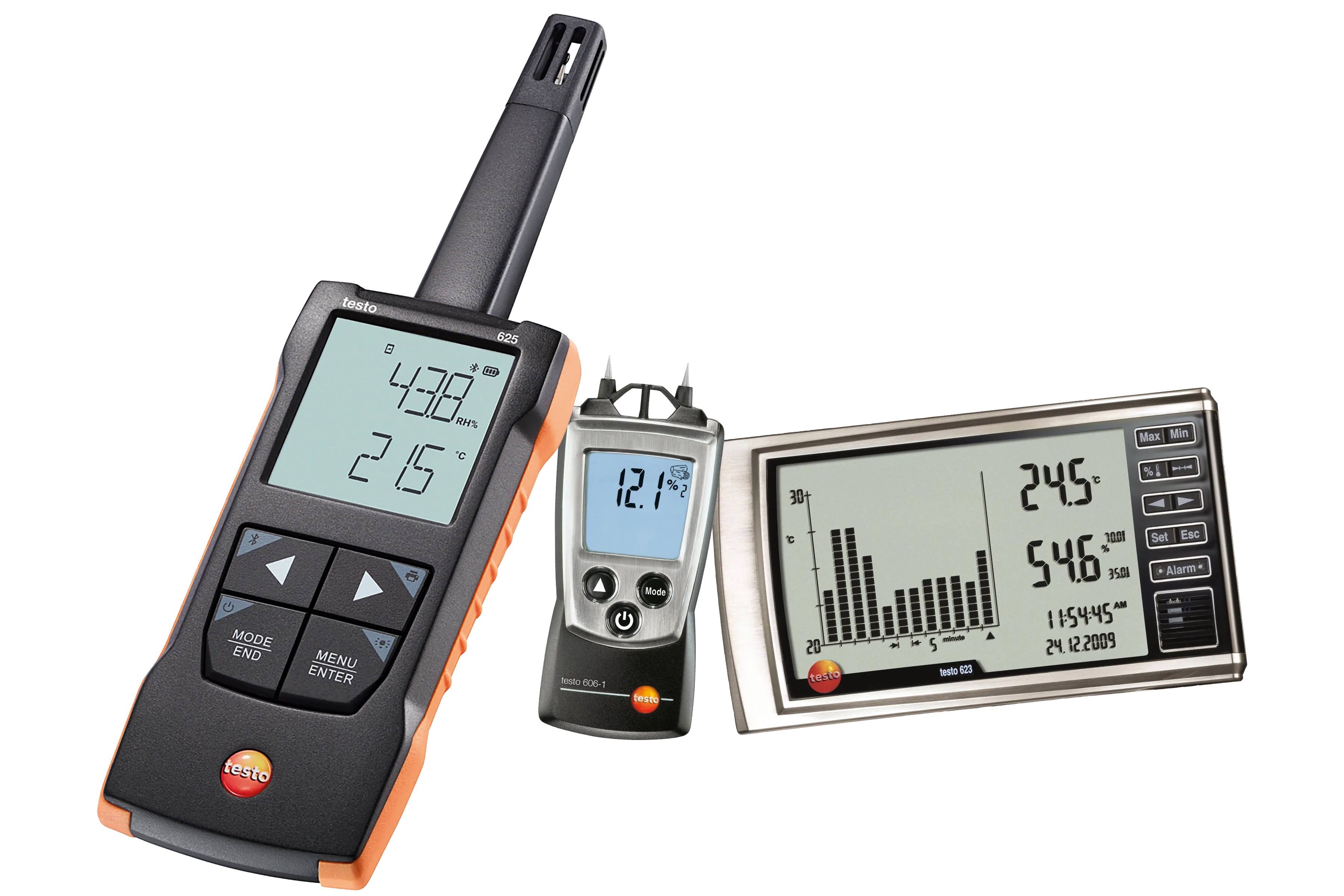
A moisture measurement instrument is a scientific device used to determine the amount of moisture or water content present in a material, gas, or environment. Moisture control is extremely important in many industries because even a small variation in water content can affect product quality, safety, and performance.
From food production to pharmaceuticals, agriculture, construction, and industrial gas systems, moisture measurement instruments play a key role in ensuring accuracy and consistency in processes.
In this guide, we will explore what moisture measurement instruments are, how they work, their types, applications, and how to choose the right one for your needs.
What is moisture measurement?
Moisture measurement refers to the process of detecting and quantifying water content in solids, liquids, or gases. This measurement helps industries maintain quality control and avoid issues caused by excess or insufficient moisture.
Moisture is typically measured in:
- Percentage (%)
- Relative humidity (RH)
- Dew point (for gases)
- Gravimetric units (weight-based measurement)
Accurate moisture measurement ensures product stability, safety, and compliance with industry standards.
What is a moisture measurement instrument?
A moisture measurement instrument is a device designed to detect and measure the moisture content in a sample or environment.
It is widely used in:
- Industrial manufacturing
- Agriculture
- Construction materials testing
- Food processing
- Pharmaceutical production
- Environmental monitoring
These instruments help companies maintain consistent quality and prevent moisture-related damage or degradation.
How Does a Moisture Measurement Instrument Work?
The working principle depends on the type of instrument, but the general idea is to detect water content using physical or chemical properties.
Basic Working Process:
The instrument takes a sample (solid, liquid, or gas).
It analyzes moisture content using sensors or heating methods.
The system converts the data into readable output.
Results are displayed digitally or transmitted to a control system.
Different technologies are used depending on application requirements, such as electrical resistance, capacitance, infrared absorption, or thermal drying methods.
Types of Moisture Measurement Instruments
There are several types of moisture measurement instruments, each designed for specific materials and environments.
Capacitive Moisture Sensors
These sensors measure moisture based on changes in electrical capacitance.
- Suitable for solids and powders
- Fast response time
- Widely used in industrial automation
They are commonly found in grain storage and manufacturing processes.
Resistive Moisture Meters
These devices measure moisture by checking electrical resistance between two probes.
- Simple and cost-effective
- Used in wood, soil, and building materials
- Good for field measurements
However, they may be less accurate in highly conductive materials.
Infrared Moisture Analyzers
These instruments use infrared light to detect moisture levels.
- High precision
- Fast and non-destructive
- Used in food and pharmaceutical industries
They are ideal for real-time production line monitoring.
Microwave Moisture Meters
Microwave-based instruments measure how water molecules interact with microwave signals.
- Very accurate for bulk materials
- Works well in industrial processing
- Suitable for continuous monitoring systems
Loss on Drying (LOD) Analyzers
These instruments measure moisture by heating a sample and calculating weight loss.
- Highly accurate laboratory method
- Used in quality control labs
- Suitable for pharmaceuticals and chemicals
Dew Point Moisture Instruments
These are used for gases and compressed air systems.
- Measure temperature where condensation forms
- Important in industrial gas systems
- Prevents corrosion and system damage
Key Features of a Good Moisture Measurement Instrument
When choosing a moisture measurement device, consider the following features:
- High accuracy and repeatability
- Fast measurement speed
- Wide measurement range
- Durable and industrial-grade design
- Digital display and data logging
- Easy calibration and maintenance
Advanced models may also include wireless connectivity and automation integration.
Applications of Moisture Measurement Instruments
Moisture measurement instruments are used in many industries where water content plays a critical role.
Agriculture Industry
Used to measure moisture in:
- Soil
- Grains
- Seeds
This helps farmers improve yield and storage quality.
Food Industry
Ensures proper moisture levels in:
- Bakery products
- Dairy products
- Processed foods
Too much moisture can cause spoilage, while too little can affect texture.
Pharmaceutical Industry
Moisture control is critical for:
- Drug stability
- Chemical composition
- Storage safety
Even small moisture variations can affect medication effectiveness.
Construction Industry
Used to measure moisture in:
- Cement
- Concrete
- Wood materials
Helps prevent structural damage and ensures durability.
Industrial Manufacturing
Used in:
- Chemical processing
- Plastic production
- Textile manufacturing
Maintains consistent product quality and reduces waste.
Environmental Monitoring
Measures humidity and moisture in:
- Air quality systems
- Weather stations
- Climate research
Importance of Moisture Measurement in Industry
Moisture control is essential because excess or insufficient moisture can lead to serious problems.
Key benefits include:
- Improved product quality
- Reduced material waste
- Enhanced safety standards
- Better process efficiency
- Lower maintenance costs
Without proper moisture measurement, industries may face product failure, contamination, or equipment damage.
Difference Between Moisture and Humidity
Many people confuse moisture content with humidity, but they are not the same.
Moisture ContentHumidityWater in materialsWater in airMeasured in percentage or weightMeasured in RH (%)Used in industrial materialsUsed in weather and environment
Moisture measurement is more material-specific, while humidity focuses on air conditions.
How to Choose the Right Moisture Measurement Instrument
Choosing the right device depends on your application and industry requirements.
Type of Material
- Solid, liquid, or gas
Accuracy Requirements
- Laboratory-grade or industrial-grade
Measurement Method
- Electrical, infrared, microwave, or thermal
Environmental Conditions
- Temperature, pressure, and contamination levels
Portability
- Handheld vs fixed installation
Budget and Maintenance
- Cost-effective vs high-end advanced systems
Common Problems Without Moisture Measurement
Ignoring moisture control can lead to several serious issues:
- Product spoilage
- Equipment corrosion
- Structural damage in construction
- Reduced shelf life of food products
- Inefficient industrial processes
These risks highlight the importance of accurate moisture monitoring systems.
Maintenance Tips for Moisture Measurement Instruments
Proper maintenance ensures long-lasting performance and accuracy.
- Regular calibration
- Cleaning sensors and probes
- Avoiding exposure to extreme conditions
- Proper storage when not in use
- Following manufacturer's instructions
Routine maintenance helps reduce errors and improve reliability.
Future Trends in Moisture Measurement Technology
The future of moisture measurement is becoming smarter and more automated.
Upcoming advancements include:
- AI-based moisture prediction systems
- IoT-enabled smart sensors
- Real-time cloud monitoring
- Wireless industrial integration
- Miniaturized high-precision sensors
These innovations will improve efficiency and reduce manual intervention in industrial processes.
Conclusion
A moisture measurement instrument is an essential tool for ensuring quality, safety, and efficiency across multiple industries. Whether used in agriculture, food production, construction, or industrial manufacturing, accurate moisture measurement helps prevent damage, reduce waste, and improve overall performance.
With advancements in technology, modern moisture measurement devices are becoming more accurate, faster, and easier to integrate into automated systems. Choosing the right instrument and maintaining it properly can significantly improve operational success and product reliability.