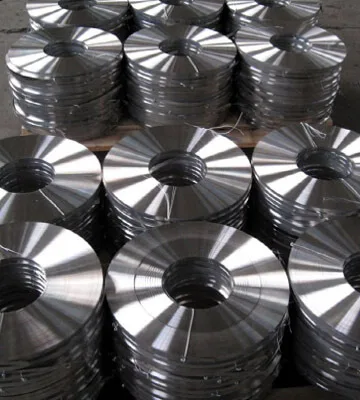
In industries where electrical performance, thermal stability, corrosion resistance, and material consistency are critical, selecting the right nickel product can directly influence the reliability of finished components. Nickel 270 Strips are a high-purity nickel product valued particularly for their electrical and thermal characteristics and are used in specialized industrial and electronic applications.
Nickel 270 is a high-purity nickel grade with very low levels of impurities. Its combination of electrical properties, thermal characteristics, ductility, and resistance to many corrosive environments makes Nickel 270 Strips suitable for manufacturers requiring precise, consistent strip material for further fabrication.
For industrial customers, understanding the characteristics, applications, specifications, and purchasing considerations of Nickel 270 Strips can help in selecting the appropriate material for specialized components.
What Are Nickel 270 Strips?
Nickel 270 Strips are thin, flat products manufactured from high-purity Nickel 270. The strip form is particularly useful for applications requiring accurate dimensions, controlled thickness, and the ability to fabricate material into small or precision components.
Depending on the manufacturing requirement, Nickel 270 Strips may be used for:
- Electrical components
- Electronic components
- Battery-related components
- Resistance elements
- Specialized connectors
- Precision fabricated parts
- Industrial components
- High-purity nickel applications
The exact dimensions, temper, thickness, width, and applicable specification should be established according to the customer's engineering requirements.
What Makes Nickel 270 Different?
Nickel 270 is distinguished from many commercial nickel grades by its very high nickel purity. The low impurity content can be important in applications where electrical, thermal, or material consistency is a priority.
The grade is associated with:
- High nickel purity
- Good electrical conductivity
- Good thermal conductivity
- Excellent ductility
- Good formability
- Useful corrosion resistance
- Good fabrication characteristics
These characteristics make Nickel 270 particularly relevant to specialized applications where conventional nickel alloys may not provide the desired combination of purity and physical properties.
Chemical Composition of Nickel 270
Nickel 270 is a commercially pure, high-purity nickel material. The composition is controlled to maintain its characteristic physical and electrical properties.
A typical composition specification includes nickel as the balance with very low levels of metallic and non-metallic impurities.
For industrial procurement, the exact chemical composition should always be verified against the applicable product specification and material test certificate.
Because Nickel 270 is frequently selected for applications where purity is important, customers should pay particular attention to:
- Nickel content
- Carbon
- Sulfur
- Iron
- Copper
- Silicon
- Other trace elements
The acceptable limits depend on the governing specification.
Key Properties of Nickel 270 Strips
High Purity
The high purity of Nickel 270 is one of its most important characteristics. This makes it suitable for applications where impurity levels can influence electrical or other physical properties.
Good Electrical Conductivity
Nickel 270 can be used in applications where controlled electrical characteristics are required.
This can make it useful for selected electrical and electronic components.
Good Thermal Conductivity
Its thermal characteristics can be advantageous in components where heat transfer or thermal response is an engineering consideration.
Excellent Ductility
Nickel 270 has good ductility, allowing thin strips to be formed and fabricated into different component geometries.
Good Formability
Strip products can be processed through suitable forming and fabrication operations when the material condition and manufacturing procedure are properly selected.
Corrosion Resistance
Nickel provides useful resistance to corrosion in many environments. However, the suitability of Nickel 270 should always be evaluated against the actual chemical environment, concentration, temperature, and operating conditions.
Applications of Nickel 270 Strips
Nickel 270 Strips are primarily relevant to specialized applications where high-purity nickel and controlled strip dimensions are required.
1. Electrical and Electronic Components
Nickel 270 can be considered for electrical and electronic components where its electrical and physical characteristics are suitable.
Strip products are useful because they can be fabricated into:
- Contacts
- Connectors
- Terminals
- Conductive components
- Precision electrical parts
The final material selection should be based on the required electrical, mechanical, and environmental performance.
2. Battery Components
Nickel materials are used in various battery-related applications. Nickel 270 Strip can be considered where high-purity nickel and precise strip dimensions are required.
Depending on the battery design, strip material may be processed into tabs, connectors, current-carrying components, or other specialized parts.
3. Electronic Manufacturing
The combination of purity, ductility, and controlled dimensions makes high-purity nickel relevant to precision electronic manufacturing.
Nickel 270 Strips can be fabricated into small components where consistent material characteristics are important.
4. Specialized Industrial Components
Manufacturers may use high-purity nickel strip as feedstock for specialized industrial components requiring specific electrical or physical properties.
The appropriate grade should be determined according to the component's operating requirements.
5. Precision Fabrication
Thin nickel strip can be used in precision fabrication applications where accurate thickness and width are essential.
Depending on the product specification, strip can be supplied for further cutting, forming, stamping, or machining.
Advantages of Nickel 270 Strips
High-Purity Material
Nickel 270's high purity makes it suitable for applications where controlled impurity levels are important.
Excellent Ductility
The material can be suitable for forming and fabrication into precision components.
Electrical Performance
Its electrical characteristics can make it useful for specialized electrical and electronic applications.
Thermal Performance
Nickel 270 can be considered where thermal conductivity and thermal stability are relevant to component performance.
Precision Strip Form
Strip products provide manufacturers with a convenient feedstock for stamping, cutting, forming, and other production processes.
Nickel 270 Strips for Precision Manufacturing
For industrial manufacturers, strip dimensions can be as important as material grade.
Important dimensional parameters include:
- Thickness
- Width
- Length
- Thickness tolerance
- Width tolerance
- Flatness
- Edge condition
- Surface finish
For high-volume production, consistent dimensional tolerances can help manufacturers maintain repeatability during stamping and forming operations.
Therefore, customers should communicate their dimensional requirements clearly when requesting Nickel 270 Strip.
Nickel 270 Strips vs Commercially Pure Nickel
Nickel 270 belongs to the family of commercially pure nickel materials, but its high purity makes it particularly relevant for applications where low impurity levels are important.
The choice between different commercially pure nickel grades should be based on:
- Required purity
- Electrical characteristics
- Mechanical requirements
- Corrosion environment
- Fabrication method
- Temperature
- Applicable specification
- Cost
Industrial buyers should not select a grade solely based on the generic term "pure nickel." The specific grade and specification should be included in the purchase order.
Nickel 270 Strip Manufacturing
Nickel 270 can be supplied in strip form through appropriate metal-processing operations.
Depending on the manufacturer's production route, manufacturing may involve:
- Melting and refining
- Hot working
- Cold rolling
- Intermediate annealing
- Final rolling
- Slitting
- Surface finishing
- Dimensional inspection
- Testing and certification
The actual manufacturing route depends on the required thickness, width, temper, surface condition, and product specification.
Surface Finishes for Nickel 270 Strips
Surface condition can influence the performance and appearance of strip material.
Depending on the customer's requirement, available finishes may include:
- Mill finish
- Bright finish
- Cold-rolled finish
- Annealed finish
- Custom surface condition
The required surface finish should be specified clearly, especially for applications involving electrical contacts, precision forming, or visible components.
How to Select Nickel 270 Strips
Industrial customers should consider several parameters before placing an order.
1. Material Grade
Clearly specify:
Nickel 270
2. Strip Thickness
Provide the required thickness and tolerance.
3. Strip Width
Specify the required width and allowable tolerance.
4. Temper
The required material condition should be specified according to the forming and mechanical requirements.
5. Surface Finish
Identify whether a particular surface condition or finish is required.
6. Application
Explain the intended use of the material, particularly when the strip will be used in electrical, electronic, battery, or precision applications.
7. Testing and Certification
For industrial applications, customers may require:
- Chemical analysis
- Mechanical testing
- Dimensional inspection
- Surface inspection
- Material Test Certificate
- Heat/lot traceability
- Third-party inspection
Factors to Consider When Buying Nickel 270 Strips
Selecting a suitable supplier is an important part of industrial procurement.
Before purchasing, customers should confirm:
- Nickel 270 grade
- Applicable material specification
- Thickness
- Width
- Length
- Thickness tolerance
- Width tolerance
- Temper
- Surface finish
- Quantity
- Packaging requirements
- Testing requirements
- Certification
- Delivery schedule
For precision applications, it is particularly important to confirm dimensional tolerances before production begins.
Nickel 270 Strips for Electrical Applications
Electrical applications may place greater emphasis on material purity and consistent physical properties.
Depending on the design, Nickel 270 Strips can be used as raw material for components such as:
- Electrical contacts
- Terminals
- Conductive strips
- Connectors
- Precision electrical parts
Manufacturers should evaluate the required electrical resistance, conductivity, temperature range, mechanical properties, and environmental exposure before final material selection.
Nickel 270 Strips for Battery Applications
Battery manufacturing requires carefully controlled materials and dimensions. Strip materials can be incorporated into specific battery components depending on the cell design and manufacturing process.
When evaluating Nickel 270 Strip for battery-related applications, customers should consider:
- Material purity
- Thickness
- Width
- Surface condition
- Electrical characteristics
- Formability
- Welding or joining requirements
- Dimensional consistency
The appropriate material should be confirmed against the battery manufacturer's engineering specification.
Nickel 270 Strips in India
India's electrical, electronics, battery, engineering, and specialized manufacturing sectors can require high-purity nickel products for precision applications.
When sourcing Nickel 270 Strips in India, industrial customers should evaluate suppliers based on:
- Material quality
- Grade compliance
- Dimensional accuracy
- Surface quality
- Manufacturing capability
- Testing facilities
- Certification
- Traceability
- Production capacity
- Delivery capability
A supplier capable of providing consistent strip dimensions and complete material documentation can be valuable for manufacturers using Nickel 270 in production environments.
Nickel 270 Strips: Quality Inspection
Quality inspection is particularly important when strip material is used in precision manufacturing.
Typical inspection areas may include:
Chemical Analysis
Confirms that the material meets the required chemical composition.
Dimensional Inspection
Checks:
- Thickness
- Width
- Length
- Tolerances
Surface Inspection
Identifies visible defects, scratches, rolling marks, or other surface conditions according to the agreed requirements.
Mechanical Testing
Testing may be performed when required by the applicable specification or customer purchase order.
Documentation Review
Material Test Certificates and traceability records can help customers verify material compliance.