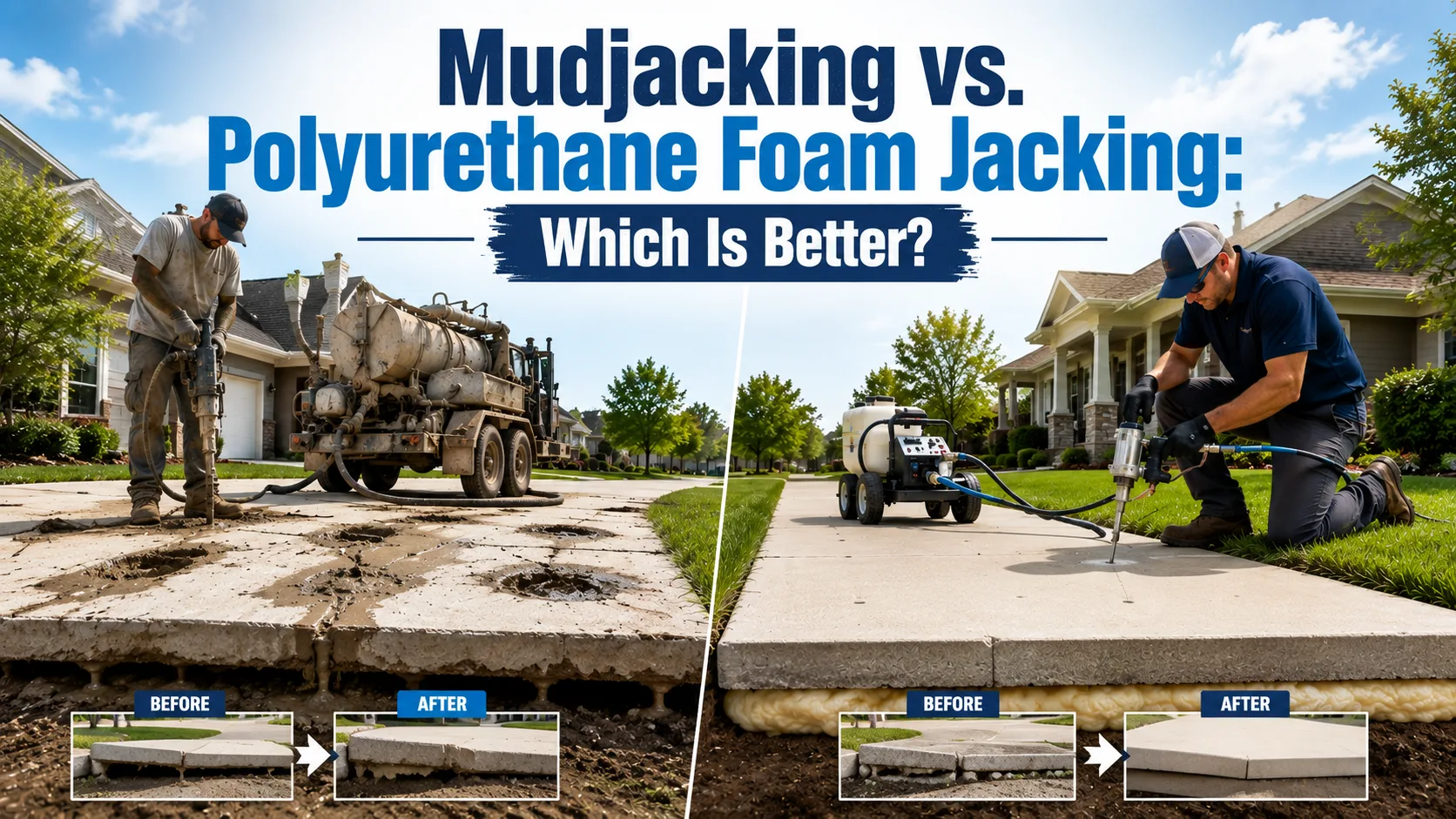
Sunken concrete is a common problem on driveways, sidewalks, patios, and garage floors. Two repair methods are typically used to correct it: traditional mudjacking with a slurry mix, and polyurethane foam jacking, a newer approach that relies on expanding foam. Both aim to raise a slab back to level without removing it, but the materials, process, and results differ in several ways.
This article compares the two methods so property owners can understand how each one works and what factors set them apart.
What Is Mudjacking
Mudjacking is a repair method that lifts a sunken concrete slab by pumping a filling material underneath it. In its traditional form, that material is a slurry made of soil, sand, and cement, often referred to simply as mud. A contractor drills holes through the slab and injects the slurry beneath it, and the added material raises the concrete back to its original height.
The term "mudjacking" is now used broadly to describe slab lifting in general, even when a contractor uses a material other than mud slurry. Because of this, the word can refer either to the classic soil-based method or, informally, to the entire category of slab leveling work.
What Is Polyurethane Foam Jacking
Polyurethane foam jacking follows the same basic principle as mudjacking but uses a different filling material. A two-part polyurethane foam is injected beneath the slab through small holes. The foam expands as it cures, filling voids in the soil and lifting the concrete above it.
Because the foam is far lighter than mud slurry and cures within minutes, this method typically requires smaller holes and less downtime before the surface can be used again. Polyurethane foam jacking has become common for both residential and commercial slab repair.
Comparing the Two Methods
Material Weight
Mud slurry is dense and heavy, similar in weight to the soil it replaces. Polyurethane foam weighs only a small fraction of that. On soil that is already soft or prone to settling, the lighter material places less load on the ground beneath the slab.
Hole Size
Mudjacking with slurry generally requires holes about two inches wide to allow the thick material to flow. Polyurethane foam jacking uses much smaller holes, often around five-eighths of an inch, since the foam is thinner before it expands.
Cure Time
Mud slurry can take one to two days to cure fully, during which the slab may need to stay out of use. Polyurethane foam sets within minutes, so the area is typically ready for normal use the same day.
Precision
Because polyurethane foam expands in a controlled way and reacts quickly, contractors can often make small adjustments to lift a slab precisely. Slurry-based mudjacking tends to be a slower, more gradual process that some contractors still prefer for large or heavily settled areas.
Longevity
Both methods can produce lasting results when performed correctly, but their long-term behavior differs. Mud slurry can, in some conditions, absorb moisture and shift again over time. Cured polyurethane foam does not absorb water in the same way, which can make it more stable in wet or freeze-thaw climates.
Environmental Considerations
Slurry mudjacking uses natural materials such as soil and cement, while polyurethane foam is a manufactured chemical product. Some property owners weigh these material differences when deciding which method fits their preferences or local regulations.
The Mudjacking and Foam Jacking Process
Regardless of material, the general steps for both methods follow a similar sequence.
Step One: Site Evaluation
A contractor examines the slab to determine why it settled and how much lift is needed. This step also identifies any drainage or soil issues that may need separate attention.
Step Two: Drilling
Holes are drilled through the concrete at intervals matched to the slab size and the chosen filling material.
Step Three: Injection
The slurry or foam is pumped beneath the slab. The contractor monitors the surface closely, stopping once the slab reaches the correct level.
Step Four: Patching
The holes are filled with a matching concrete or mortar patch so the surface is sealed and ready for use.
Step Five: Final Check
The contractor verifies that the slab now slopes correctly for drainage and aligns with neighboring surfaces.
Which Method Is Better
There is no single answer that applies to every project. The right choice depends on the specific conditions involved.
Mudjacking with slurry may be suitable for larger areas where a slower, heavier fill is acceptable and where cost per square foot is a primary concern. Polyurethane foam jacking tends to suit projects where fast turnaround, precise leveling, or long-term resistance to moisture matter more.
Soil type also plays a role. Soft or loose soil often benefits from the lighter load that foam places on the ground, while denser, more stable soil can support either method without much difference in outcome.
Because these factors vary from property to property, an inspection by a qualified contractor is generally the most reliable way to determine which method fits a particular slab.
Choosing a Contractor for Either Method
Regardless of which method a property owner selects, the contractor performing the work has a significant effect on the outcome. Property owners typically look for the following:
Experience with both methods. A contractor familiar with slurry and foam techniques can offer an unbiased recommendation based on the site rather than defaulting to one method out of habit.
Licensing and insurance. Verifying proper licensing and liability coverage helps protect the property owner if an issue arises during the repair.
Written estimates. A detailed estimate clarifies what material, labor, and warranty coverage are included before work begins.
Track record. Photos and references from past projects give a sense of the quality a contractor is likely to provide.
Contractors such as Lift It Pro focus on polyurethane foam jacking specifically, reflecting how this method has developed into its own area of specialization within the broader concrete leveling industry.
Conclusion
Mudjacking and polyurethane foam jacking both correct the same underlying problem: a concrete slab that has sunk out of position. Traditional mudjacking relies on a heavier, slower-curing slurry, while polyurethane foam jacking offers a lighter material with a much faster cure time and smaller injection holes. Neither method is universally better, since the right choice depends on soil conditions, project size, and how quickly the surface needs to return to use. A site inspection from a qualified contractor remains the most direct way to determine which approach fits a specific repair.