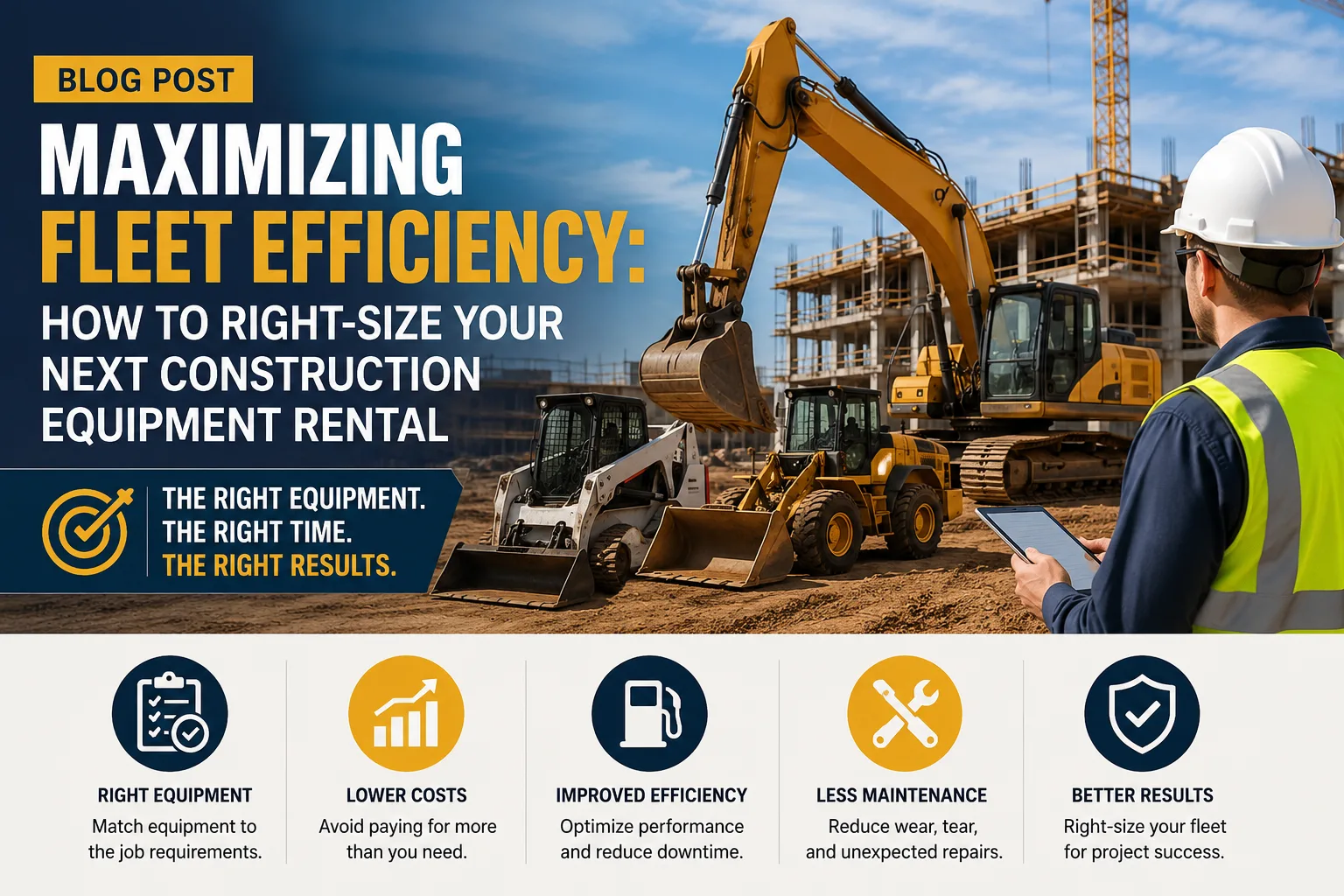
In modern commercial construction, margin protection is a daily battle. Project managers, estimators, and site superintendents face an identical challenge: executing complex earthmoving, site preparation, and material handling tasks on razor-thin timelines while keeping overhead under strict control. When a job site falls behind schedule, or when operational costs swell due to machinery bottlenecks, profitability quickly erodes.
Achieving peak operational efficiency requires a shift toward agile asset management. Implementing a strategic, flexible construction equipment rental model allows contractors to completely bypass upfront capital expenditure while maximizing fleet adaptability. Instead of forcing a pre-existing, owned asset to fit a project it wasn't engineered for, right-sizing via procurement lets you tailor your fleet configuration to the exact physical demands, soil conditions, and spatial constraints of each individual job site.
1. Bulk Earthmoving & Rough Grading
The initial phases of any major commercial development—whether it is a logistics hub, a highway expansion, or a residential subdivision—hinge entirely on mass excavation and rough grading. During this stage, success is measured strictly by cycle times and volumetric efficiency: how many cubic yards of material can be cleared, cut, and stabilized per hour.
Deploying under-powered equipment here is a recipe for operational failure. When machines lack the necessary drawbar pull or operating weight to tackle compacted soil or rocky terrain, operators are forced to take shallower cuts. This increases the total number of passes required, accelerates component wear, elevates fuel burn, and introduces severe project delays. To optimize high-volume earthmoving, contractors rely heavily on heavy-duty crawlers engineered for maximum tractive effort and stability. Utilizing premium dozer rentals ensures that your operators have the exact machine weight, horsepower, and blade configurations required to dominate tough site clearing and rough grading phases.
Tonnage, Blade Selection, and Undercarriage Dynamics
Right-sizing a large crawler requires balancing specific mechanical variables against your site profile:
Operating Weight & Horsepower: For heavy civil engineering, massive bulk earthmoving, or deep ripping applications, heavy-duty machines (typically ranging from 200 hp to over 350 hp) provide the raw drawbar pull needed to cut through highly compacted strata without slipping tracks.
- Blade Configuration:
- Semi-U (SU) Blades: Combine the excellent penetration characteristics of a straight blade with the increased capacity of side wings.
- Universal (U) Blades: Feature large wings designed specifically for pushing massive volumes of loose aggregate or stockpiled earth across longer distances.
- Variable Power Angle Tilt (VPAT) Blades: Provide mechanical versatility, allowing operators to lift, tilt, and angle the blade dynamically from the cab—perfect for finishing, sweeping, and precise grading applications.
- Undercarriage Infrastructure: Choosing between standard undercarriages for high-abrasion, rocky soils and Low Ground Pressure wide-track configurations for swampy, soft, or sensitive environments prevents costly immobilization and protects underlying subgrade structures.
2. Utility & Precise Trenching in Tight Spaces
While massive crawlers handle heavy earthmoving, urban infrastructure development and modern commercial jobsites demand localized precision. Navigating congested urban footprints, digging alongside live traffic lanes, establishing deep utility corridors, and executing structural foundation work require compact machinery capable of operating productively within highly constrained environments.
To counter spatial challenges without sacrificing mechanical capability, modern project managers deploy specialized compact and intermediate excavators. Utilizing highly versatile mini excavator rentals allows crews to work directly alongside delicate structures, open narrow utility trenches, and work around obstructions safely, all while maintaining excellent hydraulic breakout force.
Analyzing Key Technical Metrics
Selecting the ideal compact or intermediate excavator requires looking closely at key performance specs:
- Tail Swing Configuration.
- Dig Depth & Reach.
- Hydraulic Flow & Breakout Force.
- Undercarriage Options.
Maximizing Tool Adaptability
The modern compact excavator functions as a comprehensive tool carrier. By utilizing advanced hydraulic quick-couplers, operators can transition seamlessly between distinct buckets, trenching tools, and specialized attachments in minutes. This versatility allows a single compact machine to execute precise trenching, perform backfilling, drive structural posts, and handle selective demolition, effectively replacing multiple single-purpose machines and streamlining the asset footprint on site.
3. Rapid Material Handling & Load-and-Carry Operations
Once earth is moved and utilities are placed, site logistics transition into high-volume material handling. Aggregates, crushed stone, sub-base gravel, bedding sand, and pipe segments must be continuously moved from delivery staging yards to active installation zones across the site. Simultaneously, stockpiled spoils and excavated materials must be loaded into haul trucks for off-site removal.
To maintain fluid logistics and achieve optimal cycle times, contractors utilize articulated wheel loaders. Securing targeted wheel loader rentals allows you to accurately match bucket volumetric capacity, static tipping load, and lift height directly to the density of your material and the side-board dimensions of your truck fleet.
Essential Specifications for Material Handling Excellence
When right-sizing an articulated wheel loader for load-and-carry operations, consider these key operational metrics:
- Bucket Capacity & Material Density.
- Static Tipping Load & Articulation Angle.
- Dump Clearance & Hinge Pin Height.
- Powertrain Efficiency & Operator Ergonomics.
Streamlining Load-and-Carry Productivity
Articulated wheel loaders excel at load-and-carry applications, moving material across sprawling job sites much faster than tracked machines. Their rubber tires minimize rolling resistance on compacted haul roads, saving fuel and preventing damage to underground utilities or newly laid base courses. By matching the loader's bucket capacity perfectly to the haul vehicle's volume, you can fill trucks in a predictable number of passes, optimizing your entire material transportation workflow.
4. The Data-Driven Fleet Analysis Checklist
To ensure your next construction project operates at peak efficiency, use this data-driven engineering checklist before signing your next rental contract. Matching job site realities with precise machine specifications prevents costly bottlenecks and maximizes your margins.
1: Site Geometry and Environmental Assessment
2: Production Volumetrics and Material Dynamics
3: Technical Specifications and Integration
Conclusion & The OEC Rentals Advantage
Right-sizing your equipment fleet is not simply about selecting a machine from a catalog—it is a critical strategy that directly protects your project margins, optimizes labor productivity, and shortens project schedules. By accurately matching equipment size, weight, and hydraulic capacity to the specific demands of your job site, you eliminate the high fuel costs of oversized machinery and avoid the frustrating delays caused by under-powered assets. Partnering with a flexible rental provider allows you to deploy a highly agile fleet strategy, tailored to the unique phase-by-phase requirements of every contract.
As a trusted leader in heavy earthmoving and specialty fleet solutions throughout Pennsylvania, OEC Rentals provides more than just an expansive inventory of modern machinery.