
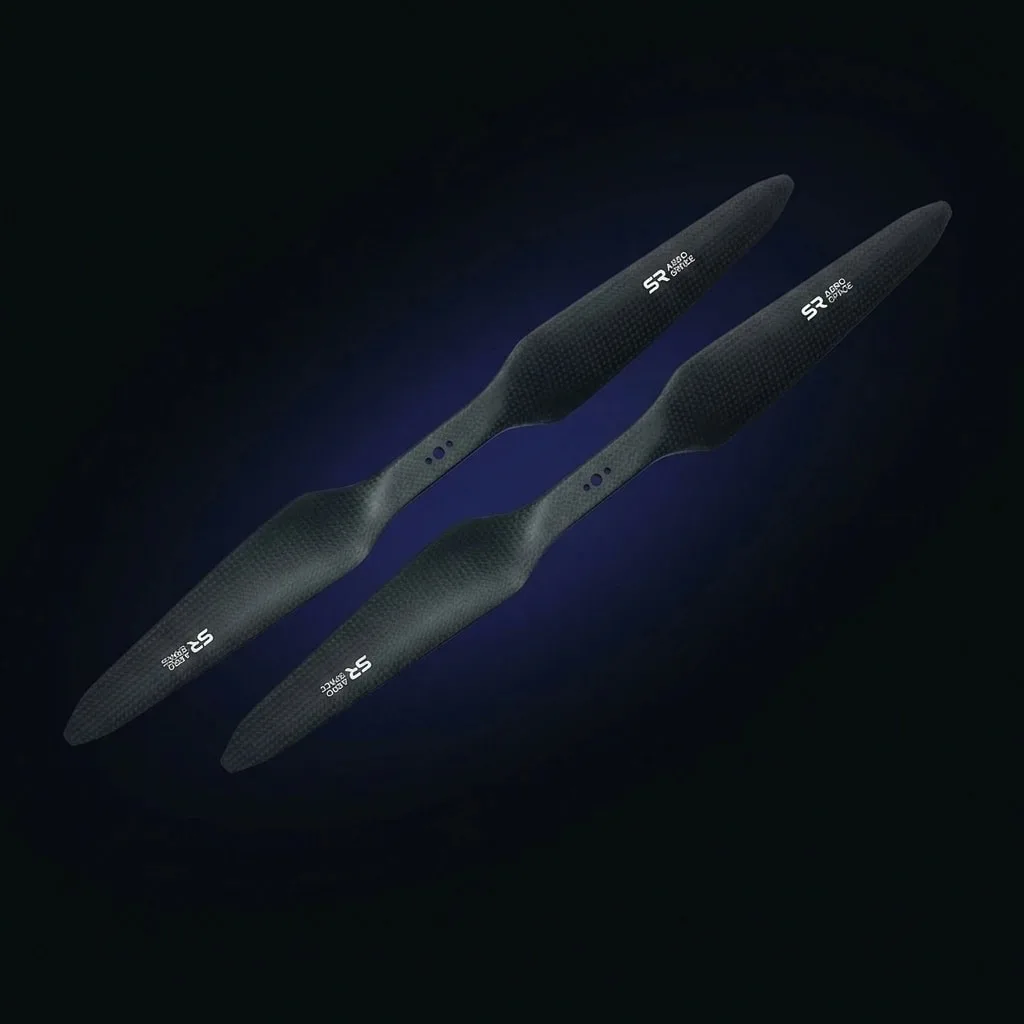
Drone propeller selection affects flight performance more directly than almost any other hardware decision. The wrong propeller for a given motor, battery, and payload combination produces inefficiency at best and mechanical failure at worst. Understanding what actually differentiates propeller specifications helps operators make decisions based on physics rather than product marketing.
Approach A: Prioritizing Thrust and Efficiency
Larger diameter propellers move more air per revolution and produce more thrust at a given RPM than smaller propellers with the same pitch. For drones carrying heavier payloads or requiring longer flight times, the best propeller for drone applications is often a larger diameter propeller operated at lower RPM, as it is more efficient than smaller, faster-spinning propellers producing equivalent thrust. The tradeoff is increased size, which affects portability and increases the structural loads on motor mounts and frames during high-speed maneuvers.
Carbon fiber propellers offer superior stiffness-to-weight ratios compared to plastic alternatives. Flexing in a plastic propeller under load changes its effective pitch during flight, reducing thrust consistency and producing vibration that degrades image quality in camera drones.
Approach B: Prioritizing Agility and Maneuverability
Smaller propellers spin faster and respond more quickly to throttle changes, making them preferable for racing drones and applications requiring rapid directional changes. The lower inertia of a smaller propeller means the motor can accelerate and decelerate it faster, which translates directly to flight responsiveness.
According to International Journal of Micro Air Vehicle Research, propeller selection for multirotor drones involves a balance between thrust coefficient and figure of merit (efficiency). The optimal propeller diameter for a given application is determined by the hover thrust required, the available motor kV rating, and the battery voltage, not by a universal size recommendation.
When to Use Which
Use larger diameter, lower pitch propellers when: the application prioritizes flight time and payload capacity over agility; the drone will operate primarily in hover or slow-speed flight; and vibration minimization is important for camera or sensor payload quality.
Use smaller diameter, higher pitch propellers when: the application requires rapid response and directional precision; the drone will operate at higher forward speeds; and the motor-battery combination is sized for high RPM operation.
Common Mistakes in Both
Over-pitching for the motor: a propeller pitch that exceeds the motor's ability to maintain target RPM under full load draws excessive current, overheats the motor, and reduces battery life. Always confirm the propeller pitch is within the motor manufacturer's recommended range at the intended operating voltage. Mismatching propeller weight distribution: cheap propellers often have mass imbalances between blades that cause vibration at operating RPM. Balance each propeller before installation using a prop balancer. The 30-second balancing check eliminates the most common source of vibration-induced airframe stress in multirotor drones.