Click Here → Learn more
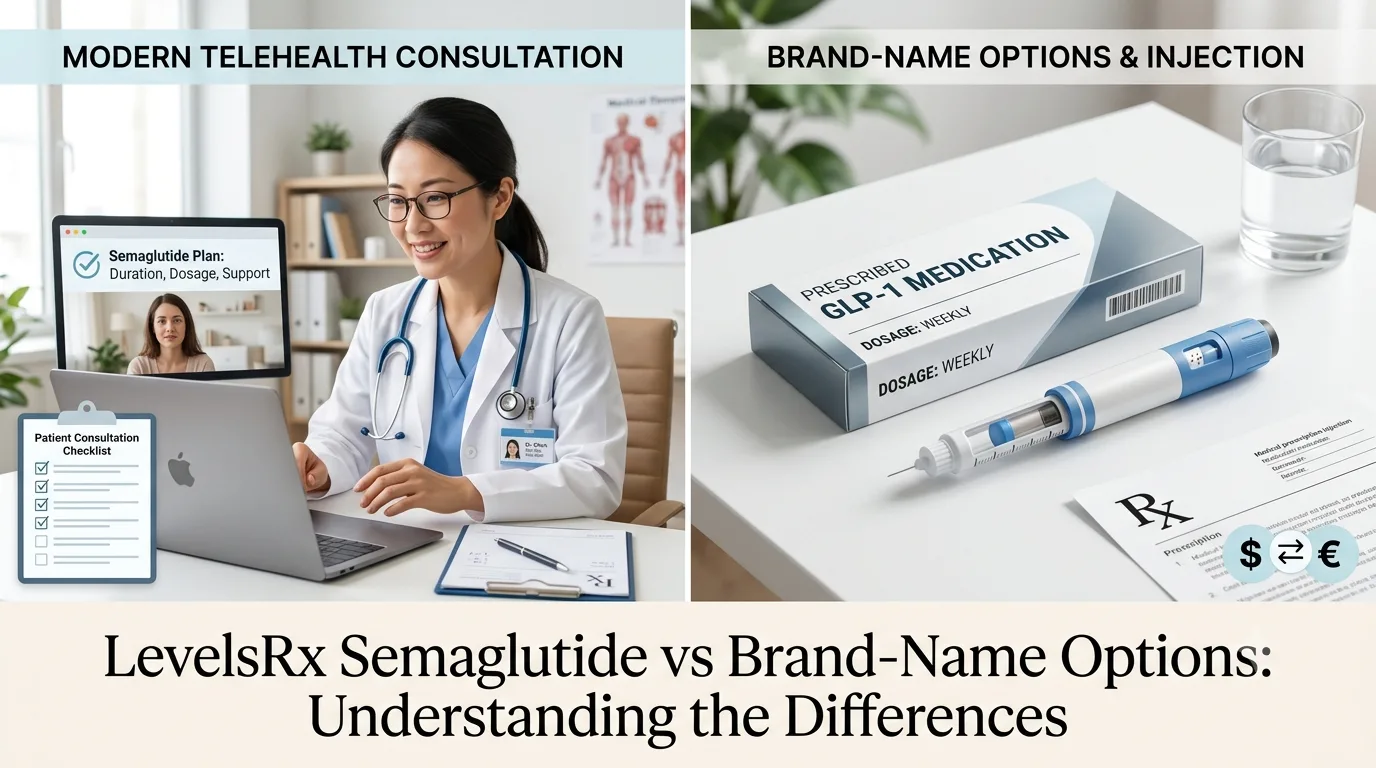
Semaglutide has become one of the most widely discussed medications for weight management and metabolic health. As interest has grown, patients may encounter several ways to access semaglutide, including telehealth programs such as LevelsRx and FDA-approved brand-name medications such as Wegovy and Ozempic.
Although these options may involve the same active ingredient, they should not automatically be treated as identical products. Differences can involve regulatory approval, formulation, delivery devices, prescribing, pharmacy services, dosing instructions, cost, insurance coverage, and the level of clinical evidence supporting a specific product.
Understanding these differences can help patients have a more informed conversation with a licensed healthcare professional before starting or changing treatment.
What Is Semaglutide?
Semaglutide is a medication that belongs to the glucagon-like peptide-1 (GLP-1) receptor agonist class. It works by activating GLP-1 receptors involved in appetite regulation, blood glucose control, and digestion.
In the United States, the FDA has approved several semaglutide products for specific medical uses. Wegovy is approved for chronic weight management in appropriate patients, while Ozempic is approved for certain adults with type 2 diabetes and related cardiovascular and kidney risk-reduction indications. Rybelsus is an oral semaglutide product approved for type 2 diabetes.
The fact that two products contain semaglutide does not mean that they have the same formulation, approved indication, dose presentation, or regulatory status.
What Is LevelsRx Semaglutide?
LevelsRx is a telehealth-based approach through which eligible patients may receive medical evaluation and treatment for weight management. The program can connect patients with healthcare professionals who assess whether prescription treatment may be appropriate.
The important distinction is that a telehealth company and a medication are not necessarily the same thing. A telehealth service may provide the clinical consultation, prescription process, follow-up, and access to a pharmacy, while the medication itself comes from a particular manufacturer or pharmacy.
Therefore, when comparing LevelsRx semaglutide with a brand-name product, patients should first determine exactly which medication is being prescribed, who manufactures it, what formulation is being used, and whether it is an FDA-approved product or a compounded preparation.
Brand-Name Semaglutide Options
Brand-name semaglutide products have gone through FDA review for their approved uses. Wegovy and Ozempic are injectable semaglutide products supplied in manufacturer-specific pen devices, while Rybelsus is an oral tablet.
FDA-approved products have standardized labeling that describes their approved indications, dosing schedules, administration instructions, warnings, contraindications, and known adverse reactions.
This standardized information can be particularly important when a medication requires dose escalation. Patients and healthcare professionals can use the manufacturer's prescribing information as a consistent reference.
FDA Approval Is an Important Difference
One of the biggest differences to investigate is regulatory status.
FDA-approved medications undergo review for safety, effectiveness, quality, manufacturing, and labeling for their approved indications. Compounded medications are different. The FDA does not approve compounded drugs before they are marketed in the same way it approves finished prescription medications.
The FDA states that compounded GLP-1 drugs should generally be considered when a patient's medical needs cannot be met by an FDA-approved medication. The agency has also warned about dosing errors and other concerns associated with compounded semaglutide.
This does not mean that every compounded medication is inherently unsafe or inappropriate. Compounding can have legitimate medical purposes. However, patients should understand that a compounded preparation is not automatically equivalent to the FDA-approved product simply because it contains semaglutide.
Formulation Can Be Different
Another important consideration is formulation.
A brand-name product has a specific formulation developed and manufactured under controlled specifications. A compounded preparation may be produced by a pharmacy according to a prescription and may differ in concentration, packaging, ingredients, and administration method.
The FDA has specifically raised concerns about compounded semaglutide products being supplied in different concentrations and containers. These differences can make dosing more complicated, particularly when patients must measure medication from a vial using a syringe.
For this reason, patients should never assume that the instructions for a brand-name pen automatically apply to a compounded product.
Delivery Device and Convenience
Brand-name injectable semaglutide products are generally supplied in manufacturer-designed injection pens. These devices are intended to make administration more standardized.
Some compounded semaglutide products may instead come in multidose vials or other formats. That can require the patient to draw a specific volume into a syringe.
The delivery method may seem like a minor detail, but it can affect convenience and the possibility of measurement mistakes. The FDA has reported dosing errors involving compounded injectable semaglutide, including situations where patients administered substantially more medication than intended.
Patients receiving a vial-based medication should receive clear instructions from their healthcare professional or dispensing pharmacy about exactly how to measure and administer the prescribed dose.
Dosing Should Not Be Compared by Name Alone
Semaglutide dosing is another area where comparisons can become confusing.
Approved products have established dosing schedules based on their prescribing information and intended use. Compounded products may be supplied in different concentrations, meaning the amount of liquid used does not necessarily correspond directly to the milligram dose used with a brand-name pen.
For example, comparing the number of "units" in a syringe with the milligram dose of a brand-name pen can be misleading without knowing the concentration of the compounded medication.
Patients should therefore compare medications using the actual prescribed dose and formulation rather than simply comparing injection volume or syringe markings.
Cost and Insurance Coverage
Price is often one of the main reasons people investigate telehealth programs or compounded medications.
Brand-name semaglutide can be expensive without insurance coverage, and insurance benefits differ considerably depending on the patient's plan, diagnosis, eligibility, and medication. Some patients may qualify for manufacturer savings programs or other assistance, depending on the product and their circumstances.
Telehealth programs may advertise a different overall price structure that can include medical consultations, ongoing care, medication, or pharmacy services. However, the advertised monthly price should be examined carefully to determine exactly what is included.
A lower price does not necessarily mean that two treatment options are equivalent. Patients should compare the medication itself, healthcare services, pharmacy source, follow-up care, shipping, and other fees.
Clinical Evidence Matters
Brand-name medications such as Wegovy and Ozempic have been evaluated through clinical development programs supporting their FDA-approved uses.
When considering another semaglutide preparation, it is important to distinguish evidence for semaglutide as a drug from evidence for a specific compounded formulation.
Research demonstrating that FDA-approved semaglutide can be effective does not automatically establish that every compounded semaglutide preparation has identical quality, stability, effectiveness, or safety.
This distinction is especially important when evaluating marketing claims that describe a compounded product as being the "same as" an FDA-approved medication. The FDA has warned that compounded products should not be represented as identical to approved drugs when they are not FDA-approved versions of those products.
Pharmacy Quality and Product Handling
Where the medication comes from is another factor worth checking.
Patients should know the name of the dispensing pharmacy and whether it is appropriately licensed. They should also receive medication with clear labeling, storage instructions, dosing directions, and contact information for questions.
Storage is particularly relevant for injectable medications. The FDA has received reports involving compounded GLP-1 medications that arrived with inadequate refrigeration. Patients should follow the storage requirements supplied with their specific medication and contact the pharmacy if there is uncertainty about whether a shipment was stored correctly.
What About Side Effects?
Semaglutide can cause side effects regardless of whether the medication is obtained through a brand-name prescription or another legitimate treatment pathway.
Common gastrointestinal effects can include nausea, vomiting, diarrhea, constipation, and abdominal discomfort. The severity and likelihood of side effects can vary between individuals.
However, compounded products can introduce additional concerns if there are differences in concentration, instructions, or administration. Dosing mistakes may result in a patient receiving more medication than intended.
Patients should follow their healthcare professional's instructions rather than adjusting the dose independently.
Questions to Ask Before Choosing a Semaglutide Option
Before starting treatment through a telehealth program, patients can ask:
- Is the medication FDA-approved or compounded?
- What is the exact product and formulation?
- Who manufactures or compounds it?
- Which pharmacy dispenses it?
- What is the prescribed dose in milligrams?
- How should the medication be stored?
- What type of injection device is provided?
- What medical follow-up is included?
- What happens if side effects occur?
- What is the total monthly cost?
- Does insurance cover the prescribed product?
- Who should be contacted with dosing or medication questions?
These questions can provide much more useful information than comparing advertised prices alone.
LevelsRx Semaglutide vs Brand-Name Options: Which Is Better?
There is no universal answer because the right treatment depends on the individual's medical needs, eligibility, treatment goals, insurance coverage, preferences, and the exact product being prescribed.
For patients who prioritize an FDA-approved product with standardized labeling and manufacturer-specific delivery devices, a brand-name medication may be preferable when clinically appropriate and accessible.
A telehealth program may appeal to patients who value remote medical consultations, structured follow-up, and convenience. However, the key question is not simply whether the medication comes through LevelsRx or another service. Patients should determine exactly what medication they will receive and whether it is an FDA-approved product or a compounded preparation.
Final Takeaway
LevelsRx semaglutide and brand-name semaglutide options should not be compared solely by the word "semaglutide." The active ingredient is only one part of the picture.
Regulatory approval, formulation, manufacturer, pharmacy, delivery device, dosing instructions, clinical evidence, monitoring, insurance coverage, and total cost can all influence the treatment experience.
FDA-approved semaglutide products have undergone regulatory review for their approved uses, while compounded semaglutide products do not undergo the same FDA premarket approval process. The FDA has highlighted concerns involving compounded GLP-1 medications, particularly dosing errors and product-quality issues.
Anyone considering semaglutide should discuss the options with a licensed healthcare professional and verify the exact medication being prescribed. The goal should be to choose an appropriate, legitimate treatment option based on medical needs and reliable information—not simply the lowest advertised price.