In a busy print shop, moving paper is not a small task. Large stacks can be heavy, awkward to position, and difficult to raise to the working height needed by a guillotine cutter, printing press, or other finishing equipment. When employees repeatedly lift, lower, and reposition those stacks by hand, the process can consume valuable time and make material handling more difficult.
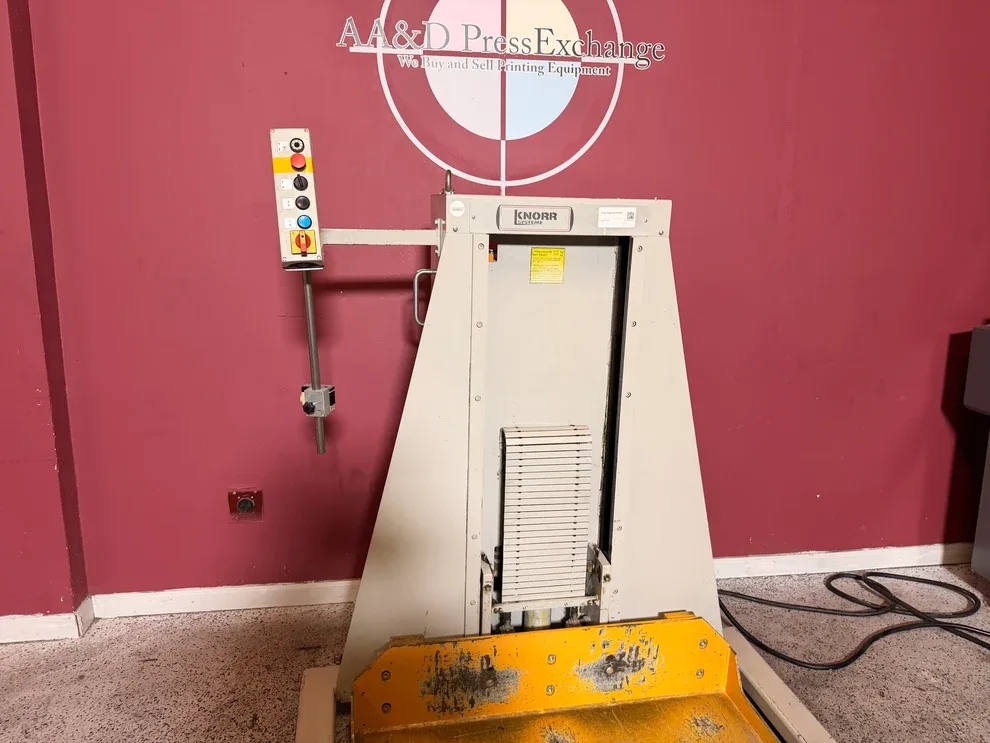
The Knorr Paper Lift L-600-3W is designed to address this part of the production process. It is a paper-handling lift used for raising and moving stacks of paper in printing and finishing environments. Rather than treating a large paper pile as something workers must repeatedly handle manually, a paper lift provides a dedicated mechanical solution for positioning it.
For businesses searching for a Knorr Paper Lift L-600-3W for sale, the machine can be particularly relevant when paper handling is an important part of daily production. Understanding how a paper lift works, where it fits into a print workflow, and what to inspect when purchasing used equipment can help buyers determine whether it is suitable for their operation.
What Is a Paper Lift?
A paper lift is a piece of material-handling equipment designed to raise and position stacks of paper.
The basic idea is simple. Imagine a large pile of books sitting on a low table. If you needed to move that pile to a higher table several times every hour, picking it up manually would quickly become inconvenient. A lifting platform solves the problem by raising the entire pile.
A paper stack lift works on the same principle, but it is designed specifically for the demands of print production.
The paper stack can be placed on the platform, raised to the required height, and positioned for the next production step. Depending on the particular equipment configuration, the lift may also help operators move the stack around the production area.
This can make paper handling more organized and reduce unnecessary manual lifting.
Why Paper Stack Handling Matters
Paper may look lightweight when viewed as a single sheet. A full pallet or large stack is a completely different matter.
Hundreds or thousands of sheets together can create a substantial load. Moving that load repeatedly requires planning and appropriate handling equipment.
In a print environment, paper may need to travel between several stages:
Storage → printing → cutting → folding → finishing → packing
At each stage, stacks may need to be raised, lowered, or repositioned.
Without suitable equipment, workers may spend considerable time moving paper with manual methods. A dedicated lift can help turn this into a more controlled process.
The purpose is not merely to make lifting easier. Efficient paper stack handling can also help keep production moving because operators spend less time dealing with material movement.
Understanding the Knorr L-600-3W
The Knorr L-600-3W is a paper lift associated with industrial printing and finishing applications.
Knorr is well known in the graphic arts industry for paper-handling and finishing equipment. The L-600-3W belongs to the type of machinery used to raise and position paper stacks for production work.
The model name itself provides useful information, but buyers should not rely on the name alone when evaluating a used machine.
The exact specifications, lifting capacity, dimensions, electrical configuration, and condition should be confirmed for the individual unit being offered for sale.
This is especially important with older or used machinery because equipment may have been serviced, modified, relocated, or configured differently during its working life.
How a Paper Lift Fits Into a Print Shop
A paper lift can serve as a link between material storage and production equipment.
For example, imagine a print shop preparing a large batch of sheets for cutting. The sheets are stacked together, but the cutting machine requires the paper to be positioned at a particular working height.
Instead of repeatedly lifting individual piles manually, the operator can use a lifting platform to bring the stack into position.
The same basic principle can apply when paper needs to be moved between different production stages.
The lift does not perform the printing or cutting itself. Its job is to make the material-handling process more practical.
That distinction is important. A paper lift is a support machine, but support equipment can have a meaningful effect on overall workflow.
Moving Heavy Paper Stacks More Efficiently
One of the main reasons businesses invest in paper-handling equipment is the sheer weight of paper.
A single sheet is easy to carry. A stack several inches high can be a very different challenge.
Trying to repeatedly lift such stacks manually can slow down operations. It can also make positioning less precise because workers need to concentrate on moving the load rather than preparing the material for production.
A paper stack handling machine allows the operator to use the equipment rather than relying entirely on physical effort.
This can be compared to using a hand truck to move a heavy box. The box has not become lighter; the equipment simply provides a better way to handle it.
Supporting Guillotine Cutting Operations
Paper lifts are commonly associated with cutting-room workflows.
A guillotine cutter may process large stacks of printed or unprinted paper. Before cutting can begin, the stack needs to be positioned correctly.
A lift can help bring the material to a suitable height and make movement between stages more manageable.
This is particularly useful in environments where cutting is performed continuously throughout the day.
The lift itself does not replace the cutter. Instead, it supports the cutter by making the movement and positioning of paper more efficient.
For businesses running a substantial amount of sheet-cutting work, this supporting role can be important.
Paper Handling Before Printing
Paper handling begins before a sheet ever reaches the printing press.
Stock may arrive in large quantities and remain in storage until it is required. When a job is scheduled, the appropriate paper must be brought to the production area.
A lifting system can help operators move the material through this preparation stage.
The specific movement method depends on the facility's layout and the equipment used alongside the lift. Businesses should consider how the L-600-3W would interact with existing carts, pallets, presses, cutters, and finishing machinery.
The goal is to create a logical route rather than having employees repeatedly carry heavy stacks across the facility.
Paper Handling After Printing
The work does not become easier simply because the paper has been printed.
Printed sheets may need to be moved to a cutter, folder, collator, bookletmaker, or other finishing equipment. Some jobs may involve several stages before the finished product is ready for packaging.
A paper lift can support these transitions.
For example, a printed stack could be moved from a press area to a cutting station. Once cutting is complete, the resulting material may need to be moved again for folding or other finishing work.
Efficient handling at each transition can help reduce unnecessary delays.
Why Lift Height Matters
A paper lift is useful because it can change the working height of a stack.
Imagine trying to transfer a heavy stack from floor level onto a high work surface. The challenge is not only the weight but also the difference in height.
A lifting platform reduces that problem by raising the material.
The exact lifting range of a used Knorr L-600-3W should be verified from the individual machine's documentation or listing rather than assumed from the model designation.
For buyers, the key question is whether the machine can position the paper where it needs to go in their particular workflow.
Evaluate the Maximum Load
Load capacity is another critical consideration.
Different paper lifts are designed for different weights. The maximum allowable load should never be guessed.
Before purchasing a Knorr L-600-3W paper lift, determine the approximate weight of the largest paper stacks your operation normally handles.
Then compare that requirement with the confirmed capacity of the machine being offered.
This is similar to buying a vehicle for hauling equipment. Knowing that it can move a load is not enough; you need to know whether it can safely handle your typical maximum load.
Never exceed the manufacturer's specified capacity.
Used Equipment Requires Careful Inspection
A used paper lift should be evaluated as a working machine, not simply as a piece of equipment with a recognizable brand name.
Start with the platform and lifting mechanism. Look for visible damage, excessive corrosion, bent components, leaks where applicable, or signs of unusual wear.
Check the controls and safety devices.
If a demonstration is available, operate the lift through its normal movement range while observing whether the platform moves smoothly and consistently.
Listen for unusual noises. Watch for hesitation, uneven movement, or vibration.
A machine that operates smoothly during testing provides more useful information than one that is only shown in a stationary photograph.
Inspect the Hydraulic or Lifting System
Depending on the specific configuration, lifting equipment can contain components that require regular maintenance.
The lifting system should therefore be inspected carefully.
Check for visible fluid leakage where hydraulic components are present. Examine hoses, fittings, cylinders, mechanical components, and connection points for signs of damage or deterioration.
The machine should also be checked to ensure that it can hold the load appropriately during operation.
Any repair or inspection involving critical lifting components should be performed by qualified personnel.
Safety should take priority over production speed or convenience.
Check the Platform and Wheels
The platform is where the paper stack sits, so its condition matters.
Inspect the platform for damage or deformation. Make sure the surface is suitable for supporting the intended load.
If the particular unit is equipped with wheels or a mobile base, examine those components as well.
A mobile paper lift needs to move predictably across the floor. Damaged wheels or casters can make a heavy load difficult to control.
The floor surface itself should also be considered. Uneven floors, ramps, thresholds, or narrow passageways can affect how safely heavy paper stacks can be moved.
Consider the Physical Size
Before buying a used Knorr paper lift, measure the space where it will operate.
Do not only measure the parking area. Think about the entire route the machine will travel.
Ask:
- Can it fit through the required doors?
- Is there enough space to turn?
- Can the operator reach the controls easily?
- Is there sufficient clearance around nearby machines?
- Can the lift be positioned safely beside the intended equipment?
- Is the floor suitable for the combined machine and load?
These questions become particularly important in crowded print shops.
A machine that works perfectly but cannot move through the facility efficiently will not provide much practical value.
Electrical Requirements Should Be Verified
Used industrial equipment can have different electrical configurations depending on where and when it was installed.
Before purchasing the Knorr L-600-3W, confirm its voltage, phase, frequency, and other electrical requirements from the actual machine's documentation or identification plate.
This is particularly important when equipment is being moved between countries or facilities.
The installation should be completed according to applicable electrical and workplace safety requirements. If the electrical configuration is unfamiliar, have it reviewed by a qualified professional.
Think About Operator Workflow
A paper lift is only useful when employees can operate it efficiently.
Consider who will use the machine and what steps they will perform.
For example, an operator might:
- Bring the paper stack to the lift.
- Position the stack securely.
- Raise the platform to the required working level.
- Move or transfer the material as appropriate.
- Lower the platform when finished.
- Prepare the lift for the next stack.
The exact procedure will depend on the machine and application.
The important point is to make the handling sequence clear before production begins.
Safety Is a Central Part of Paper Handling
Heavy loads require appropriate safety procedures.
Operators should be trained to use the equipment correctly and understand its load limitations. Hands and feet should be kept away from pinch points and moving mechanisms.
The load should be positioned securely and should not exceed the machine's rated capacity.
Workers should also understand how to move the equipment safely when it is carrying a heavy stack, if the particular model is designed for movement under load.
Safety procedures should follow the manufacturer's instructions and the requirements applicable to the workplace.
A paper lift should make material handling safer and more controlled—not encourage employees to take shortcuts.
Maintenance Can Extend Equipment Life
A used paper lift can remain useful for years when properly maintained.
Routine inspections can identify wear before it affects production. Operators should pay attention to unusual movement, unexpected sounds, fluid leaks, damaged controls, or other changes in normal operation.
Mechanical and lifting components should be serviced according to the manufacturer's recommendations.
Keeping the equipment clean is also worthwhile. Paper dust and debris are common in printing environments and can accumulate around machinery over time.
A clean working area makes inspections easier and can help employees notice problems sooner.
Why Used Paper Handling Equipment Can Make Sense
For a print business, buying every machine new is not always practical.
A used Knorr L-600-3W for sale may offer an opportunity to add dedicated paper-handling capability while working within a controlled equipment budget.
However, the purchase should be based on suitability rather than price alone.
Consider the condition of the machine, confirmed capacity, lifting performance, dimensions, electrical requirements, maintenance history, and compatibility with the existing production setup.
A lower-priced machine that cannot handle the required paper load is not necessarily an economical purchase.
Conversely, a well-maintained machine that fits the workflow can provide useful value as part of a broader production system.
Working With a Used Equipment Supplier
When researching used machinery, it helps to gather as much information as possible about the individual unit.
Ask for clear photographs, available specifications, machine condition, and information about included components. If possible, request a demonstration.
AA&D PressExchange provides used printing and finishing equipment for businesses evaluating machinery for production environments. Buyers considering a Knorr Paper Lift L-600-3W should use the available machine information as a starting point and verify the details that matter most to their application.
The more closely the equipment can be matched to the intended workflow, the easier it becomes to determine whether it is the right fit.
Build a Better Paper Handling Workflow
A paper lift should not be considered in isolation.
Look at the complete journey of the paper through the facility.
Where does the paper arrive? Where is it stored? How is it moved to the press? Where does it go after printing? How does it reach the cutter? Where are finished stacks placed?
Mapping these steps can reveal where employees spend the most time handling material.
Sometimes the greatest benefit of a paper lift comes not from a single lifting operation but from reducing repeated handling throughout the production day.
For example, if a heavy stack normally needs to be lifted manually three separate times before reaching the cutting area, reorganizing the workflow around a suitable lift may eliminate some of those unnecessary movements.
The Role of Paper Stack Handling in Productivity
Productivity is not only about how quickly a press prints.
If printed material sits waiting because it cannot be moved efficiently, the entire production chain can slow down.
Paper handling equipment helps address this supporting part of the process.
A paper lift for print shops can help operators position material more efficiently, especially when large stacks are involved. It can also provide a more structured method for moving paper between machines.
The result may be a smoother workflow in which employees spend more time on production tasks and less time struggling with heavy material.
Choosing the Right Equipment for Your Facility
Before purchasing the Knorr L-600-3W, create a practical checklist based on your operation.
Consider:
- Typical paper stack weight
- Maximum stack size
- Required lifting height
- Available floor space
- Door and aisle dimensions
- Existing printing and finishing equipment
- Frequency of paper movement
- Operator requirements
- Electrical configuration
- Maintenance condition
- Safety features
- Availability of technical documentation
This approach keeps the decision focused on actual production needs.
The machine may be suitable for one facility and unnecessary for another. What matters is whether it solves a genuine material-handling requirement.
Conclusion
The Knorr Paper Lift L-600-3W for sale is designed around a straightforward but important production need: handling and positioning paper stacks more efficiently.
In a printing or finishing environment, large piles of paper can become difficult to move, especially when they must repeatedly be raised or positioned for different stages of production. A dedicated paper stack handling system can provide a practical alternative to repeated manual lifting and help connect storage, printing, cutting, and finishing operations more smoothly.
For businesses considering a used L-600-3W, the most important step is to evaluate the actual machine carefully. Confirm its load capacity, lifting range, physical dimensions, electrical requirements, condition, and suitability for the paper stocks handled in the facility.
It is equally important to consider the machine as part of the larger workflow. When the lift is positioned where it can genuinely reduce unnecessary material movement, it becomes more than a piece of handling equipment. It becomes a useful support tool that helps keep paper moving through the production floor.
With the right application, proper maintenance, and appropriate safety procedures, a Knorr paper lift can provide a practical way to make heavy paper-stack handling more organized and manageable.