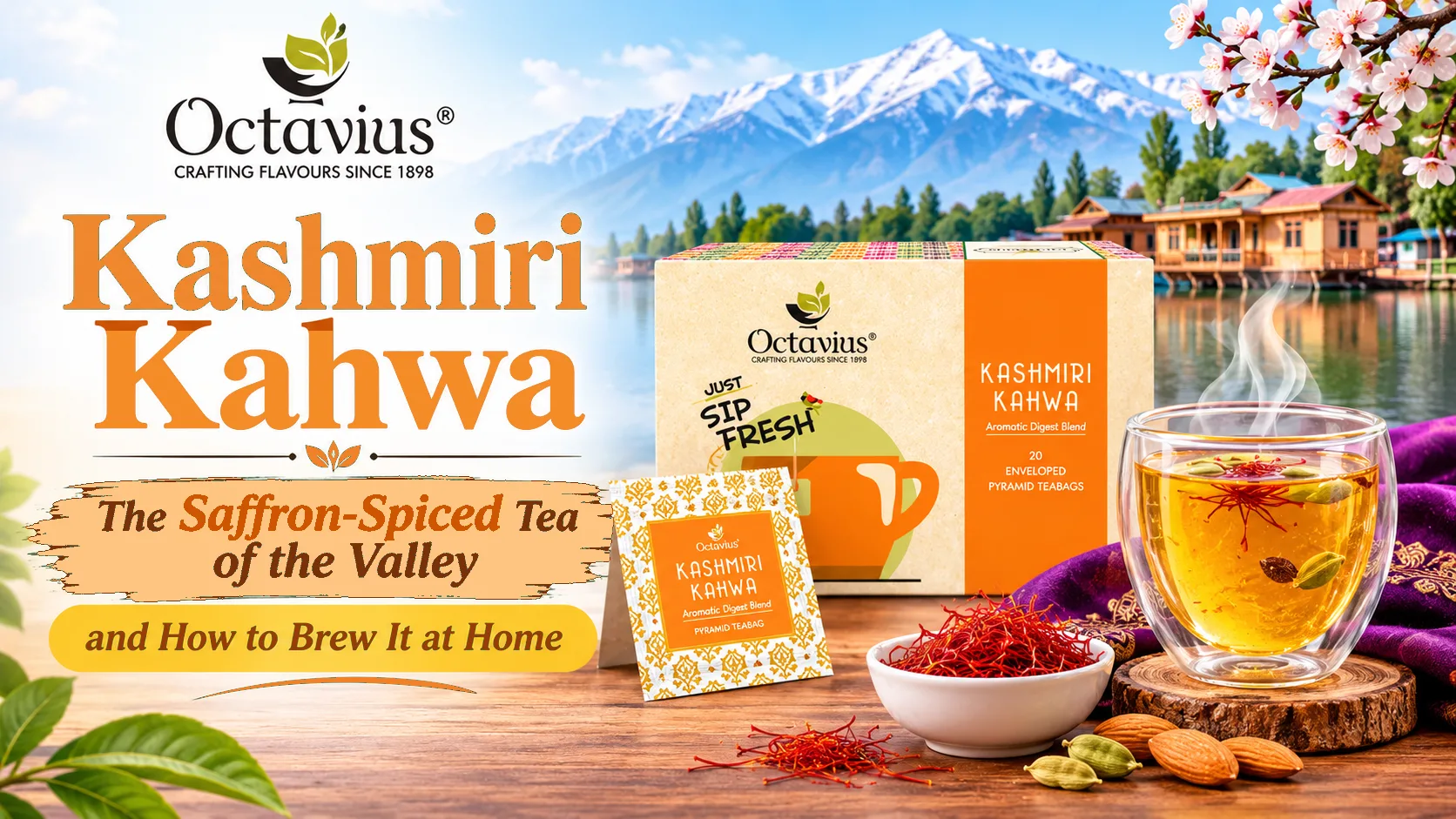
As winter settles over North India, many people reach for something warmer than the usual cup of chai. One drink that keeps coming back is Kashmiri kahwa, a light, golden green tea scented with saffron, cardamom and cinnamon.
Kahwa has been part of life in the Kashmir Valley for centuries. In recent years it has also found a place in kitchens and cafés across India and abroad. This article explains what it is, where it comes from, what goes into it, and how to make it at home.
What Is Kashmiri Kahwa?
Kashmiri kahwa is a traditional green tea simmered with whole spices and finished with saffron. Many cups also include crushed almonds, and sweetness usually comes from honey or sugar. Unlike masala chai, it contains no milk. The colour is pale gold and the taste is gentle, floral and slightly sweet.
The word “kahwa” is commonly linked to the Arabic word qahwa. In Kashmir, though, it has long meant this spiced green tea rather than coffee.
A Short Look at Its Origins
Kashmir sat on old trade routes that connected South Asia with Central Asia. Merchants carried tea, spices and dried fruit along these paths, and food habits travelled with them. Kahwa is often described as a result of this exchange, mixing green tea from the wider region with spices and saffron grown in the valley.
Exact dates are hard to prove, and food historians do not all agree on the details. What is clear is that kahwa is deeply tied to Kashmiri hospitality. It is served to guests at home, at weddings, and alongside festive meals. Traditionally it is poured from a samovar, a metal urn with a coal chamber that keeps the tea hot for hours.
What Goes Into a Cup of Kahwa
Recipes differ from family to family, but most versions use the same core ingredients:
- Green tea leaves: the base of the drink
- Saffron strands: for colour and a soft, floral aroma
- Green cardamom: gives a sweet, citrusy spice
- Cinnamon: adds warmth
- Cloves: used in small amounts for depth
- Almonds: sliced or crushed, added to the cup
- Honey or sugar: to taste
Some households add dried rose petals, and in certain places a little ginger or fennel. Saffron is the ingredient that sets kahwa apart, so it is worth buying a good quality one. Kashmir is one of the few places in India where saffron is grown.
How to Make Kashmiri Kahwa at Home (Serves 1)
You will need:
- 1 cup (about 250 ml) water
- 1 teaspoon green tea leaves
- 2 green cardamom pods, lightly crushed
- 1 small cinnamon stick
- 1 clove
- 2 to 3 saffron strands
- 4 to 5 almonds, thinly sliced
- Honey, to taste
Method:
- Bring the water to a boil in a small pot with the cardamom, cinnamon and clove. Let it simmer for 2 to 3 minutes so the spices release their flavour.
- Lower the heat, add the green tea leaves, and steep for about 1 to 2 minutes. Green tea turns bitter if it brews too long.
- Strain the tea into a cup.
- Add the saffron strands and let them sit for a minute until the tea turns golden.
- Top with sliced almonds and stir in honey if you like.
Quick tips:
- Let the water cool for a minute after boiling before adding the leaves. Water that is too hot can make green tea taste harsh.
- Add honey after the tea has cooled slightly, as very hot liquid can change its flavour.
- Make a larger batch of spices and keep them ready in a small jar for busy mornings.
Is Kahwa Good for You?
Green tea naturally contains antioxidants, and spices like cardamom and cinnamon have long been used in home cooking across India. Many people enjoy kahwa after a heavy meal or on a cold evening because it feels warming and light. That said, it is best seen as a pleasant drink rather than a treatment for any health problem. Anyone with a medical condition, or who is pregnant, should check with a doctor before making tea a regular part of a health routine. Green tea also contains caffeine, though less than most black teas and coffee.
Choosing Good Kahwa Tea
If you do not want to measure out each spice, ready-made kahwa blends are available. When buying one, check the ingredient list. A good blend should show green tea, whole spices and saffron clearly, without too many flavourings or fillers. Loose leaf versions usually give a fuller aroma than tea bags. For example, Indian tea brand Octavius lists a Kashmiri kahwa green tea in a 100 gram loose leaf pack, which is one option for people who want a ready blend.
How and When to Serve It
Kahwa works well at several moments of the day:
- After a heavy lunch or dinner
- On cold mornings, in place of milk tea
- With dry fruits, walnut cookies or Kashmiri bread such as girda or lavasa
- When guests visit, served in small cups with a few almonds on top
Final Thoughts
Kashmiri kahwa is a simple drink with a long story. It uses a handful of ingredients, takes about ten minutes to make, and fits easily into daily routines. Whether you brew it from scratch or use a ready blend, a cup of kahwa is an easy way to try a piece of Kashmiri food culture at home.