Selecting the right ISO 27001 consultant is a critical decision for organizations aiming to achieve certification efficiently and with minimal risk. A qualified consultant not only simplifies the implementation process but also ensures that the Information Security Management System (ISMS) aligns with ISO 27001 requirements and audit expectations.
Understanding the key selection criteria helps organizations avoid delays, reduce compliance risks, and improve their chances of successful certification on the first attempt.
Why Choosing the Right ISO 27001 Consultant Matters
ISO 27001 certification is a structured process that includes gap analysis, risk assessment, documentation development, control implementation, and audit preparation. Organizations often face challenges in aligning these activities due to limited internal expertise and lack of a clear implementation roadmap.
In such cases, working with an experienced ISO 27001 consultant helps establish a systematic approach to implementation, ensuring that all requirements are addressed efficiently and aligned with audit expectations.
Key ISO 27001 Consultant Selection Criteria
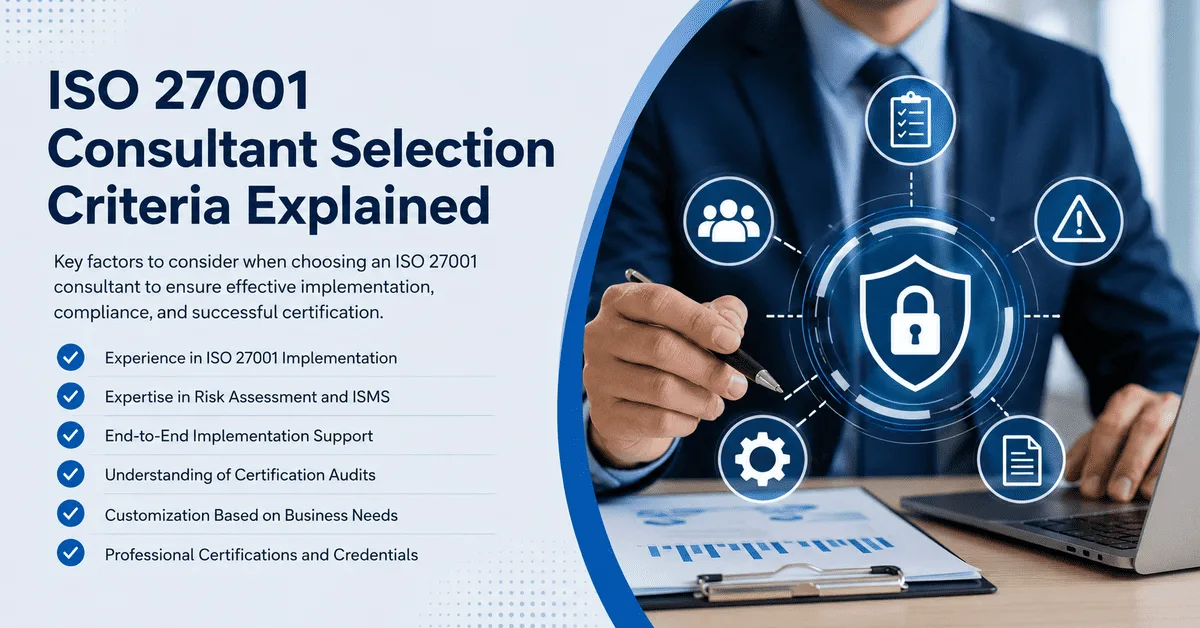
1. Experience in ISO 27001 Implementation
Experience plays a crucial role in consultant selection. A consultant with proven implementation experience can identify gaps quickly and recommend practical solutions based on real-world scenarios. Organizations should review case studies or past projects to evaluate this capability.
2. Expertise in Risk Assessment and ISMS
ISO 27001 is fundamentally based on risk management. The consultant should be able to perform detailed risk assessments, define risk treatment plans, and align them with Annex A controls. Strong ISMS knowledge ensures a structured and compliant implementation.
3. End-to-End Implementation Support
Organizations should look for consultants who provide comprehensive support, including gap analysis, policy development, implementation, internal audits, and certification readiness. End-to-end support reduces coordination issues and ensures consistency across all stages.
4. Understanding of Certification Audits
A good consultant should have in-depth knowledge of Stage 1 and Stage 2 audits. This includes preparing documentation, verifying control implementation, and addressing potential non-conformities before the certification audit.
5. Customization Based on Business Needs
Every organization has unique operational and security requirements. The consultant should provide a tailored approach based on company size, industry, and risk profile, rather than using a generic template.
6. Professional Certifications and Credentials
Certifications such as ISO 27001 Lead Auditor or Lead Implementer demonstrate professional competence. These credentials indicate that the consultant understands audit requirements and ISMS best practices.
Common Mistakes When Selecting ISO 27001 Consultants
One of the most common mistakes organizations make is selecting consultants solely based on cost. Low-cost services may not provide adequate support, leading to incomplete implementation or audit failures.
Another frequent issue is choosing consultants who focus primarily on documentation rather than the actual implementation of controls. Since certification bodies assess both documentation and practical execution, this approach can result in non-conformities during audits. To improve audit readiness, organizations often focus on effective ISO 27001 audit preparation to ensure proper implementation and reduce audit risks.
Organizations also underestimate the importance of audit preparation. Without proper readiness, even well-documented systems may fail during certification audits.
Best Practices for Evaluating ISO 27001 Consultants
To ensure successful selection, organizations should adopt a structured evaluation process:
- Assess the consultant’s experience and past projects
- Understand the scope of services offered
- Evaluate expertise in risk assessment and ISMS
- Verify support for audit preparation and certification
- Check ability to customize implementation strategies
Taking a systematic approach helps organizations identify consultants who can deliver reliable and efficient certification outcomes.
Conclusion
Choosing the right ISO 27001 consultant directly impacts the success of your certification journey. By focusing on experience, audit expertise, risk management capabilities, and end-to-end support, organizations can ensure a smooth and efficient implementation process.
Businesses aiming for structured implementation and compliance alignment often choose ISO 27001 certification consultancy services to achieve certification with reduced risks and improved audit readiness.