Introduction
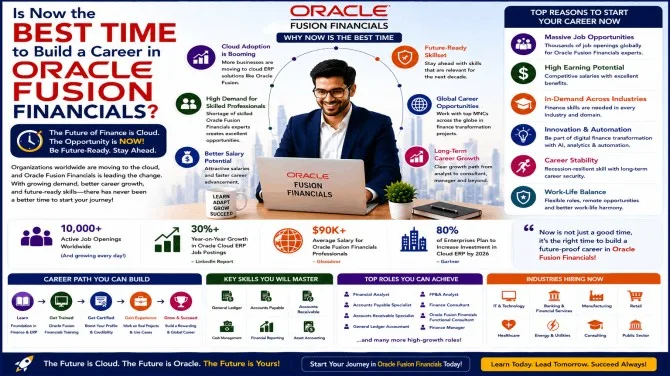
Timing plays a bigger role in career decisions than most people realize, since entering a field too early can mean limited opportunities, while entering too late often means facing saturated competition. Tech Leads IT frequently gets asked whether the current moment represents good timing for building expertise in Oracle's cloud-based financial management platform, and after looking closely at current market conditions, the answer leans strongly toward yes. Several specific factors happening right now make Oracle Fusion Financials Training a particularly well-timed decision.
Why Timing Deserves Careful Consideration
Choosing when to invest in a particular skill matters almost as much as choosing which skill to learn. Entering a field during its strongest growth phase, rather than after it has already matured and become crowded, generally leads to better opportunities, faster career progression, and stronger negotiating power. Understanding exactly where Oracle Fusion Financials currently stands in its growth cycle helps clarify why this specific moment looks especially favorable.
1. Migration Waves Are Still Actively Happening
Many organizations are currently in the middle of migrating from legacy financial systems to Oracle Fusion Financials, rather than having already completed this transition years ago. This means active implementation and support demand remains high right now, creating strong opportunities for professionals entering the field at this particular stage rather than waiting until this migration wave has largely concluded.
2. The Talent Shortage Remains Significant
Current hiring data consistently shows a meaningful gap between available job openings and qualified candidates in this space. This shortage means professionals completing a solid Oracle Fusion Financials Course right now face less competition for entry-level and mid-level positions compared to what might be expected once more people catch on to this growing opportunity.
3. AI and Automation Integration Is Creating New Opportunities
Oracle's ongoing integration of AI-driven features into Fusion Financials has created fresh demand for professionals who understand these newer capabilities. Entering the field now allows professionals to build expertise in these emerging areas early, rather than trying to catch up later once these skills become a standard expectation across the industry.
4. Consulting Firms Are Actively Hiring and Expanding
Major consulting and implementation firms are currently expanding their Oracle Fusion Financials practice areas, actively hiring new talent to meet growing client demand. This active hiring phase represents a favorable window for job seekers, since firms experiencing growth often have more flexibility in bringing on newer professionals compared to firms in a more stable, slower-hiring phase.
5. Economic Conditions Favor Essential Financial Systems Expertise
Even during periods of broader economic uncertainty, organizations continue investing in financial system modernization, since improved efficiency and compliance remain priorities regardless of economic conditions. This relative resilience makes now a reasonably safe time to build expertise in this area, compared to career paths more closely tied to discretionary spending that tends to slow down during uncertain economic periods.
6. Certification Pathways Are Well-Established
Unlike newer or less mature certification programs that may still be evolving, Oracle Fusion Financials certification pathways are well-established at this point, giving learners clear, structured options for validating their skills. This maturity in the certification ecosystem makes it easier for professionals starting now to understand exactly what credentials will support their career goals.
7. Training Resources Have Become More Accessible and Refined
Training programs covering Oracle Fusion Financials have matured significantly over recent years, offering more practical, scenario-based learning compared to earlier, more theoretical course offerings. Professionals starting their Oracle Fusion Financials Training now benefit from these more refined, effective learning resources compared to those who may have started years ago with less developed training options.
8. Global Remote Work Trends Continue to Support This Career Path
The continued acceptance of remote work arrangements, which grew substantially in recent years, supports professionals building careers in this cloud-based space, since much of the implementation and support work can be performed without requiring on-site presence. This trend remains strong currently, adding further favorable conditions for those entering the field now.
Weighing the Risks of Waiting
While no career decision is entirely without risk, waiting to enter this field carries its own downside, since the currently favorable talent gap could gradually close as more professionals recognize this opportunity. Entering now, while demand remains strong and competition remains manageable, offers a more favorable risk-reward balance compared to waiting for a "perfect" moment that may not offer significantly better conditions.
Making the Most of This Window
For those convinced that now is indeed a strong time to enter this field, the next step involves choosing a comprehensive Oracle Fusion Financials Course that includes practical, hands-on training rather than purely theoretical content, ensuring readiness to take advantage of current market conditions as quickly as possible.
Conclusion
Based on active migration trends, a persistent talent shortage, strong consulting firm hiring, and continued alignment with broader technology and remote work trends, current conditions strongly suggest that now represents a favorable time to build a career in this space. For those ready to take advantage of this timing, investing in Oracle Fusion Financials Training or a comprehensive Oracle Fusion Financials Course offers a well-timed and practical path forward.