
Opening the Vault of the Cosmos: A New Dawn for Space Exploration
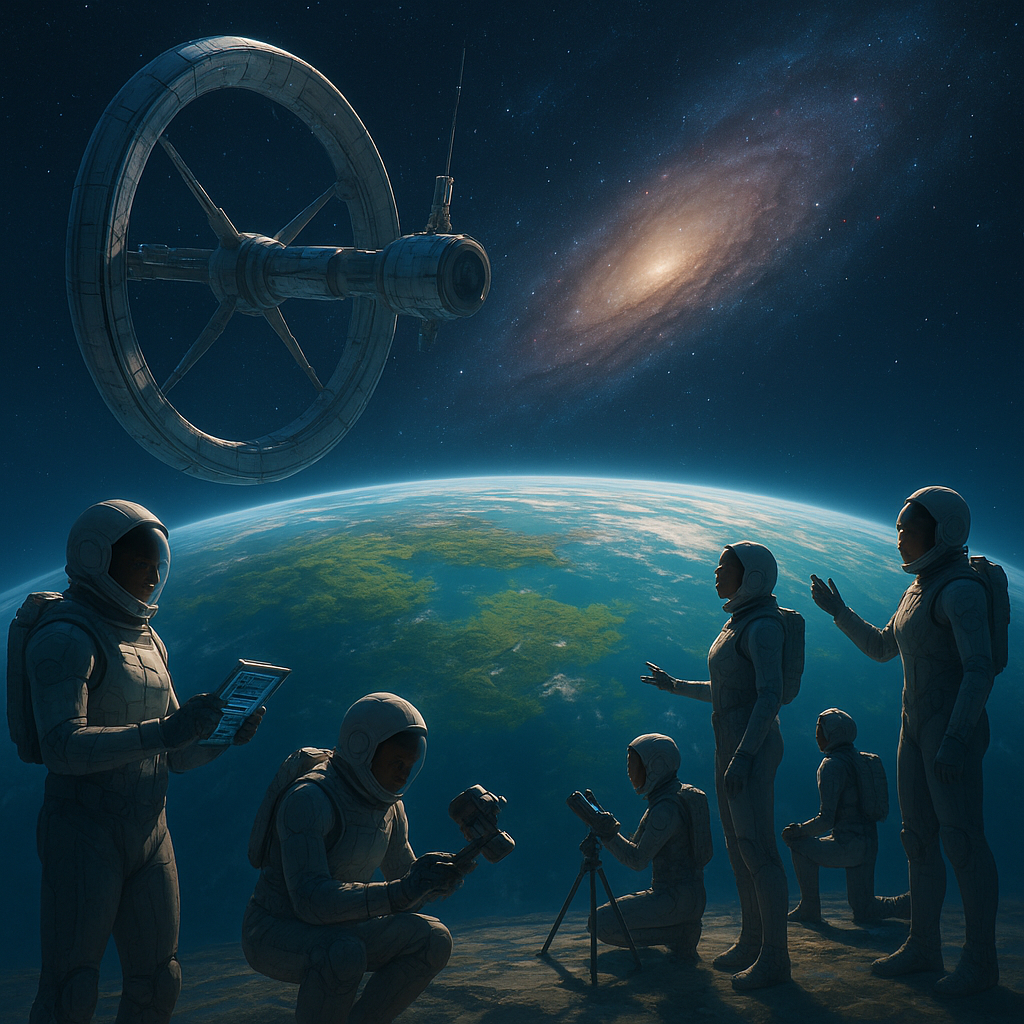
On a clear night in June 2026, millions across the globe watched as the Artemis VII spacecraft touched down on the lunar surface, marking the first human presence on the Moon in over two decades. This milestone is not merely a reprise of the Apollo era but a launching pad for unprecedented ambitions: establishing permanent lunar bases, mining extraterrestrial resources, and preparing for manned Mars missions. The scene at the landing site, where astronauts unfurled the first interplanetary habitat module, encapsulates a larger truth — humanity is poised to extend its reach deeper into the solar system than ever before.
Space exploration, once the exclusive domain of Cold War superpowers, has transformed into a multifaceted endeavor involving government agencies, private corporations, and international consortia. The scale and complexity of these missions reflect advancements in technology, funding models, and geopolitical priorities, making 2026 a pivotal chapter in cosmic pursuit. This article explores the trajectory of space exploration, grounding its latest breakthroughs in historical context, analyzing current trends, and projecting what lies ahead for humanity’s ventures beyond Earth.
The Odyssey So Far: Tracing the Roots and Evolution of Space Exploration
The journey to today’s momentous achievements began in the mid-20th century, driven by geopolitical rivalry and scientific curiosity. The launch of Sputnik in 1957 by the Soviet Union shattered Earth’s atmospheric boundary, igniting the Space Race that culminated in Apollo 11’s Moon landing in 1969. These early missions laid the foundation for orbital stations, planetary probes, and robotic explorers, gradually shifting focus from survival in space to sustainable presence.
By the 1980s and 1990s, the International Space Station (ISS) symbolized global collaboration, hosting continuous human habitation since 2000. Meanwhile, robotic missions expanded our knowledge of Mars, Venus, and the outer planets, revealing the solar system’s complexity and potential habitability. However, progress slowed due to budget constraints and shifting political will, leading to a period of relative dormancy for crewed deep space missions.
The resurgence in the 2020s owes much to renewed interest from emerging space powers and the private sector. Companies like SpaceX, Blue Origin, and others revolutionized launch economics with reusable rockets and ambitious visions. National agencies rekindled lunar ambitions through programs such as NASA’s Artemis and China’s Chang’e series. This convergence of actors, resources, and technology has redefined the scope and pace of exploration.
Decoding 2026: Innovations and Breakthroughs Reshaping Space Ventures
This year, space exploration is characterized by remarkable strides in propulsion, habitation, and resource utilization technologies. The Artemis VII mission exemplifies the integration of next-generation life support systems and autonomous construction robots, enabling the deployment of modular habitats on the lunar surface. Furthermore, the deployment of the Solar Power Satellite Array (SPSA) promises to revolutionize energy supply for off-world colonies, harvesting solar energy uninterrupted by Earth’s day-night cycle.
On Mars, the Perseverance II rover began delivering cached samples to the Martian surface ascent vehicle, a critical step toward sample return missions. The collaborative Mars Gateway orbital station, operational since late 2025, facilitates crewed missions further into the Red Planet’s orbit, allowing shorter travel times and safer astronaut rotations.
Private enterprises have also expanded their footprint. Asteroid mining initiatives led by companies such as Planetary Resources Inc. have successfully extracted water ice and rare metals from near-Earth objects, proving the viability of in-situ resource utilization (ISRU). These materials are critical for manufacturing rocket fuel and building materials on-site, dramatically reducing mission costs and logistics complexity.
“The transition from exploratory missions to sustainable off-world habitats is the hallmark of this decade,” notes Dr. Elena Morales, chief scientist at the International Space Exploration Consortium. “Our ability to live and work beyond Earth hinges on mastering resource independence and advanced robotics.”
The Impact and Perspectives of Experts and Industry Leaders
Leading voices in space science and industry emphasize the transformative potential of current exploration efforts. Dr. Rajiv Banerjee, director of the Global Space Policy Institute, highlights how geopolitical collaboration now underpins strategic space initiatives, contrasting sharply with the competitive tensions of the 20th century. “The governance models emerging today, like the Artemis Accords and Lunar Resource Protocols, establish frameworks for peaceful cooperation and equitable resource sharing,” he explains.
Industry stakeholders underline the commercial opportunities arising from expanded space activity. Satellite mega-constellations for global internet access, space tourism ventures, and manufacturing in microgravity are burgeoning fields. According to recent reports, the global space economy surpassed $600 billion in 2025, with projections estimating a doubling by 2030 fueled by extraterrestrial mining and lunar infrastructure development.
However, experts caution about challenges related to space debris, regulatory oversight, and ethical considerations of planetary protection. “Ensuring sustainable practices in space is paramount to prevent repeating terrestrial mistakes on an interplanetary scale,” warns Dr. Morales.
“Space exploration is no longer science fiction; it’s an economic and diplomatic reality shaping the next century,” asserts Samantha Cho, CEO of StarReach Aerospace.
Case Studies: Pioneering Missions and Their Lessons
The Artemis program serves as a flagship example of modern exploration complexity and ambition. Artemis missions have progressively demonstrated integration of international partners, innovative technologies, and long-duration crewed operations. Artemis V, completed in 2024, successfully deployed the first 3D-printed habitat on the lunar South Pole, utilizing locally sourced regolith, setting a precedent for sustainable construction.
China’s Tiangong space station, operational since 2023, exemplifies an alternative approach emphasizing modularity and rapid deployment. Its recent cargo missions supporting lunar robotic explorers underscore the rising role of emerging space powers in shaping exploration trajectories.
Asteroid mining pilot projects illustrate commercial viability and technical hurdles. In 2025, Planetary Resources Inc. extracted over 10,000 kilograms of water ice from asteroid 1998 QE2, using autonomous mining rigs powered by compact nuclear reactors. This success validated the concept of off-world resource harvesting, although scaling operations remains an ongoing challenge.
- Artemis VII: First permanent lunar base module deployed
- Mars Gateway: Operational orbital station supporting Mars surface missions
- Asteroid mining: First large-scale extraction of water ice and rare metals
- Solar Power Satellite Array: Continuous energy supply for off-Earth habitats
Looking Ahead: Navigating the Next Frontiers of Space Exploration
As the 2030s approach, the trajectory of space exploration is set to accelerate, driven by technological innovation and geopolitical alignment. Key areas to watch include:
- Interplanetary Travel: Advances in nuclear thermal propulsion and antimatter research promise to reduce travel times to Mars and beyond.
- Space Habitation: Development of bio-regenerative life support systems and artificial gravity habitats aims to support longer missions and deeper space colonization.
- Planetary Defense: Enhanced asteroid detection and deflection technologies are becoming integral to planetary safety strategies.
- Policy and Ethics: International frameworks will evolve to govern resource rights, environmental stewardship, and human activities beyond Earth.
Moreover, emerging technologies such as quantum communication satellites and AI-driven mission planning will redefine operational capabilities. The integration of space exploration into broader scientific, economic, and social paradigms positions humanity for profound transformation.
For those intrigued to embark on their own journeys into space science and exploration, TheOmniBuzz offers comprehensive resources like Unlocking the Cosmos: A Beginner’s Guide to Space Exploration and How to Embark on Space Exploration: A Practical Guide for Aspiring Pioneers, providing essential knowledge and practical insights.
In summation, 2026 stands as a watershed year, bridging the exploratory zeal of the past with the practicalities of sustainable off-world living. The decisions, collaborations, and innovations unfolding now will echo across generations, shaping the human story among the stars.