Buying a second home near Jaipur can be exciting, but ownership also brings practical responsibilities. An independently owned villa requires regular security, cleaning, repairs, utility management, gardening and tenant supervision—even when the owner visits only a few times each year.
A managed resort villa follows a different model. The buyer owns an eligible unit within a professionally operated hospitality development, while an appointed management team may handle defined resort operations, guest services and property upkeep according to the executed agreements.
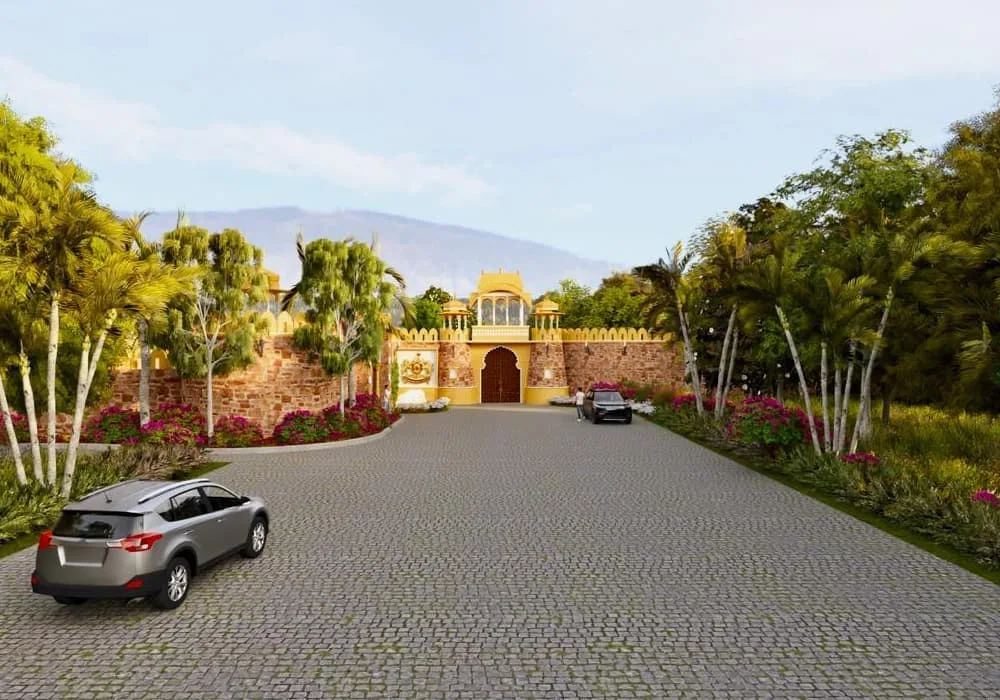
Sonagarh Fort Resort near Kukas, Jaipur, has been planned around this combined ownership and hospitality concept. Its proposed development includes palace rooms, premium suites, resort villas, landscaped areas, recreational facilities, dining infrastructure and event spaces.
But is this model better than buying a conventional second home? The answer depends on how the buyer intends to use the property.
Quick Answer
A managed resort villa may be more suitable than a conventional second home for buyers who want personal holidays, professional maintenance, resort services and potential hospitality-linked benefits without personally supervising everyday operations.
A traditional second home may be more appropriate for buyers who want unrestricted personal use, independent rental control, permanent residence or complete authority over furnishing and property management.
Before choosing either option, buyers should compare ownership rights, recurring costs, usage restrictions, management responsibilities, financial risks and resale conditions.
Two Buyers, Two Different Ownership Experiences
Consider two buyers purchasing properties outside Jaipur.
The first buyer purchases an independent villa. The property remains completely under the owner’s control. The owner can visit whenever desired, furnish it independently and decide whether to rent it.
However, the owner must also arrange:
- Security
- Housekeeping
- Repairs and maintenance
- Utility payments
- Gardening
- Pest control
- Tenant or guest management
- Property inspections
- Emergency assistance
The second buyer purchases an eligible unit within a managed resort. Depending on the agreement, a hospitality operator may coordinate applicable property services and guest-related operations.
The second buyer may have less direct operational responsibility but must follow the resort’s management and personal-usage policies.
Neither model is automatically better. Their suitability depends on what the buyer values most.
How Does a Traditional Second Home Work?
A traditional second home is generally purchased for personal use, long-term appreciation, independent rental or occasional family visits.
The owner normally manages the property directly or appoints local service providers. When the property is not occupied, it may remain locked for long periods.
This model offers significant personal control. The owner can usually:
- Decide when to visit
- Select furniture and interiors
- Permit relatives or friends to stay
- Find tenants independently
- Set rental terms
- Make eligible modifications
- Keep the property outside a hospitality arrangement
However, control also creates responsibility. The owner remains accountable for upkeep, security, repairs and compliance.
A second home that is used only occasionally can still generate recurring expenses throughout the year.
What Is a Managed Resort Villa?
A managed resort villa is an eligible individually owned unit operating within a wider hospitality development. The resort-management company may coordinate applicable services under a formal management or lease-back agreement.
The operator may manage:
- Guest reservations
- Front-office services
- Check-in and checkout
- Housekeeping
- Routine property upkeep
- Security coordination
- Food and beverage services
- Common facilities
- Events and guest experiences
- Owner-stay reservations
The exact responsibilities vary from one project to another. Buyers should rely only on the executed agreement when determining which services are included.
People researching Managed Resort Villas in Jaipur should understand that professional management does not remove every cost, responsibility or investment risk.
How Is Sonagarh Fort Resort Structured?
Sonagarh Fort Resort is proposed as a heritage-inspired resort ownership development near Kukas, Jaipur. Rather than functioning as a standalone residential township, it is planned around a combined real-estate and hospitality model.
The supplied project information presents five proposed ownership categories:
Deluxe Palace Room
An approximately 450 sq. ft. compact accommodation format proposed within the Sonagarh Palace building.
Palace Suite Room
An approximately 850 sq. ft. premium palace-suite format providing more space than the Deluxe Palace Room.
Super Deluxe Villa
An approximately 700 sq. ft. villa-style category planned within the broader resort environment.
Grand Suite Villa
An approximately 1,000 sq. ft. format designed for buyers seeking a larger resort-villa configuration.
Residential Mansion Suite
An approximately 1,300 sq. ft. two-bedroom format intended to provide a more spacious personal-stay experience.
All proposed areas, unit numbers, layouts, configurations and inventory should be verified through the latest registered documents before purchase.
Which Model Requires More Personal Supervision?
A traditional second home normally requires more owner involvement.
Even when the property is part of a gated township, the owner may need to manage the condition of the unit, appliances, furniture, utility bills, cleaning and tenant-related issues.
A managed resort villa may reduce this burden because applicable hospitality and upkeep responsibilities can be assigned to a professional operator.
However, buyers should confirm:
- Which maintenance services are included
- Which repairs remain the owner’s responsibility
- Who replaces damaged furniture
- Who pays utility expenses
- Whether annual maintenance charges apply
- How service fees can increase
- How frequently the unit is inspected
- Whether maintenance reports are provided
Professional management is valuable only when its responsibilities and service standards are clearly documented.
Which Property Offers Greater Personal-Use Flexibility?
A conventional second home generally provides greater personal-use freedom. Subject to local regulations and community rules, the owner can usually visit according to personal requirements.
A resort villa may include defined personal-stay privileges. These can be influenced by:
- Annual stay entitlement
- Advance reservation requirements
- Room availability
- Blackout dates
- Peak-season restrictions
- Guest charges
- Food and beverage conditions
- Housekeeping or service fees
- Rules for transferring stays to family members
At Sonagarh Fort Resort, every personal-use right should be confirmed in writing. Buyers should not assume that property ownership automatically provides unlimited stays.
If unrestricted occupation is the buyer’s main objective, a regular residential property may be more suitable.
How Do the Maintenance Costs Compare?
Both types of property create recurring expenses.
A conventional second home may involve:
- Society maintenance
- Security expenses
- Housekeeping
- Gardening
- Repairs
- Insurance
- Utilities
- Property tax
- Appliance replacement
- Brokerage or tenant-management costs
A managed resort villa may involve:
- Resort-management fees
- Common-area maintenance
- Furniture replacement
- Utility contributions
- Property insurance
- Operational deductions
- Taxes
- Reserve or refurbishment charges
The resort model does not mean that all maintenance is free. It means that eligible responsibilities may be professionally coordinated.
Buyers should obtain an itemised estimate of recurring charges and understand how these costs may change over time.
Can a Traditional Second Home Generate Rental Income?
Yes, an independently owned second home may be rented, subject to applicable laws, society regulations and market demand.
The owner may retain control over:
- Rental rate
- Tenant selection
- Length of stay
- Security deposit
- Furnishing level
- Property availability
However, the owner must also manage listings, enquiries, contracts, tenant verification, cleaning, repairs and payment collection—or pay another party to handle them.
Occupancy and rental income are never automatic. They depend on location, demand, condition, pricing and marketing.
How Can a Managed Resort Villa Generate Financial Benefits?
Within a managed resort structure, an eligible unit may participate in a defined annual-return, revenue-sharing or hospitality-management arrangement.
The Sonagarh project material refers to applicable financial benefits for eligible buyers. Every buyer should review the relevant agreement to determine:
- How payments are calculated
- When payments begin
- Payment frequency
- Duration of the benefit
- Responsible legal entity
- Applicable deductions
- Connection with resort occupancy
- Treatment of delayed payments
- Conditions for suspension or termination
- Dispute-resolution process
An advertised percentage should never be treated as a guarantee of overall investment profitability. The complete contractual clause, underlying costs and responsible entity must be evaluated.
Does Professional Hospitality Management Add Value?
A professionally managed resort can provide a coordinated guest experience that individual owners may find difficult to create independently.
This may include:
- Central reservations
- Trained hospitality staff
- Standardised housekeeping
- Guest reception
- Food and beverage
- Resort activities
- Wellness facilities
- Wedding and event infrastructure
- Common-area maintenance
- Property-level branding and marketing
Sonagarh is positioned as a Luxury Resort Project in Jaipur because its proposed development combines individual ownership categories with a wider resort ecosystem.
However, the eventual value of this ecosystem will depend on construction completion, operational quality, demand, maintenance and consistent management.
Why Are Weddings and Events Relevant to the Resort Model?
A conventional second home depends mainly on personal usage, long-term tenancy or independent holiday rentals. A full resort may serve several hospitality segments.
Sonagarh Fort Resort is proposed to support:
- Leisure stays
- Family holidays
- Wellness visits
- Corporate gatherings
- Social functions
- Destination weddings
- Celebrations
- Dining experiences
These multiple demand segments may support the resort’s overall hospitality positioning. However, proposed facilities and future demand should not be treated as guaranteed occupancy or income.
Buyers should verify which event spaces are approved, under construction, completed or representational.
Which Model Offers Better Privacy?
Privacy depends more on layout, management policies and guest movement than on the property label.
An independent villa can offer strong personal privacy because the owner controls access. However, privacy may reduce if the property is located in a dense township or frequently rented to tenants.
A resort villa can offer a managed and serviced environment, but guests, staff and resort operations may create more activity in common areas.
Before selecting a Sonagarh unit, buyers should study:
- Unit placement
- Entrance arrangement
- Distance from event spaces
- Guest circulation
- Shared walls or floors
- Outdoor space
- Staff access
- Housekeeping procedures
- Sound management
Buyers should select the unit according to their own expectations rather than relying only on the category name.
What About Security and Property Upkeep?
An unoccupied second home may require regular local supervision. Owners sometimes discover water leakage, electrical problems, pest damage or security issues only when they return after several months.
A professionally operated resort generally maintains staff presence, common security and routine property activity. This may reduce the burden of leaving a property unattended.
Nevertheless, buyers should confirm:
- Security coverage
- Access-control procedures
- CCTV coverage in common areas
- Emergency response
- Fire-safety provisions
- Unit inspection schedule
- Insurance responsibilities
- Damage-reporting process
Security arrangements should be verified through current project and operational documents.
How Do Resale Conditions Differ?
A regular villa can generally be resold according to applicable law, ownership documents and community restrictions.
A managed resort villa may include additional conditions because the unit is connected with a hospitality-management arrangement.
The agreement should explain:
- Whether the unit can be resold
- Whether the resort operator must approve the transfer
- Whether a transfer fee applies
- Whether management terms bind the new owner
- Whether financial benefits continue after transfer
- Whether owner privileges are transferable
- How outstanding charges are settled
- Whether the developer has a first right of refusal
The existence of a management agreement may influence how future purchasers evaluate the property.
Who Should Consider a Sonagarh Resort Villa?
A Sonagarh unit may be relevant for buyers who:
- Want an ownership option near Jaipur
- Prefer professional property management
- Expect to use the property for limited personal holidays
- Appreciate heritage-inspired resort surroundings
- Do not want to independently manage short-term guests
- Understand hospitality-linked ownership
- Are comfortable with documented usage conditions
- Can evaluate real-estate and operational risks
Buyers exploring Resort Villas for Sale in Jaipur should compare different unit categories and management conditions instead of selecting only by size or advertised return.
Who May Prefer a Traditional Second Home?
A conventional second home may be better for someone who wants:
- Permanent or extended personal occupation
- Unrestricted visits
- Complete furnishing control
- Independent rental decisions
- Direct tenant management
- Freedom from a long-term resort-management agreement
- A purely residential environment
The buyer’s intended use should determine the property type.
A Simple Comparison
Decision PointTraditional Second HomeManaged Resort VillaPersonal useGenerally more flexibleDefined by owner-stay policyMaintenanceManaged by ownerApplicable services may be professionally managedRental operationsOwner’s responsibilityMay be handled by resort operatorFurnishing controlUsually greaterMay follow resort standardsAmenitiesDepend on townshipIntegrated with proposed resort facilitiesHospitality servicesUsually limitedPart of the operating modelRecurring costsDirectly managed by ownerDefined through management and maintenance termsFinancial benefitsDepend on independent rental or resaleDepend on executed agreementsResaleSubject to normal legal conditionsMay include management-transfer conditionsFinal Verdict
A managed resort villa is not simply a traditional second home with additional amenities. It is a different ownership model that combines real estate with professional hospitality operations.
Sonagarh Fort Resort may suit buyers who want a heritage-inspired property near Jaipur, occasional personal stays and reduced responsibility for day-to-day hospitality management. Its proposed accommodation, dining, wellness, recreational and event facilities aim to create a complete resort environment around the individually owned units.
A conventional second home may remain more suitable for buyers who want unrestricted occupation and complete operational control.
Before deciding, buyers should verify Sonagarh’s RERA information, inspect the project, compare unit categories and have the sale and management agreements independently reviewed. The better choice is the one that aligns with the buyer’s actual lifestyle, financial capacity, usage requirements and understanding of risk.