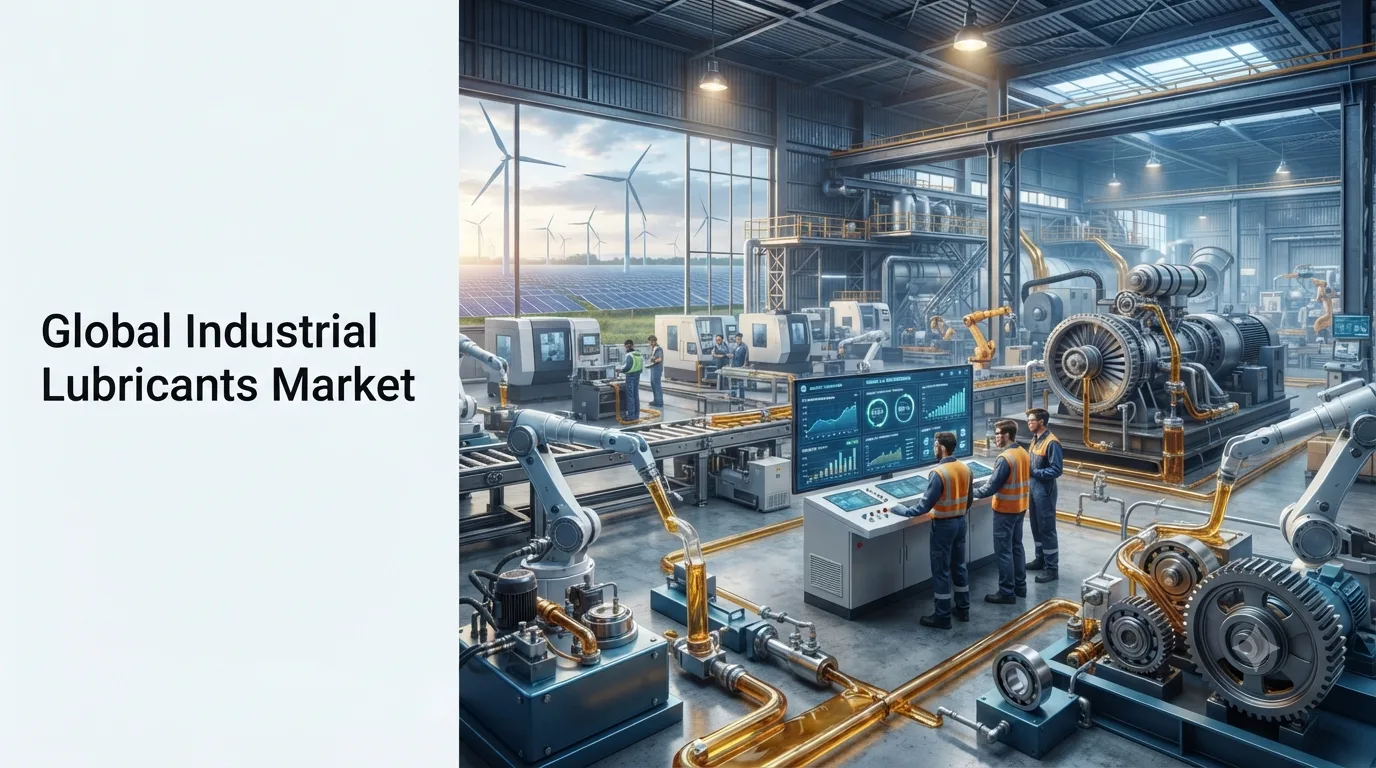
The Global Industrial Lubricants Market is witnessing consistent growth as industries across manufacturing, mining, power generation, construction, and transportation increasingly prioritize equipment efficiency and operational reliability. Industrial lubricants play a crucial role in minimizing friction, reducing wear and tear, improving energy efficiency, and extending the service life of industrial machinery. As industrial operations become more automated and technologically advanced, the demand for high-performance lubrication solutions continues to rise worldwide.
The Industrial Lubricants Market size is expected to reach USD 66.9 billion in 2026 and is projected to grow at a compound annual growth rate (CAGR) of 4.7%, reaching approximately USD 100.9 billion by 2035. One of the major factors driving this expansion is the growing adoption of renewable energy sources such as solar and wind, where specialized lubricants are essential for maintaining equipment performance under demanding operating conditions.
Industries are also focusing on reducing maintenance costs, improving machine uptime, and complying with environmental regulations. This has encouraged lubricant manufacturers to develop advanced synthetic formulations, biodegradable products, and high-performance specialty lubricants capable of operating under extreme temperatures and heavy loads. These innovations continue to create new growth opportunities across multiple industrial sectors.
Download a Complimentary PDF Sample Report:
https://dimensionmarketresearch.com/request-sample/industrial-lubricants-market/
What are Industrial Lubricants?
Industrial lubricants are specially formulated oils, greases, and fluids designed to reduce friction between moving mechanical parts. They help prevent corrosion, dissipate heat, reduce equipment wear, improve operational efficiency, and protect machinery operating under high-pressure conditions.
These lubricants are widely used across industries including:
- Manufacturing
- Mining
- Cement
- Power generation
- Marine
- Construction
- Automotive manufacturing
- Food processing
- Chemical processing
- Renewable energy
Depending on the application, industrial lubricants may include hydraulic fluids, compressor oils, gear oils, turbine oils, metalworking fluids, refrigeration oils, and industrial greases.
Industrial Lubricants Market Overview
Industrial growth across emerging economies continues to drive lubricant consumption. Expanding production facilities, infrastructure investments, and increasing automation have significantly increased the demand for reliable lubrication solutions.
At the same time, manufacturers are developing environmentally friendly lubricants that offer improved oxidation stability, longer drain intervals, and reduced environmental impact. The transition toward Industry 4.0 technologies has also increased the importance of predictive maintenance, making lubricant performance monitoring an integral part of industrial operations.
Growing investments in renewable energy projects, including wind farms and solar power plants, further strengthen the market outlook as these installations require specialized lubricants capable of operating in harsh environmental conditions.
Key Market Drivers
Expansion of Manufacturing Activities
Rapid industrialization in developing economies continues to increase machinery installations across various industries. Every industrial machine requires regular lubrication to maintain operational efficiency and prevent costly breakdowns.
Growing manufacturing output directly translates into higher lubricant consumption across production facilities worldwide.
Rising Renewable Energy Installations
Wind turbines operate under heavy mechanical stress and require high-performance lubricants for gearboxes, bearings, and hydraulic systems.
Similarly, solar tracking systems require specialized lubricants that maintain smooth movement while resisting dust and extreme temperatures. The rapid expansion of renewable energy infrastructure has become an important demand driver.
Increasing Focus on Equipment Reliability
Industries aim to maximize equipment uptime while minimizing maintenance expenses.
Modern industrial lubricants help:
- Reduce mechanical wear
- Improve machine efficiency
- Lower operating costs
- Extend maintenance intervals
- Enhance equipment lifespan
These benefits continue encouraging industries to adopt premium lubrication products.
Growth of Industrial Automation
Automated production lines rely on precision machinery operating continuously under demanding conditions.
Advanced lubricants support automation by maintaining consistent equipment performance, reducing unexpected failures, and ensuring production continuity.
Emerging Market Trends
Growing Adoption of Synthetic Lubricants
Synthetic lubricants offer numerous advantages over conventional mineral oils, including:
- Better thermal stability
- Longer service life
- Improved oxidation resistance
- Enhanced performance at extreme temperatures
- Reduced maintenance frequency
As industrial machinery becomes increasingly sophisticated, demand for synthetic lubricants continues to accelerate.
Eco-Friendly Lubrication Solutions
Environmental sustainability has become a key industry priority.
Manufacturers are introducing:
- Biodegradable lubricants
- Low-toxicity formulations
- Bio-based industrial oils
- Reduced-emission lubricant technologies
These products help industries comply with evolving environmental regulations while maintaining equipment performance.
Smart Lubrication Systems
Industrial facilities increasingly utilize smart lubrication technologies featuring:
- Real-time monitoring
- Automated lubricant dispensing
- Predictive maintenance
- Oil condition monitoring
- AI-based maintenance scheduling
These innovations improve lubricant utilization while reducing operational costs.
Longer Oil Drain Intervals
Advanced lubricant chemistry allows longer replacement intervals without compromising equipment protection.
This reduces:
- Downtime
- Maintenance costs
- Lubricant consumption
- Waste generation
Market Challenges
Volatility in Raw Material Prices
Industrial lubricant production depends heavily on base oils and chemical additives.
Fluctuations in crude oil prices affect manufacturing costs and pricing strategies, creating uncertainty across the supply chain.
Stringent Environmental Regulations
Governments worldwide continue tightening regulations regarding lubricant disposal, emissions, and environmental safety.
Manufacturers must invest in research and development to produce cleaner, safer products while remaining cost-competitive.
Counterfeit Lubricants
The availability of counterfeit industrial lubricants in some markets presents a major challenge.
Inferior products can damage expensive machinery, reduce operational efficiency, and negatively impact customer confidence.
Market Opportunities
Several emerging opportunities are expected to shape future market growth.
Expansion of Wind Energy
Wind turbine gearboxes require highly specialized lubricants capable of operating continuously under heavy mechanical loads.
As global wind power capacity expands, lubricant demand is expected to increase significantly.
Industrial Digitalization
Industry 4.0 technologies encourage predictive maintenance strategies based on lubricant condition monitoring.
Digital lubrication management helps industries improve productivity while reducing maintenance expenses.
Growth in Mining Operations
Mining equipment operates under extremely harsh environments requiring durable lubrication products.
Expanding mining activities across developing economies create substantial opportunities for lubricant manufacturers.
Food-Grade Lubricants
The food processing industry increasingly demands NSF-compliant lubricants that ensure equipment safety without contaminating food products.
Growing food manufacturing capacity supports this niche market.
Industrial Lubricants Market Segmentation
By Product Type
- Hydraulic Fluids
- Gear Oils
- Compressor Oils
- Turbine Oils
- Metalworking Fluids
- Greases
- Refrigeration Oils
- Others
Hydraulic fluids and gear oils account for a significant portion of industrial lubricant consumption due to their extensive usage across manufacturing and heavy industries.
By Base Oil
- Mineral Oil
- Synthetic Oil
- Bio-Based Oil
Synthetic lubricants continue gaining market share because of their superior performance and longer operational life.
By End User
- Manufacturing
- Power Generation
- Mining
- Construction
- Marine
- Metal Processing
- Food Processing
- Chemical Industry
- Automotive Manufacturing
- Others
Manufacturing remains the largest consumer due to the extensive use of industrial machinery.
Purchase the report for comprehensive details:
https://dimensionmarketresearch.com/checkout/industrial-lubricants-market/
Regional Analysis
Asia-Pacific Leads the Global Industrial Lubricants Market
The Asia-Pacific region is expected to dominate the Industrial Lubricants Market with an estimated 42% market share in 2026.
Several factors contribute to this leadership:
- Rapid economic development
- Expanding manufacturing industries
- Infrastructure investments
- Strong automotive production
- Increasing steel and metal manufacturing
- Growing construction activities
Countries such as China and India continue investing heavily in industrial development, creating substantial demand for lubricants across numerous sectors.
The region's expanding renewable energy installations also increase the requirement for specialized lubrication products used in wind turbines and industrial equipment.
North America
North America maintains a significant share owing to:
- Advanced manufacturing facilities
- High industrial automation
- Strong oil & gas sector
- Renewable energy expansion
- Demand for premium synthetic lubricants
Industries increasingly adopt predictive maintenance technologies that support lubricant monitoring systems.
Europe
Europe remains an important market driven by:
- Sustainability initiatives
- Bio-based lubricant adoption
- Advanced manufacturing technologies
- Strict environmental standards
- Renewable energy projects
The region continues investing in environmentally responsible lubrication solutions.
Latin America
Industrial growth in mining, agriculture, and infrastructure development contributes to lubricant demand across Latin America.
Modernization of manufacturing facilities further supports market expansion.
Middle East & Africa
Growing investments in energy production, construction, mining, and industrial infrastructure continue creating opportunities for lubricant manufacturers throughout the region.
Competitive Landscape
The Industrial Lubricants Market remains highly competitive, with companies focusing on:
- Product innovation
- High-performance synthetic lubricants
- Sustainable lubricant technologies
- Digital lubrication monitoring
- Strategic partnerships
- Geographic expansion
- Customized industrial solutions
Manufacturers continue investing in research to improve lubricant durability, reduce maintenance requirements, and support industrial sustainability initiatives.
Future Outlook
The future of the Industrial Lubricants Market appears highly promising.
Several long-term factors are expected to support sustained growth:
- Expansion of renewable energy infrastructure
- Increased industrial automation
- Smart manufacturing adoption
- Growth in electric equipment manufacturing
- Rising infrastructure investments
- Higher demand for sustainable lubricants
- Predictive maintenance integration
- Development of advanced synthetic formulations
As industries continue modernizing their operations, lubricant technologies will become increasingly sophisticated, delivering enhanced equipment protection and improved operational efficiency.
Frequently Asked Questions (FAQs)
1. What is driving the growth of the Industrial Lubricants Market?
The primary growth drivers include expanding manufacturing activities, renewable energy installations, industrial automation, infrastructure development, and increasing demand for equipment reliability.
2. How large is the Industrial Lubricants Market expected to become?
The market is expected to grow from USD 66.9 billion in 2026 to approximately USD 100.9 billion by 2035, registering a CAGR of 4.7%.
3. Which region leads the Industrial Lubricants Market?
Asia-Pacific is expected to dominate the market with an estimated 42% share in 2026, supported by strong manufacturing growth, infrastructure development, and expanding industrial activities.
4. Why are synthetic lubricants becoming more popular?
Synthetic lubricants offer superior thermal stability, longer service life, improved equipment protection, lower maintenance requirements, and better performance under extreme operating conditions.
5. How does renewable energy contribute to lubricant demand?
Wind turbines, solar tracking systems, and other renewable energy equipment require specialized lubricants to ensure reliable operation, reduce wear, and maximize equipment lifespan.
Summary of Key Insights
The Global Industrial Lubricants Market is positioned for steady long-term growth as industries continue investing in automation, advanced manufacturing, renewable energy, and infrastructure development. With the market projected to grow from USD 66.9 billion in 2026 to USD 100.9 billion by 2035 at a 4.7% CAGR, opportunities continue expanding across manufacturing, mining, construction, and clean energy sectors. Asia-Pacific is expected to remain the leading regional market due to rapid industrialization and infrastructure expansion, while ongoing innovation in synthetic and environmentally friendly lubricants will further strengthen market competitiveness. Organizations that prioritize high-performance, sustainable lubrication solutions are expected to benefit from improved equipment reliability, lower maintenance costs, and enhanced operational efficiency in the years ahead.