
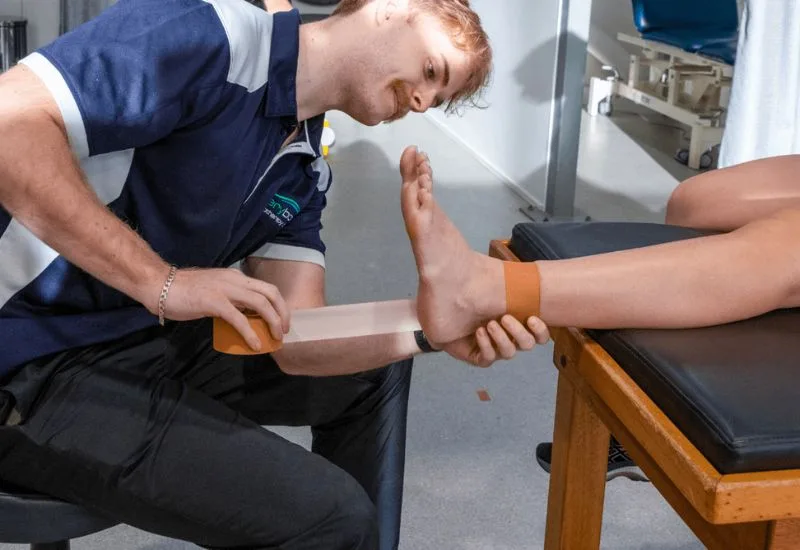
When a local footy player tears an ankle syndesmosis on a muddy patch in Greater Western Sydney, the immediate impulse is usually to slap on an ice pack, stay off it completely, and wait weeks for the swelling to clear. But sitting on the lounge and losing muscle bulk doesn't do anyone any favours. Any experienced practitioner running a clinic for sports physio in Penrith will tell you that getting load through damaged tissues early – without destroying the repair process – is the hardest needle to thread in sports rehabilitation. This is precisely where aquatic physiotherapy comes in. It is not a gentle soak in a warm bath, nor is it a universal cure-all for every sore muscle. When used properly, water-based loading is a calculated, biomechanical tool that can fill gaps in early-stage and full-length, gravity-based exercise.
Water does not magically speed up healing, but it certainly changes the physical environment in which rehabilitation takes place. This is a critical point –
- After surgery
- During early loading
- When land-based exercise is uncomfortable
- When an athlete needs to rebuild movement before returning to harder sporting work
Hydrotherapy is therefore best viewed as an integral part of sports physio Penrith and a critical tool within a broader rehabilitation plan. It is not just a treatment that every injured athlete automatically needs.
Why Water Changes The Rehabilitation Equation?
The useful thing about a hydrotherapy pool is not simply that exercise feels easier in it. Buoyancy reduces the effective load placed through the body, while the resistance of water can still challenge the movement.
Temperature, depth, movement speed, and the exercise itself can all alter the experience, and this gives a physiotherapist more room to adjust the workload. For example, any athlete who cannot comfortably perform a particular movement on land may tolerate a modified version in chest-deep water.
However, this does not mean that the injury is ready for full land-based loading. It simply means that there is another step between doing very little and demanding normal sporting performance. The Australian Physiotherapy Association's aquatic group also emphasises professional education and standards around aquatic physiotherapy. This includes specific guidance for safe practice in hydrotherapy pools.
There is a significant distinction, and it gets lost online, as in most cases, hydrotherapy is presented as a universal recovery shortcut. The fact is that the decision is much more individual.
Where Hydrotherapy Fits Into Sports Rehabilitation?
The timing matters the most when it comes to introducing hydrotherapy in sports physio in Penrith or pelvic floor physiotherapy. An athlete may initially need protection and symptom management, but later, the focus can shift towards –
- Controlled Movement
- Strength
- Balance
- Progressively greater loading
Eventually, rehabilitation needs to resemble the demands of the sport itself, and hydrotherapy rehabilitation can be useful somewhere within that progression. This is because water's properties can make a particular exercise more manageable or appropriately challenging.
Common Applications Can Include The Following:
- Controlled walking and lower-limb movement after injury or surgery
- Gradual strengthening when full land loading is not yet tolerated
- Mobility work where movement is restricted or painful
- Cardiovascular conditioning during selected stages of recovery
- Progressive exercise before more demanding land-based training
The key is progression. A swimmer, footballer and recreational runner may all enter the same pool, but their rehabilitation targets should not be identical. The Australian Institute of Sport makes a similar point about rehabilitation loading, and it says that athletes need to be progressively prepared for the overall and sport-specific demands that they will eventually face.
A useful rule of thumb to follow here is that hydrotherapy should bridge a rehabilitation gap, not become the ultimate destination.
If an athlete can comfortably complete the required exercise on land, there may be little reason to keep moving the programme into water simply because the pool feels easier. Conversely, if land-based loading is currently too demanding, aquatic physiotherapy as a part of sports physio in Penrith may provide a sensible intermediate environment.
When Hydrotherapy Is Suitable For Athletes?
The suitability of this approach depends on –
- The injury
- The stage of recovery
- Sporting demands
- The athlete's response to exercise
This sounds very obvious, but it has a practical consequence: two people with the same diagnosis may receive completely different rehabilitation programmes. For example – a recreational netball player recovering from an ankle injury may need to regain – - Walking tolerance
- Calf strength
- Change-of-direction capacity
But on the other hand, a competitive runner with a similar injury may eventually need – - Repeated impact
- Speed
- Running-volume exposure
The pool can assist with parts of either programme, but the truth still remains the same: it cannot reproduce every demand of the sport. This is why choosing hydrotherapy for the sports injury recovery process should start with a rehabilitation objective rather than the question, "Will Hydrotherapy Help?" A better question to ask in this situation is:
- What does the athlete need to be able to do next?
- Can the water help them reach that stage safely?
This approach can also avoid another common mistake, i.e., staying in low-load exercise for too long because it feels comfortable. Comfort is useful, but it is not the same thing as readiness.
Hydrotherapy Is Not A Substitute For Sport-Specific Loading
This is probably the biggest practical misunderstanding that people have in mind related to hydrotherapy included in sports physio in Penrith. Water can reduce impact and alter resistance, but competitive sport rarely happens in water. A footballer eventually needs to accelerate, decelerate, kick, land, and change direction on grass. Similarly, a runner needs to tolerate repeated impact and a basketball player needs jumping, landing and rapid directional changes. These demands need to be progressively reintroduced into the process. The AIS also specifically notes that returning athletes need preparation for sport-specific movements and environments, with connective-tissue loading managed carefully during the reloading process. This clearly means that the final stages of rehabilitation will look very different from the first pool sessions.
- The pool might help build capacity.
- The gym may then provide heavier resistance.
Field or court drills can introduce speed, impact, and unpredictable movement, and this means that eventually, normal training becomes a major part of the rehabilitation process. This progression is where good clinical judgement matters more than following a generic exercise list.
The Local Practical Side Of Hydrotherapy
Practicality can influence whether a rehabilitation programme will be sustainable or not for athletes around Penrith and western Sydney. Factors such as travel time, pool availability, training schedules, school or work commitments, and the need to combine aquatic sessions with land-based rehabilitation will matter a lot. There is little value in prescribing an elaborate programme that an athlete cannot realistically maintain.
Then, the cost is another very important consideration in 2026. Pool-based rehabilitation can involve facility or session fees, and private physiotherapy costs vary between providers and circumstances.
Rather than choosing a programme based solely on the cheapest session, it is more useful to establish what the session is intended to achieve and how it fits with the rest of rehabilitation. That is where a proper assessment earns its keep, as a good plan should make clear –
- Why water is being used
- What progress will be measured?
- When the athlete is expected to transition towards normal training
The best hydrotherapy programme isn't the one that keeps an athlete in the pool the longest. It is the one that uses the pool for a defined rehabilitation purpose.
Frequently Asked Questions
Is Hydrotherapy Suitable For Every Sports Injury?
No, suitability depends on the injury, healing stage, symptoms, and rehabilitation goals. An in-depth sports physio Penrith assessment will help determine whether aquatic work adds value or whether land-based rehabilitation is more appropriate.
Can Hydrotherapy Replace Gym Rehabilitation?
Usually not, because athletes eventually need to tolerate sport-specific strength, impact, and movement demands. The pool can complement gym work when water provides a useful stepping stone.
What Are The Benefits Of Hydrotherapy In Sports Physiotherapy?
Water can make selected movements easier to control while still providing resistance for exercise. The practical benefit depends on the athlete's injury, rehabilitation stage and response to loading.
When Is Hydrotherapy Suitable For Athletes?
It is ideal for athletes who need controlled movement or graded loading before they can return to harder land-based exercise. The decision should follow a thorough clinical assessment by an expert rather than simply choosing water because it feels easier.
Can Hydrotherapy Help Female Athletes?
It can form part of rehabilitation when aquatic exercise is appropriate for the individual's circumstances. Female athletes with pelvic-health concerns may also benefit from discussing whether pelvic floor physiotherapy is relevant.
How Long Should Athletes Use Hydrotherapy?
There is no useful universal timeframe because rehabilitation progresses according to capacity and sporting requirements. Staying in the pool longer is not automatically better if the athlete is ready for appropriate land-based loading.
Is Hydrotherapy Useful After Surgery?
It can be useful during selected stages of recovery, depending on the procedure, wound status and medical advice. The exercises still need to match the restrictions and progression set for that individual.
Should Hydrotherapy Be Used For Recovery After Training?
Hydrotherapy used purely for recovery is a separate consideration from rehabilitation after injury. The AIS advises that water immersion as a recovery strategy should be considered in relation to the individual athlete, sport and environmental circumstances.
The Practical Takeaway
Hydrotherapy works best when it solves a specific rehabilitation problem. Sometimes that problem is getting an athlete moving when land-based exercise is still too demanding. Sometimes it is providing resistance without immediately imposing the full impact of sporting activity. And sometimes the right decision is to move out of the pool and progress elsewhere. This is the part worth discussing with a physiotherapist: not whether hydrotherapy is fashionable, but whether it makes sense for this injury, at this stage, for this athlete and this sport. A professional assessment can clarify whether aquatic work belongs in the programme and how it should connect with the eventual return to training.