
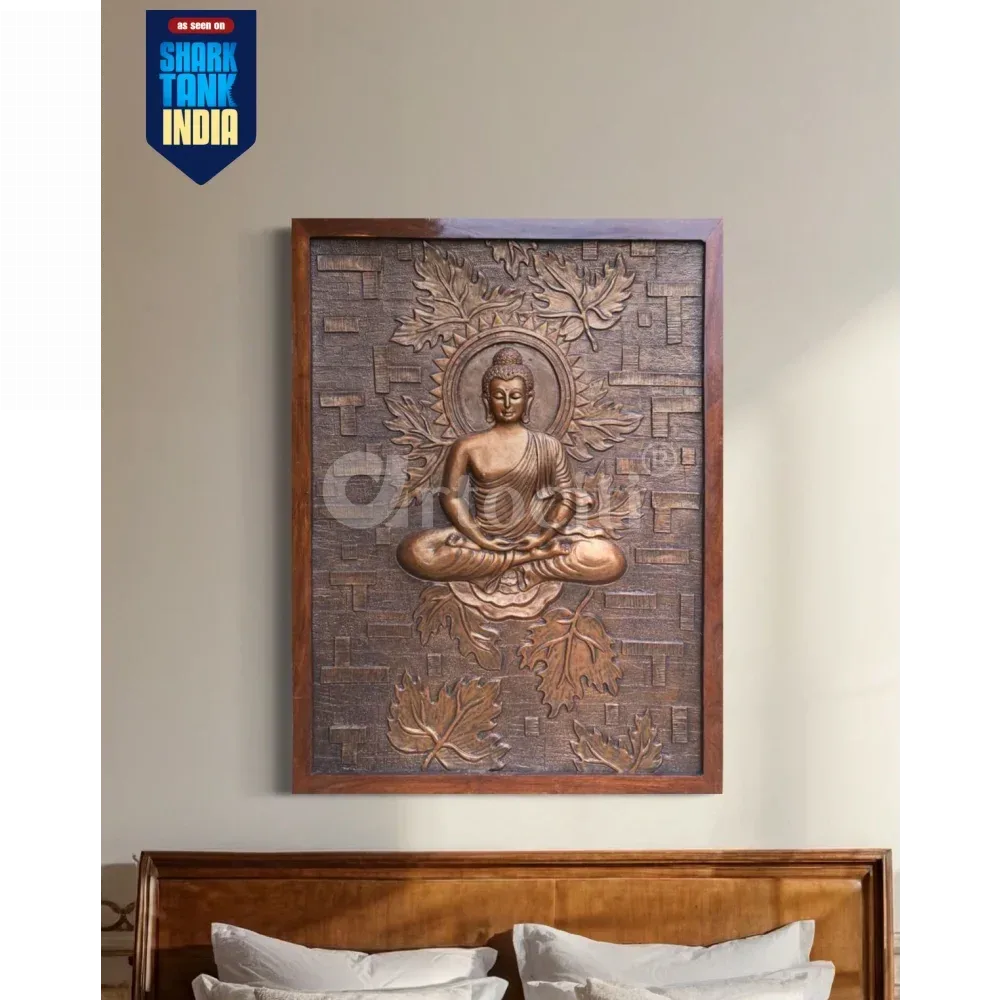
Define What Calm Means in Your Home
Calm interiors are not always pale, minimal, or empty. For some people, calm comes from soft colours and open space. For others, it comes from familiar symbols, earthy textures, and a controlled amount of contrast. Buddha imagery can create a reflective centre, while abstract work can add movement without introducing a literal story. Before choosing either, identify the room's purpose and the feeling you want during daily use. A quiet bedroom needs a different visual rhythm from a social living room, even when both follow a modern style.
Let One Style Lead the Composition
A balanced room usually needs one dominant artwork. Large meditative Buddha paintings can lead a meditation area, reading corner, or peaceful living room wall. A bold abstract piece may be better above a sofa or dining console where stronger colour is welcome. The second style should support rather than compete. It can appear on an adjacent wall, in a smaller format, or through related shapes and colours. When both pieces are equally large, bright, and detailed, the room may lose the stillness you intended to create.
Build a Restrained Colour Palette
Choose two or three main colours from the artwork and repeat them lightly through upholstery, cushions, rugs, ceramics, or plants. Stone grey, sand, cream, muted blue, olive, rust, black, and warm wood can connect spiritual and contemporary pieces. If the Buddha image is highly detailed or metallic, select an abstract work with open areas and softer contrast. If the figurative piece is monochrome, the abstract artwork can introduce one controlled accent colour. Artociti collections can help compare these different visual strengths before deciding how much colour the room can carry.
Use Abstract Art to Add Gentle Movement
Modern rooms sometimes feel flat when every surface is plain and every line is straight. Abstract Wall Art can solve this by introducing curves, layers, brush marks, or geometric rhythm. For a calm result, look for balanced spacing and colours that relate to the furniture. The artwork does not need to be faint, but it should avoid overwhelming the room. A composition with one strong shape and several quieter areas often feels more restful than a surface filled with equal activity. Viewing distance also affects how energetic the work appears.
Place Buddha Art in Quiet Visual Zones
A Buddha artwork benefits from a wall that is not interrupted by screens, storage, or constant movement. Consider a wall near a reading chair, beside a low cabinet, opposite the bed, or within a dedicated meditation corner. Avoid hanging it where an open door hides half the image or where television light repeatedly flashes across the surface. Keep nearby objects limited to a lamp, plant, bowl, or a few books. This creates a respectful visual pause and helps the artwork influence the atmosphere without becoming a decorative theme across the entire room.
Balance Scale, Furniture, and Empty Space
Artwork should relate to the furniture below it. A small piece above a wide sofa may look uncertain, while an oversized work in a narrow corner may feel oppressive. Measure both wall and furniture, then use tape to test the outline. Leave breathing space around the frame, especially when the artwork contains detailed figures or active brushwork. Empty wall is not wasted space; it helps the eye rest. In gallery arrangements, keep spacing consistent and avoid mixing too many frame widths, colours, and orientations.
Choose Frames and Finishes Carefully
Slim black, dark brown, light wood, or frameless canvas presentations often suit modern interiors. Metallic frames can work when the artwork includes similar accents, but heavy shine may reduce the calm effect. Use the same framing family across connected walls without forcing identical treatment. A Buddha image may benefit from warm wood, while an abstract piece uses a crisp black edge. The relationship can come from equal frame depth, similar matting, or aligned hanging heights. Good framing supports the composition without becoming the main attraction.
Use Lighting to Shape the Mood
Soft, warm, indirect light helps both figurative and abstract art feel comfortable. Harsh ceiling spots can flatten subtle colour or create reflections on glass. Adjustable lights are useful because they can be aimed away from shiny surfaces. In bedrooms and meditation spaces, pair artwork lighting with dimmable lamps rather than bright overhead light alone. During the day, watch how sunlight moves across the wall. Long exposure to direct sun may affect colours, while deep shadows can hide important detail. Lighting should reveal texture gently and consistently.
Final Thoughts
Decide which artwork should lead and give the supporting piece a quieter role. Use limited colours to connect spiritual imagery with contemporary forms. Protect calm visual zones from screens, storage, and unnecessary decorative objects. Measure scale carefully and preserve empty space around detailed compositions. Choose frames that share a design language without becoming identical. Use gentle lighting to reveal texture and colour without glare. Modern calm comes from thoughtful contrast, not from removing every expressive element. The Buddha image can provide emotional stillness while abstract forms prevent the room from feeling predictable. Let the figurative work lead in quiet zones and the abstract piece lead in social areas. This division creates variety without breaking the overall modern character of the home. Use open wall space as an active part of the composition rather than an area that must be filled. A restrained abstract work may carry colour through broad shapes instead of many small details. The spiritual piece can then remain visually clear and free from decorative competition. Frames may differ in colour when their depth, finish, or proportion still feels related. Observe both pieces under daylight and evening lamps before committing to permanent positions. Soft materials and natural textures can support calm without copying imagery from the artworks. Remove accessories that make the room feel staged or overly themed. A calm modern interior succeeds through controlled contrast, generous spacing, and personal connection. Let balance guide you.