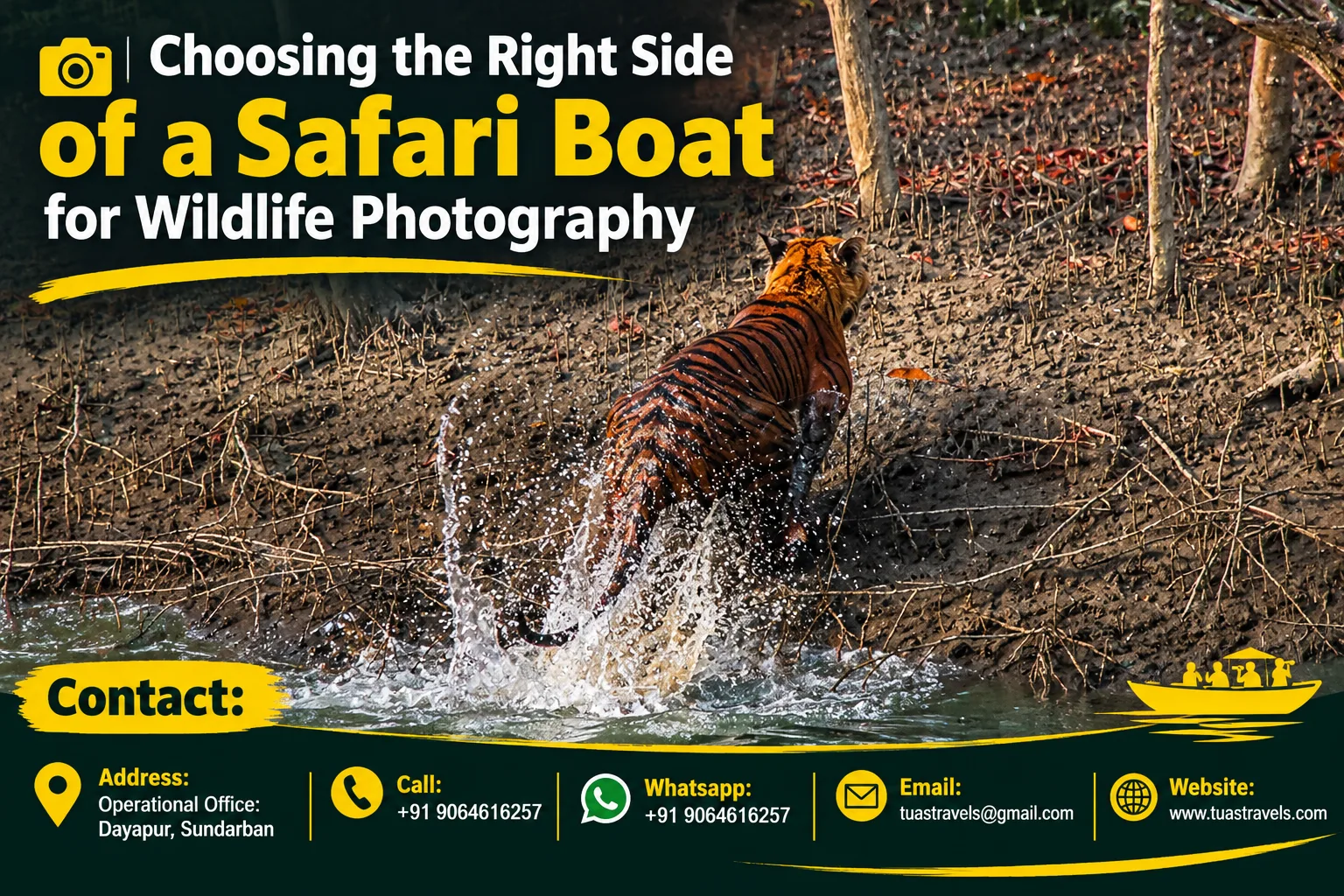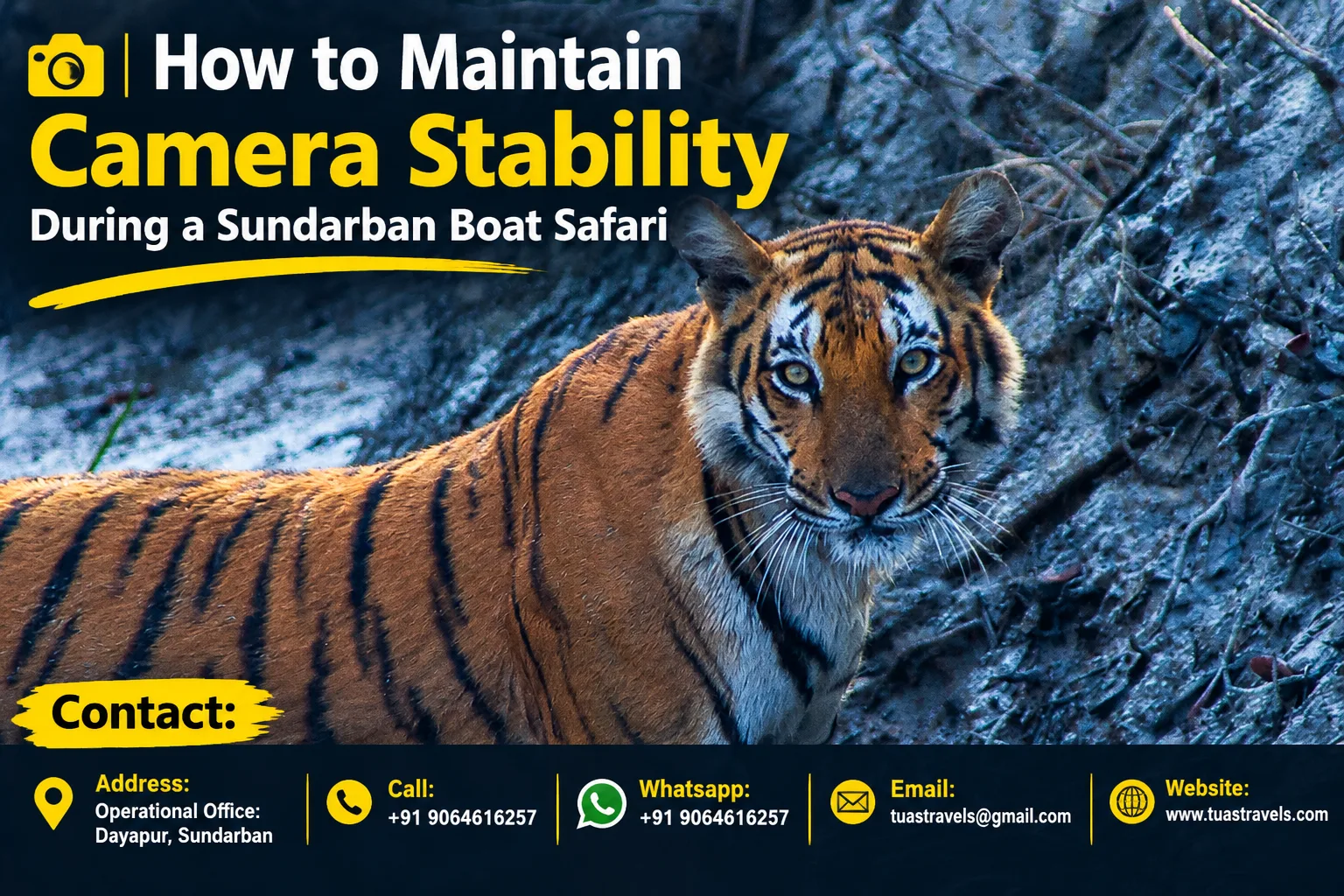
There are fantastic opportunities to photograph mangrove forests, waterways, birds, crocodiles and more when you go on a boat safari in the Sundarbans. Taking clear, steady photographs from a moving boat, though, can be difficult. The continuous motion of the water, vibrations from the engine and fluctuating weather conditions can all lead to murky photos. There are some tips and tricks that can help to reduce camera shake and make your photos sharper.
Use A High Shutter Speed
Shutter speed is especially significant in the case of the boat. Photographing wildlife: Exposure times of 1/500 second or higher are helpful for wildlife photos. Exposure times of 1/1000 second or faster can be useful for photos of birds in flight or fast subjects. When light is limited, decrease your shutter speed but not so much that the image is blurry, as this can probably be done by adjusting the ISO.
Use the Camera Correctly
Maintain both hands on the camera. Hold one hand around the body of the camera, and hold the lens from below with the other hand. When using the viewfinder, hold elbows close to your body, and push the camera gently against your face. This will provide more points of contact and less unwanted movement.
Do Not Rest The Camera On The Boat
While it might be easy to mount your camera directly on the boat railing, you could end up with some camera shaky due to engine vibrations. Rather, use the hands to hold the camera or a soft cushion or beanbag between the camera or lens and a firm surface.
Consider Image Stabilization
Use optical and/or electronic image stabilisation if available on the camera or lens, when suitable. This will help compensate for small hand movements and is useful for rather stationary subjects. Refer to the camera's manual as stabilisation settings may differ from camera to camera and in different shooting context.
Carefully use a Monopod
A monopod will also provide extra support for a heavy telephoto lens. But don't tie it to a vibrating part of the boat. It's usually easier to have a lightweight setup with the ability to respond to wildlife more rapidly than a heavy tripod.
Position Yourself Strategically
The location of the camera on the boat can impact on the stability of the camera. Stand or sit position where the boat is relatively stable and do not lean over the edge. Practice a comfortable stance and use the boat's available motion when taking photos, rather than resisting each and every move.
Use Burst Mode
Wildlife is not always so easy to find and the boat is always moving. Firing multiple frames means it is more likely that you will capture at least one sharp frame. Use burst shooting, fast shutter speed and continuous AF for moving subjects.
Protect Your Equipment
Staying comfortable and ready are also important to camera stability. Protect your camera from splashes, humidity and sudden rain and keep your camera strap secure. It is important that the camera is suitably protected during the safari, and a dry bag or camera cover that resists the weather can offer a lot of protection.
Using the proper technique, equipment, and patience, you can take good and memorable photographs from a safari on a boat in the Sundarbans. It's all about minimizing vibration, having appropriate shutter speeds, keeping steady postures and being prepared and excited for some wild life.