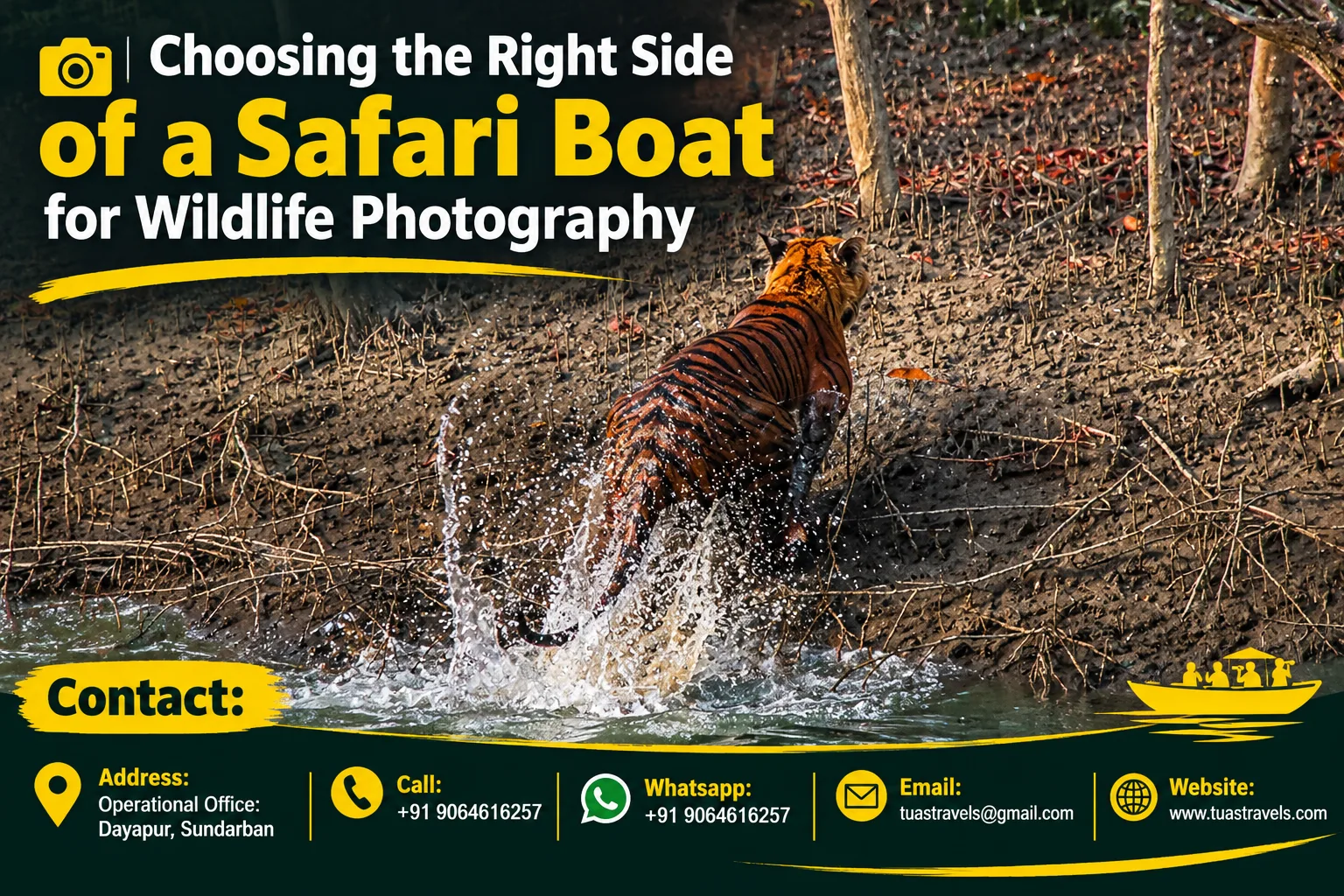
A safari boat photographers will capture animals in a very different way than wildlife on land. One can not change position freely, get closer to the subject or select any angle one desires. Where you're on the boat may affect the light, background, visibility, and even how quickly you are able to capture a flash of wildlife.
So, what's the optimum side of the safari boat for photography? None of the above is the right answer. There are a number of factors involved with the right side.
Take Into Account The Direction Of The Sunlight
If you are taking a side, take into account light! Ideally, stand in front of the sun and not towards the animal's eyes.
Sunlight behind or to the side of the subject will enhance the detail in the face, body and eyes of the animal. Front window glare and silhouettes that may be produced by direct sunlight can make detail preservation more difficult.
Side lighting can, however, also produce beautiful shadows and textures, especially when portraying animals in the mangroves.
Watch Both Sides of the Waterway
Wildlife could be present on the either of the banks in a place like the Sundarbans. You do not have to be sitting on one side to be guaranteed greater opportunities during the safari.
Continue to scan on both banks as boat travels. Also, your guide or boat crew can warn you if you see an animal. Don't continuously shift your position, be ready to shoot from whichever side allows a clear, safe view.
Keep in mind the background!
The location of the boat has impact beyond that of the animal. It also alters the background of the subject.
A clear background will help to make the animal look more prominent and less cluttered. If you photograph a deer, monkey, bird or other animal, try to find a space that is separated from the subjects by plants, water, or even a distant mangrove.
A slight shift in the camera can dramatically alter the composition at times.
Set aside space for moving animals!
Animals do not sit very still. A bird can suddenly fly off, a deer may walk along the riverbank or some other animal may move through the bushes.
The moment you see the animal moving, put some empty space in front of the animal. This makes for a more organic arrangement, and provides a feeling of movement for the picture.
Being on the side with a better vantage point of the animal's way may then be helpful.
Consider Other Photographers
Typically, a safari boat is a "shared' space. Do not obstruct other photographers or wildlife from being viewed or photographed by others.
When an animal appears do not make sudden movements. Make sure to change your stance gradually if it is necessary; only when it is safe. A small amount of being aware of those around you can make it better for all.
Be Ready for Birds
When photographing birds, it's especially crucial to make a side decision. Watch birds' perching, flying, and probable movements.
Side of the boat may be more suitable for action pictures if flying parallel to the boat. In case of sudden movements, be ready with your camera and use fast shutter speed.
If the bird is perched, observe the background and light sources before capturing the photo.
Safety First
A better angle does not necessarily result in leaning over the side dangerously or in aggressively approaching wildlife.
Wildlife require space and responsible wildlife photography involves not unnecessarily disturbing wildlife. Follow your guide's and boat crew's instruction, especially when taking photographs of potentially dangerous animals.
Stay Flexible
The worst error is to believe that one side of the safari boat will always be better.
Things may change during the journey. The sun shifts, the boat swerves, animals just turn up and the background can change in just a few minutes.
Look for a place that will be perfect when you're there, rather than looking for a place that is perfect now.
Final Thoughts
Getting the right side of a safari boat is a minor detail of wildlife photography that can make a big difference. Just before you take your seat at your location, think about how the sun will move, animal movement, background, visibility, and other photographers.
First and foremost, be vigilant. Wildlife does not plan their activities by the clock. With a keen eye and a prepared camera, a great opportunity may be captured in a fleeting moment, whether on the side of the boat or not.