
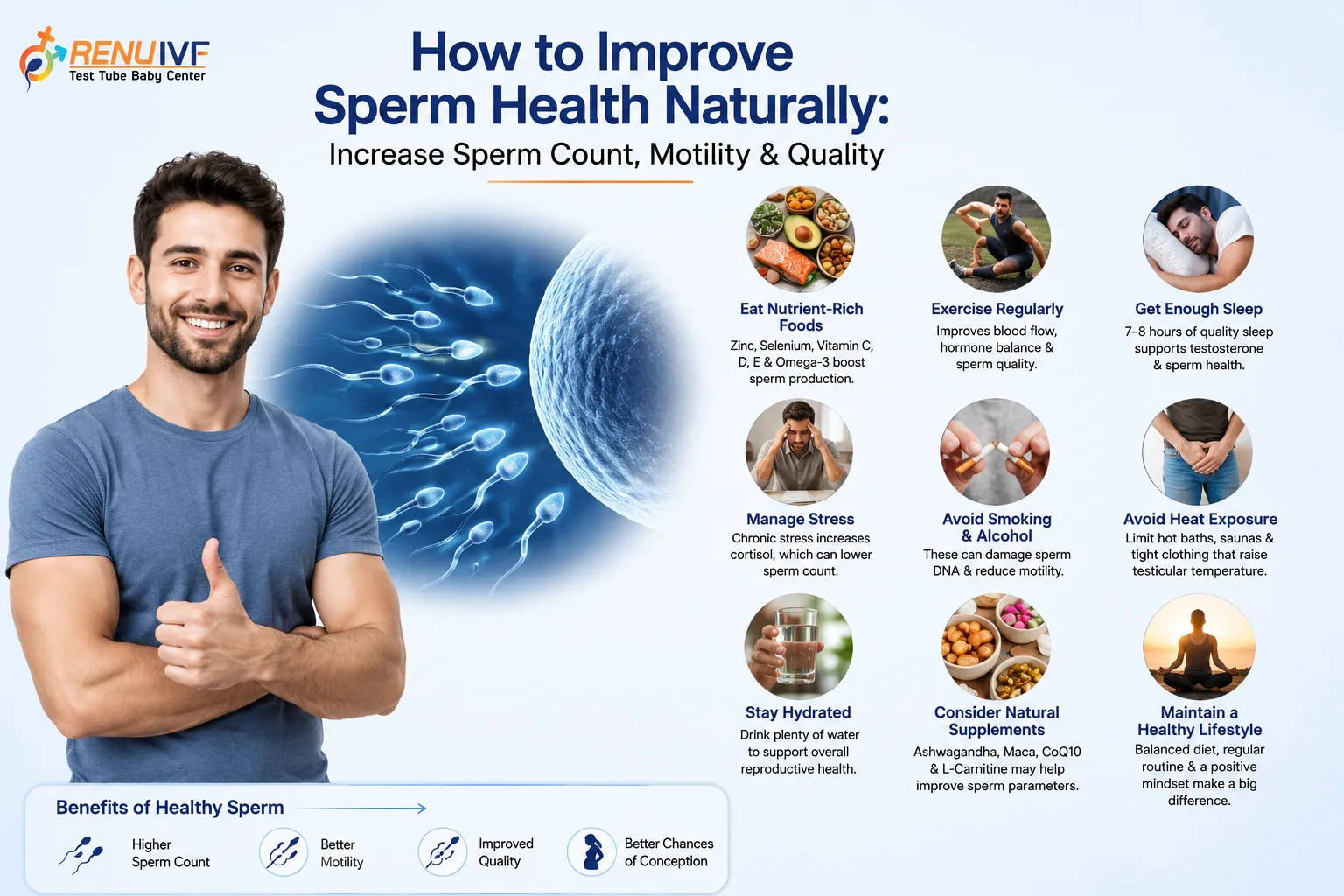
Sperm health plays a central role in male fertility, yet it's something most men never think about until they're actively trying to conceive. The good news is that sperm health isn't fixed it responds fairly quickly to lifestyle changes, because the body is constantly producing new sperm through a process called spermatogenesis. Since this cycle takes roughly two to three months to complete, the choices you make today can genuinely show up in your sperm quality a couple of months down the line. This guide covers practical, natural ways to support sperm count, motility, and overall quality.
What Does "Sperm Health" Actually Mean?
When doctors talk about sperm health, they're usually referring to three things together, not just one number:
FactorWhat It MeansSperm countThe total number of sperm present in a semen sampleSperm motilityHow well sperm can swim and move toward the eggSperm morphologyThe size and shape of individual sperm cellsA man can have a normal sperm count but still face fertility issues if motility or shape is poor — which is why all three factors matter together, not in isolation.
Why Sperm Health Can Decline
Sperm are produced continuously inside the testes through spermatogenesis, a process that depends heavily on hormonal balance and overall body health. When something disrupts this process — poor diet, chronic stress, heat exposure, or underlying illness — sperm quality tends to drop before count does, which is often the first sign something needs attention.
Common contributors to declining sperm health include:
- Smoking and tobacco use
- Excessive alcohol consumption
- Obesity and poor diet
- Chronic stress
- Lack of physical activity
- Prolonged heat exposure (laptops on the lap, tight underwear, hot tubs)
- Exposure to environmental toxins and pesticides
- Certain medications
- Untreated medical conditions like varicocele or hormonal disorders
Natural Ways to Improve Sperm Count and Quality
1. Eat a Fertility-Friendly DietDiet has a direct, well-documented impact on sperm production. Foods rich in antioxidants help protect sperm cells from damage, while certain nutrients directly support the stages of spermatogenesis.
NutrientFound InBenefitZincNuts, seeds, eggs, seafoodSupports sperm production and testosterone levelsFolateLeafy greens, legumesReduces abnormal sperm formationVitamin C & ECitrus fruits, almonds, spinachProtects sperm from oxidative damageOmega-3 fatty acidsFish, walnuts, flaxseedsImproves sperm motilitySeleniumBrazil nuts, whole grainsSupports healthy sperm structure2. Maintain a Healthy Body WeightBoth being underweight and being significantly overweight can disrupt the hormonal signals — GnRH, FSH, LH, and testosterone — that drive spermatogenesis. Excess body fat in particular can lower testosterone and raise estrogen levels, both of which work against healthy sperm production.
3. Exercise Regularly, But Don't Overdo ItModerate, regular exercise supports healthy testosterone levels and blood flow to the reproductive organs. That said, excessive endurance training or overheating during workouts can actually have the opposite effect, so balance matters more than intensity.
4. Manage StressChronic stress raises cortisol levels, which can interfere with the hormonal chain that triggers sperm production. Simple, consistent habits — enough sleep, downtime, breathing exercises, or just cutting back on constant overload — can measurably support fertility over time.
5. Avoid Heat Exposure to the TesticlesSperm production requires a slightly cooler temperature than the rest of the body, which is exactly why the testes sit outside it. Regularly exposing the groin to heat — laptops resting directly on the lap, prolonged hot baths, tight synthetic underwear — can quietly lower sperm count and motility over weeks of exposure.
6. Cut Down on Alcohol, Smoking, and Recreational DrugsAll three are consistently linked to lower sperm count, poor motility, and abnormal sperm shape. Alcohol and smoking in particular disrupt testosterone levels and increase oxidative stress inside the testes, directly interfering with spermatogenesis.
7. Get Enough SleepTestosterone production largely happens during sleep, so consistently poor or insufficient sleep can lower hormone levels enough to affect sperm quality over time.
8. Limit Exposure to ToxinsPesticides, industrial chemicals, and certain plastics contain compounds that can interfere with hormone function. Where possible, reducing exposure — washing produce, avoiding certain plastic containers for hot food, being cautious with unnecessary chemical exposure at work — is a reasonable precaution.
Quick Reference: What Helps vs What Harms
Supports Sperm HealthHarms Sperm HealthBalanced, nutrient-rich dietSmokingRegular moderate exerciseExcessive alcoholAdequate sleepObesityStress managementChronic stressHealthy body weightHeat exposure to groinAvoiding toxinsEnvironmental toxin exposureWhen Lifestyle Changes Aren't Enough
Natural methods can meaningfully improve sperm health, but they can't fix every underlying cause. Conditions like varicocele, hormonal disorders, infections, or genetic factors need proper medical evaluation and treatment lifestyle changes alone won't resolve these. It's also worth remembering that male fertility is only half the picture; egg health, driven by the female reproductive process of oogenesis, matters equally, so couples struggling to conceive are usually better served by evaluating both partners together rather than focusing on just one.
If sperm parameters remain abnormal despite consistent lifestyle changes over a few months, it's a reasonable point to consult a specialist rather than continuing to guess. Getting a proper semen analysis and hormonal workup done at a top IVF centre in Kanpur can help identify whether the issue is lifestyle-related or something that needs targeted medical treatment.
Conclusion
Sperm health is shaped by daily habits far more than most men realize, and because the body is constantly generating new sperm through spermatogenesis, positive changes today can genuinely improve sperm count, motility, and quality within a few months. Eating well, managing weight and stress, avoiding heat and toxin exposure, and cutting out smoking and excess alcohol are all practical, evidence-backed steps anyone can start immediately. But if fertility concerns persist despite these efforts, it's important not to delay medical evaluation. At Renu IVF, our fertility specialists offer detailed semen analysis, hormonal assessment, and personalized treatment plans to help men and couples address the real cause behind their fertility challenges and move forward with confidence.