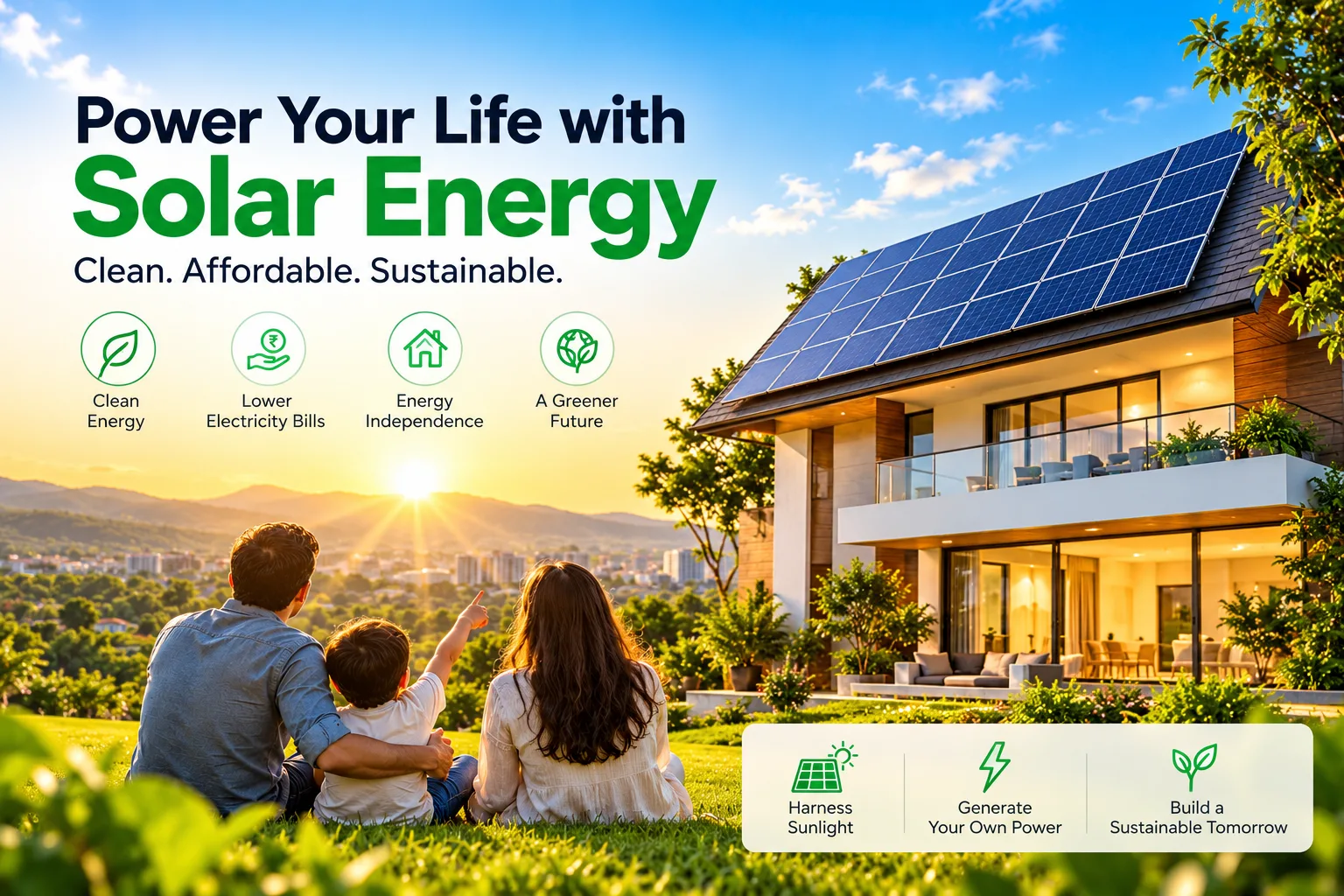
India is making steady progress towards renewable energy, and rooftop solar is becoming an attractive option for households looking to manage their electricity expenses. With abundant sunlight across much of the country, solar energy offers homeowners an opportunity to generate clean electricity, reduce their dependence on conventional power, and support a more sustainable future.
However, the initial cost of installing a rooftop solar system can be a concern for many families. To encourage adoption, the government provides financial assistance to eligible residential consumers through schemes such as PM Surya Ghar: Muft Bijli Yojana. Understanding the eligibility criteria, application process, and installation requirements can help homeowners make informed decisions.
This guide explains how to apply for a solar panel subsidy in India, what to check before installation, and how Solar Sathi can help homeowners understand their options.
1. What Is a Solar Panel Subsidy?
A solar panel subsidy is financial assistance provided by the government to reduce the upfront cost of installing an eligible rooftop solar system. It helps make renewable electricity more accessible to residential households.
Under applicable government solar schemes, eligible consumers may receive central financial assistance after completing the required registration, installation, inspection, and commissioning procedures.
The subsidy is intended to encourage households to adopt solar power while supporting India's broader renewable energy goals. However, the amount received depends on the scheme guidelines, the system's eligible capacity, and whether the applicant meets all applicable conditions.
2. Understand the PM Surya Ghar: Muft Bijli Yojana
The PM Surya Ghar: Muft Bijli Yojana is a central government initiative launched in February 2024 to encourage residential rooftop solar installations across India. It aims to help households generate their own electricity and potentially reduce their monthly electricity expenses.
Under the central subsidy structure announced for the scheme, eligible residential households in most states can receive assistance based on the following indicative amounts:
- 1 kW system: ₹30,000
- 2 kW system: ₹60,000
- 3 kW system or larger: Up to ₹78,000
These amounts reflect the published central assistance structure and are subject to current scheme rules, approved system requirements, and eligibility. Special provisions may apply in certain states and Union Territories.
A subsidy does not automatically mean that a household will receive free electricity or eliminate every electricity bill. Actual savings depend on solar generation, household consumption, local tariffs, and applicable electricity-metering rules.
Homeowners looking for a government scheme for solar panels should check the official PM Surya Ghar portal for the latest guidelines and application details.
3. Who Is Eligible for a Solar Subsidy?
Before applying, homeowners should check whether their household meets the scheme's requirements. Eligibility generally includes the following considerations:
- The applicant must meet the scheme's citizenship and residential-consumer requirements.
- The property must have a suitable rooftop or other permitted installation space.
- The household must have a valid electricity connection from the relevant distribution company.
- The installation must comply with applicable technical requirements and scheme procedures.
- The applicant must follow the rules concerning previous subsidies and other eligibility restrictions.
Applicants should also confirm whether their proposed solar system, electricity connection, and selected vendor meet the requirements of their local distribution company, commonly known as the DISCOM.
People living in rented homes or apartments should check roof-use permissions, ownership arrangements, and the relevant electricity connection requirements before proceeding. Eligibility should always be confirmed through the official portal rather than assumed.
4. How to Apply for a Solar Panel Subsidy in India
The application process involves several steps. Following the correct sequence can help prevent delays and avoid complications during installation.
Step 1: Register on the Official Portal
Visit the PM Surya Ghar website and begin the consumer registration process. You will generally need to select your state and electricity distribution company and provide details such as your electricity consumer account number and registered contact information.
Step 2: Submit the Rooftop Solar Application
Log in using the required consumer details and complete the rooftop solar application. Provide accurate information about your electricity connection and proposed installation.
Wait for any required technical feasibility approval before proceeding, as specified by the scheme and your DISCOM.
Step 3: Select an Eligible Solar Vendor
Once the required approval is received, choose a vendor registered or empaneled under the applicable scheme and distribution of company process. Compare quotations, equipment specifications, warranties, installation costs, and after-sales support before deciding.
Step 4: Complete Solar Panel Installation
The selected vendor installs the approved rooftop system according to applicable technical and safety standards. A typical system includes solar panels, an inverter, mounting structures, wiring, and protective equipment.
Use qualified professionals to ensure that the installation follows the approved specifications.
Step 5: Complete Metering and Inspection Requirements
After installation, submit the required system details through the portal and follow the procedure for net-meter installation or other applicable metering arrangements. The distribution company will complete the necessary inspection and commissioning formalities.
Step 6: Submit Bank Details for Subsidy
Once the installation meets the scheme's commissioning requirements, submit the required bank account information and supporting documents through the official process. Ensure that your bank details match the applicant's requirements.
The subsidy is processed according to the applicable scheme procedures. Check the portal for the latest instructions and application status.
5. Documents Required for a Solar Subsidy Application
Keeping the necessary documents ready can make the application process easier. Depending on the portal and local requirements, homeowners may need:
- Electricity consumer number and recent electricity bill.
- Registered mobile number and email address.
- Bank account details and a cancelled cheque or other accepted bank verification document.
- Installation details, system specifications, and photographs where required.
- Additional information requested by the electricity distribution company.
Always check the official portal for the current document list. Ensure that the applicant's details are accurate and consistent across the application, electricity connection, and bank records.
6. How to Choose Solar Panel Installation Companies
Selecting the right installer is an important part of adopting solar energy. Reliable solar panel installation companies can help homeowners assess their rooftops, select suitable equipment, complete the installation, and follow the necessary subsidy procedures.