
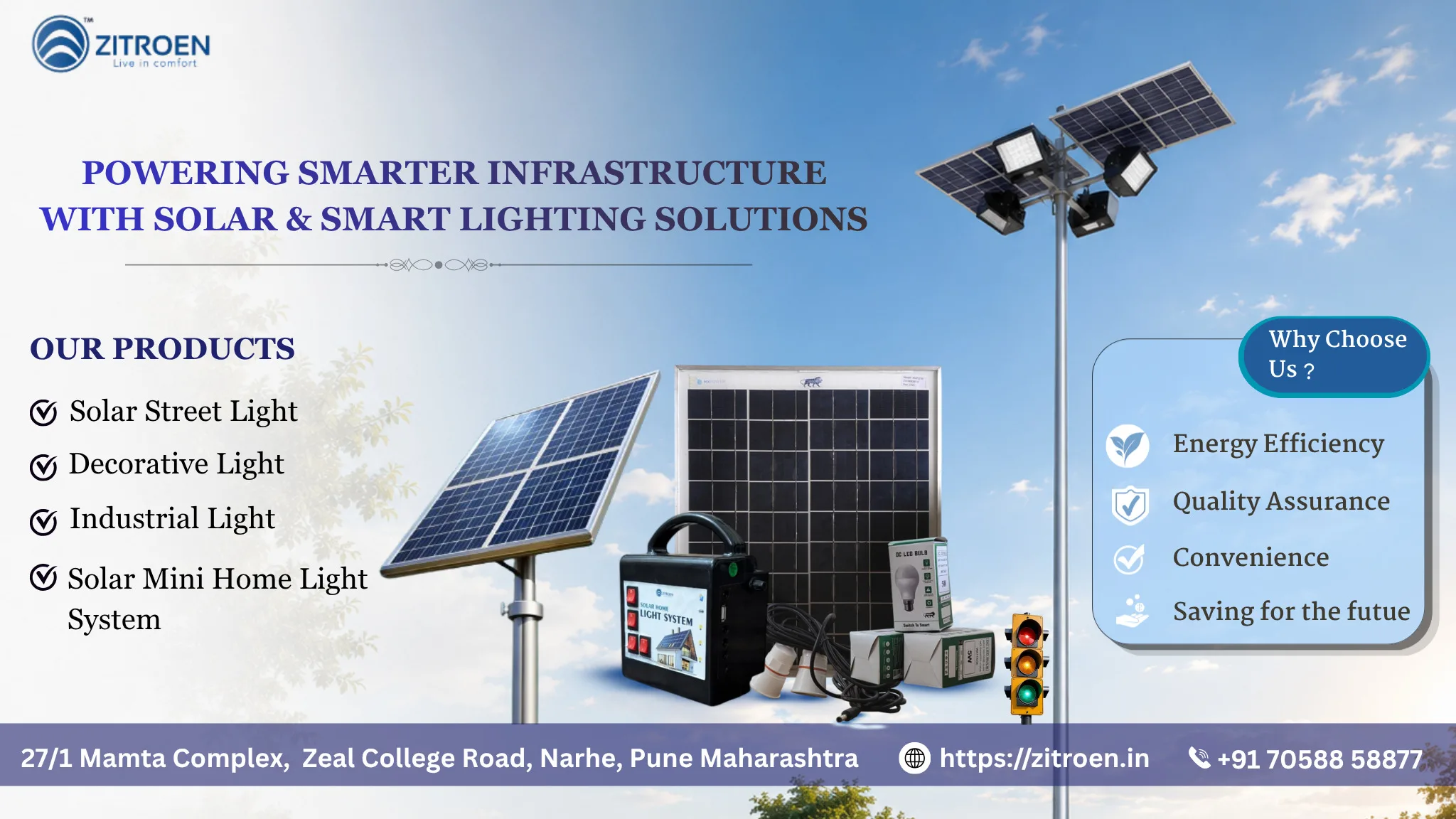
Solar street lighting has become an increasingly practical option for outdoor infrastructure in India. From residential roads and campuses to industrial areas, parking spaces and public infrastructure, solar-powered lighting can provide illumination while reducing dependence on conventional grid electricity.
However, choosing a solar street light should not be based only on wattage or price. Different locations have different lighting requirements, operating conditions and installation needs. Selecting the right system requires consideration of several technical and environmental factors.
Understand the Application First
The first step is to understand where the solar street light will be installed.
A light intended for a residential road may have different requirements from one installed along a highway, industrial facility, warehouse entrance or large parking area.
Consider the road or area that needs illumination, the required lighting level, pole height, spacing between lights and the expected operating hours. These factors help determine the appropriate lighting configuration.
Consider LED Lighting Performance
LED technology plays an important role in solar street lighting. Modern LEDs can provide efficient illumination while consuming relatively low amounts of energy.
When comparing solar street lights, don't look only at the wattage. Also consider light distribution, beam angle, luminous output and the area that needs to be illuminated.
A properly designed optical system can distribute light more effectively across a road or outdoor area rather than concentrating illumination in one small location.
Select an Appropriate Solar Panel
The solar panel is responsible for generating the energy required by the lighting system.
Solar panel capacity should be selected according to the LED load, battery capacity, location and expected sunlight conditions. The panel should be capable of generating enough energy during the available daylight hours to support the required nighttime operation.
The installation location is also important. Buildings, trees or other structures that create shade can reduce solar energy generation.
Battery Capacity Matters
The battery stores energy generated by the solar panel during the day and supplies power to the LED light after sunset.
Battery capacity and technology directly affect how long the lighting system can operate. When selecting a solar street light, consider the expected operating hours and local weather conditions.
A suitable system should have enough stored energy to meet its intended lighting requirements, including periods when sunlight may be lower than usual.
Consider Pole Height and Lighting Coverage
The height of the pole affects the area covered by the light.
Higher mounting heights can provide broader coverage, but the lighting system must have an appropriate optical design for the installation height. Pole spacing should also be considered when planning multiple solar street lights.
For larger roads, industrial premises and open areas, a lighting layout should be planned so that there are no significant dark zones between individual lights.
Look at Operating Conditions
Outdoor lighting equipment must operate in changing environmental conditions. Rain, dust, temperature variations and prolonged exposure to sunlight can affect equipment over time.
Before selecting a product, organizations should consider the environmental conditions of the installation location and choose equipment designed for the intended application.
Durable construction and suitable protection against environmental exposure can contribute to long-term performance.
Smart Features Can Improve Efficiency
Modern solar lighting systems can incorporate smart features such as automatic controls, motion sensors and different lighting modes.
For example, a lighting system can operate at a higher brightness level when activity is detected and use a lower brightness level during periods of limited activity, depending on the system design.
These features can help optimize energy usage while maintaining appropriate illumination when required.
Maintenance and Installation
Although solar street lights can operate independently from conventional electrical grids, proper installation and periodic maintenance remain important.
Solar panels should be kept reasonably clean so that dust and other deposits do not significantly reduce sunlight absorption. Battery condition and lighting performance should also be monitored according to the product and application.
Correct installation is equally important. Solar panel orientation, pole positioning, mounting height and lighting direction can all affect the performance of the system.
Choosing the Right Manufacturer or Supplier
The manufacturer or supplier is another important consideration when selecting solar street lighting.
Organizations should evaluate technical specifications, product quality, available configurations, application experience, warranty terms and after-sales support.
A reliable solar street light manufacturer in India should be able to provide products suitable for different applications and offer technical information to help customers select the appropriate configuration.
Companies such as Zitroen provide solar and LED lighting solutions for various outdoor applications, including roads, residential areas, industrial facilities, campuses and other infrastructure projects.
Common Applications of Solar Street Lights
Solar street lighting can be used in a wide range of locations, including:
- Residential roads
- Rural roads
- Industrial areas
- Warehouses and logistics facilities
- Parking areas
- Educational campuses
- Commercial properties
- Parks and public spaces
- Construction and development projects
- Internal roads and access areas
The exact system should be selected according to the lighting requirements and conditions of each location.
Conclusion
Choosing a solar street light involves more than selecting a particular wattage. LED performance, solar panel capacity, battery specifications, pole height, lighting coverage, installation conditions and environmental factors all contribute to the overall performance of the system.
By evaluating these factors before installation, businesses, institutions and infrastructure developers can select solar lighting solutions that better match their requirements.
As solar technology and LED lighting continue to develop, solar street lights can play an important role in supporting energy-efficient outdoor infrastructure across India.