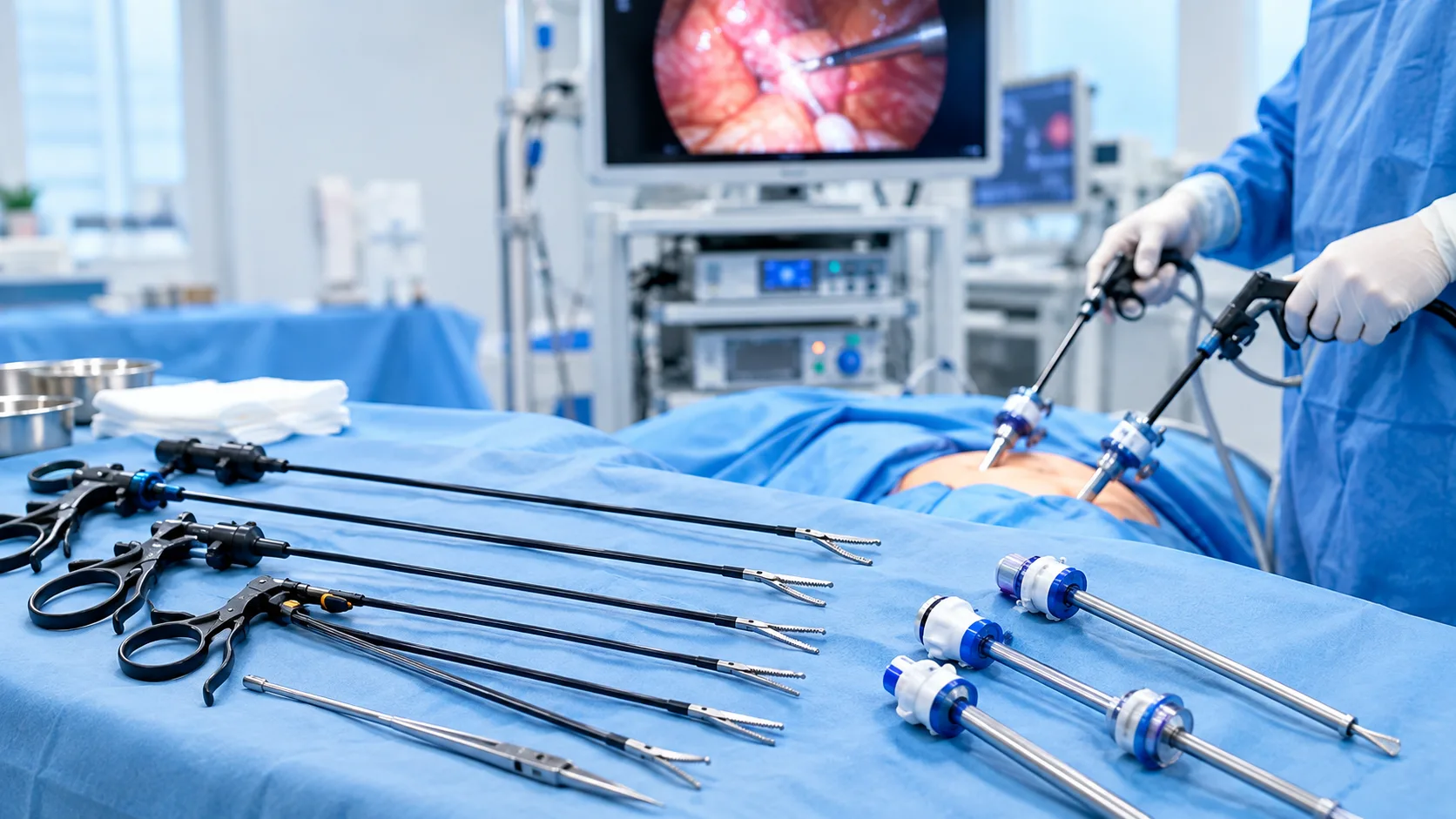
Laparoscopic surgery has changed the way many surgical procedures are performed. Instead of using large incisions, surgeons can access the operating area through small openings with the help of specialized instruments and a camera system. This approach requires precision, controlled movement and suitable surgical tools. Choosing the right laparoscopic instruments is therefore an important part of preparing for a successful minimally invasive procedure.
Different laparoscopic procedures require different types of instruments. A grasper used for holding tissue, for example, has a different function from a laparoscopic scissors used for cutting or a needle holder used for suturing. For this reason, selecting laparoscopic instruments should be based on the procedure, the type of tissue being handled, the required movement and the surgeon's working technique.
Understanding the Role of Laparoscopic Instruments
Laparoscopic instruments are designed to allow surgeons to perform different surgical tasks through small access points. Their long shafts and specialized working ends allow the surgeon to manipulate tissue while viewing the surgical area through a laparoscope.
A typical laparoscopic setup may require several types of instruments depending on the procedure. Graspers can be used to hold and manipulate tissue, scissors can be used for cutting and dissection, needle holders can assist with suturing, while trocars and cannulas provide access for instruments to enter the surgical area.
Bharat Surgical provides a range of laparoscopic instruments designed for different surgical applications, including graspers, scissors, trocars, bipolar instruments, needle holders, retractors and other specialized instruments.
Start by Identifying the Surgical Procedure
The first step in choosing the appropriate laparoscopic instrument is understanding the procedure in which it will be used. Instruments required for a general laparoscopic procedure may differ from those used in gynecological, urological or other specialized procedures.
For example, a procedure involving extensive tissue manipulation may require different graspers and retractors compared with a procedure where suturing and precise dissection are the primary requirements. Similarly, procedures involving electrosurgical applications may require suitable bipolar instruments.
Instead of selecting instruments simply because they are commonly used, hospitals and surgical facilities should consider the actual requirements of their procedures. This helps create an instrument set that is practical and suitable for the operating environment.
Choosing the Right Laparoscopic Grasper
Graspers are among the most commonly used instruments in laparoscopic surgery. They are primarily used to hold, manipulate and reposition tissue during a procedure. However, different types of graspers are designed for different applications.
The shape and design of the jaws can influence how the instrument interacts with tissue. Some designs provide a stronger grip, while others are intended for more controlled or delicate tissue handling. Therefore, the appropriate grasper should be selected according to the surgical procedure and the type of tissue being manipulated.
Bharat Surgical offers different types of graspers and scissors, providing options for different laparoscopic applications. When choosing a grasper, surgeons and healthcare facilities can consider factors such as jaw configuration, working length, shaft diameter, rotation and handle design.
Selecting Laparoscopic Scissors for Cutting and Dissection
Laparoscopic scissors are another essential part of many minimally invasive surgical procedures. They are used when controlled cutting or dissection is required, and their design can affect visibility, maneuverability and cutting control.
Straight and curved scissors can provide different working angles, while specialized designs may be useful for particular surgical applications. When selecting laparoscopic scissors, it is important to consider the shape of the working end, shaft length, diameter, handle design and the type of cutting required.
The instrument should provide sufficient control while allowing the surgeon to work comfortably within the limited space of a laparoscopic operating field. Selecting an appropriate scissors design can therefore make a difference in how easily the required surgical task can be performed.
Considering Bipolar Laparoscopic Instruments
Some laparoscopic procedures involve electrosurgical applications, making bipolar instruments an important consideration. Bipolar instruments are designed to deliver electrical energy between two electrodes located within the instrument.
The choice of bipolar instrument depends on the intended application, jaw configuration and compatibility with the relevant electrosurgical equipment. The instrument should also be selected according to the manufacturer's specifications and the requirements of the procedure.
Bharat Surgical includes bipolar instruments within its laparoscopic instrument range, giving healthcare professionals access to specialized instruments for procedures where bipolar electrosurgical functionality is required.
Choosing a Suitable Needle Holder
Suturing during laparoscopic surgery requires precise control because the surgeon works through a limited access point. A laparoscopic needle holder is designed to hold and manipulate a surgical needle during suturing.
When selecting a needle holder, factors such as jaw design, working length, shaft diameter, handle configuration and needle-holding capability should be considered. The instrument should provide an appropriate grip while allowing the surgeon to control the needle within the surgical field.
A suitable needle holder can be particularly important in procedures where laparoscopic suturing forms an essential part of the surgical technique.
Selecting the Right Trocar and Cannula
Before laparoscopic instruments can be introduced into the surgical field, appropriate access needs to be established. Trocars and cannulas play an important role in providing this access.
The choice of trocar can depend on factors such as diameter, cannula design, sealing mechanism and compatibility with the instruments being used. The diameter is particularly important because the selected trocar needs to accommodate the instruments that will pass through it.
For healthcare facilities looking for different access options, Bharat Surgical's laparoscopic trocar range provides products designed for laparoscopic applications.
Considering the Size and Working Length
Instrument size is another factor that should not be overlooked. Laparoscopic instruments are available in different shaft diameters and working lengths, and the appropriate configuration depends on the procedure and access system.
A smaller-diameter instrument may be appropriate for certain minimally invasive applications, while another procedure may require a different size for adequate manipulation. The working length also needs to provide sufficient reach to the surgical area without making instrument control unnecessarily difficult.
Before purchasing instruments, hospitals should make sure that the selected instruments are compatible with the trocar and cannula system used in their operating setup.
Don't Ignore Instrument Ergonomics
Technical specifications are important, but ergonomics also play a significant role in laparoscopic instrument selection. During a surgical procedure, instruments may need to be manipulated continuously and with precise movements.
Handle design, finger positioning, rotation and overall balance can influence how naturally an instrument can be controlled. A well-designed handle can provide the surgeon with better control over the working end while reducing unnecessary difficulty during manipulation.
For this reason, hospitals and surgical teams should consider not only what an instrument does but also how comfortably and effectively it can be handled during the intended procedure.
Material and Durability Matter
Reusable surgical instruments need to withstand repeated cleaning, sterilization and handling. Material quality and manufacturing standards can therefore be important considerations when selecting laparoscopic instruments for regular clinical use.
Healthcare facilities should review the manufacturer's information regarding cleaning, sterilization, maintenance and storage. Regular inspection is also important for identifying signs of wear, damage or changes in instrument performance.
Choosing instruments from an established surgical instrument manufacturer or supplier can also provide access to product information and technical support when required.
Match Instruments to the Actual Surgical Requirement
One of the most practical ways to select laparoscopic instruments is to build the instrument set around the procedures performed by the surgical facility.
For example, a procedure may require a trocar for access, a grasper for tissue manipulation, scissors for cutting, a needle holder for suturing and suction-irrigation equipment for managing fluids. Another procedure may require retractors, clip applicators or bipolar instruments depending on its specific requirements.
This approach helps avoid selecting instruments simply because they are available. Instead, every instrument becomes part of a planned setup based on its intended surgical function.
What Should You Check Before Buying Laparoscopic Instruments?
Before purchasing laparoscopic instruments, healthcare facilities should look at the complete product specification rather than focusing only on the purchase price. The instrument's intended application, working length, diameter, jaw design, material, handle configuration and compatibility with existing equipment can all influence its suitability.
It is also useful to understand the manufacturer's recommendations for cleaning, sterilization and maintenance, particularly when purchasing reusable instruments. Availability of technical assistance and after-sales support can be another practical consideration for hospitals and surgical centers that rely on their instruments regularly.
Final Thoughts
Choosing the right laparoscopic instruments is about matching the instrument to the specific surgical requirement. Graspers are selected according to tissue-handling needs, scissors according to cutting and dissection requirements, needle holders for controlled suturing, trocars for surgical access and bipolar instruments for appropriate electrosurgical applications.
Factors such as instrument size, working length, jaw design, ergonomics, material, compatibility and maintenance requirements should also be considered before making a purchase. A carefully selected laparoscopic instrument set can help surgical teams have the appropriate tools available for different procedures and working requirements.
Bharat Surgical offers a range of laparoscopic surgical instruments covering different applications, making it possible for healthcare facilities and surgical professionals to explore various instrument categories according to their requirements.