
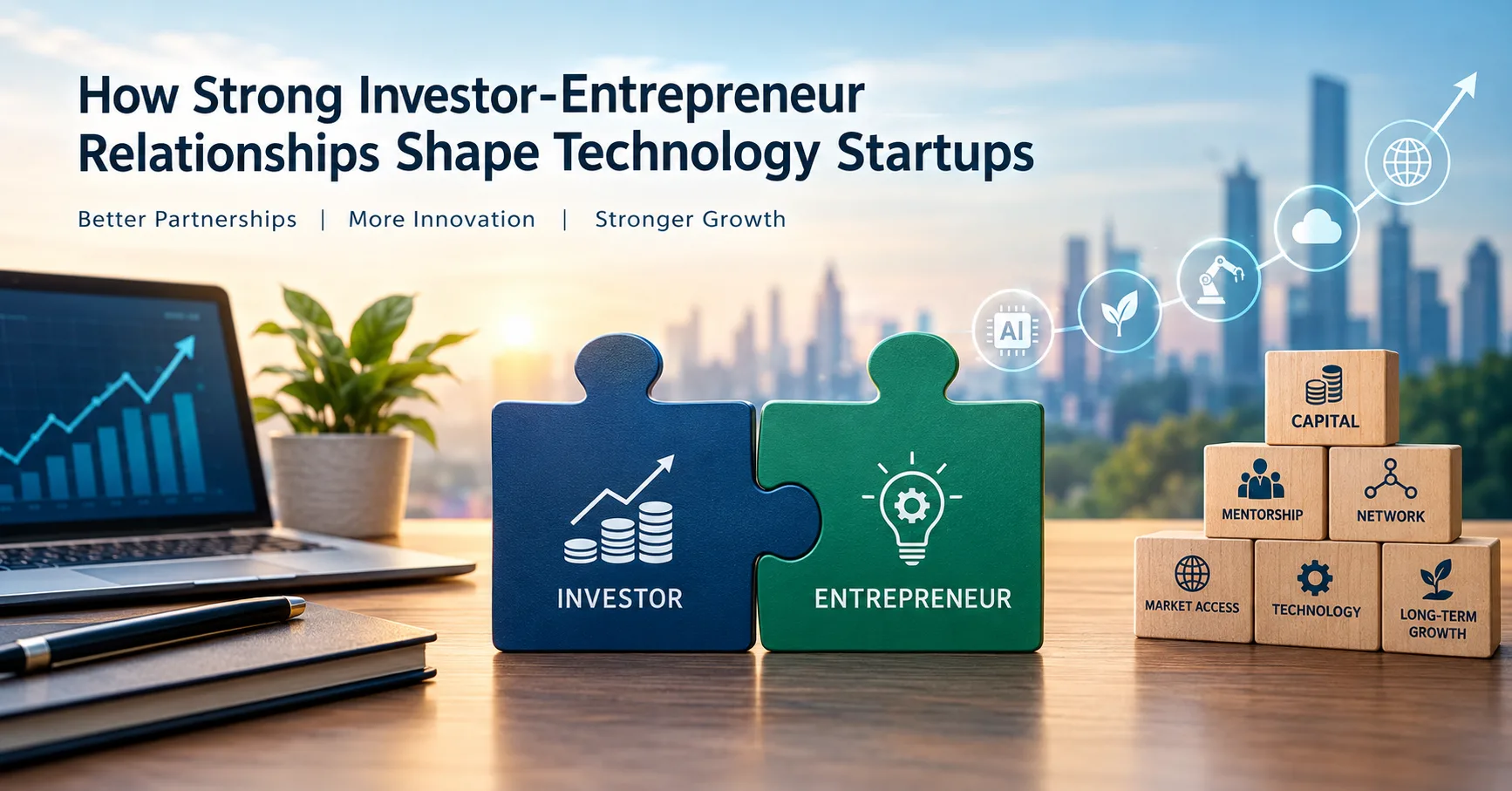
Technology startups often begin with an ambitious idea, a technical solution, or a new way of addressing an existing problem. But turning that idea into a sustainable business requires much more than innovation. Founders need access to capital, market knowledge, experienced guidance, professional networks, and the confidence to make decisions during uncertain stages of growth. This is where Rajat Khare Venture Capitalist fits into the broader discussion about how modern investors and entrepreneurs can work together to build technology businesses.
The relationship between a founder and an investor has changed significantly as technology companies have become more complex. Investors are no longer viewed only as sources of funding. In many cases, they can become long-term partners who contribute experience, connections, business knowledge, and an understanding of the markets in which a startup operates.
The Changing Role of Venture Capital
Venture capital has traditionally focused on providing funding to companies with strong growth potential. Capital remains essential, particularly for early-stage technology businesses that need resources for research, product development, hiring, testing, and market expansion.
However, money alone does not guarantee that a startup will succeed. Founders may have excellent technical skills but limited experience in areas such as international expansion, commercial partnerships, business development, or organizational growth. An experienced investor can provide another perspective and help entrepreneurs evaluate opportunities and challenges from a broader business viewpoint.
The Modern Diplomacy article featuring Rajat Khare's observations about entrepreneurs and investors focuses on this changing relationship. It discusses how entrepreneurs increasingly recognize the importance of investors and highlights the value of understanding, common objectives, and cooperation between the two sides.
This relationship becomes especially important when startups are developing technologies that require significant time and resources before reaching the market.
Why Trust Matters Between Investors and Founders
Trust is one of the most important elements of a productive investor-founder relationship. Entrepreneurs are responsible for developing the product, managing teams, understanding customers, and making decisions that can shape the future of the company.
Investors, meanwhile, provide financial resources and often expect transparency about the company's progress, challenges, and opportunities. When both sides communicate openly, they can work toward shared business objectives without creating unnecessary friction.
Technology startups frequently operate in uncertain environments. Product development can take longer than expected. Market demand can change. Competitors can introduce new solutions. Regulatory conditions can also affect businesses working in areas such as healthcare, energy, transportation, or artificial intelligence.
A strong relationship allows founders and investors to discuss these challenges constructively. Instead of treating every obstacle as a failure, both sides can examine the problem, consider alternatives, and adjust the company's direction when necessary.
Investors Can Provide More Than Capital
One of the major advantages of venture capital is that investors can contribute resources beyond funding. For a startup, an investor's professional network may help create introductions to potential customers, technology partners, advisors, or future investors. Industry experience can also help founders understand how similar businesses have approached commercialization and expansion.
This type of support can be particularly useful for companies working on emerging technologies. A startup developing an advanced medical device, artificial intelligence platform, robotics solution, or clean-energy system may require specialized knowledge and relationships to move from development toward commercial adoption.
Investors can also help founders think about the business side of technology. A technically impressive product still needs customers, a sustainable business model, reliable operations, and a realistic path to market. This is why the relationship between capital and expertise has become an important part of the modern startup ecosystem.
Understanding Technology Is Increasingly Important
Technology-focused investment requires more than an understanding of financial markets. Investors also need to appreciate how the underlying technology works and what challenges may affect its development.
Artificial intelligence, machine learning, automation, robotics, medical technology, clean technology, and advanced industrial systems all have different development cycles. Some products can reach customers relatively quickly, while others require years of research, testing, certification, and refinement. Understanding these differences can help investors set realistic expectations around growth.
Rajat Khare's professional profile connects his investment activities with several technology sectors, including artificial intelligence, data analytics, machine learning, automation, medical technology, aerospace, and clean technology. Boundary Holding, the Luxembourg-based firm he founded, focuses on technology-driven businesses and provides support to companies working across emerging sectors. This type of technology-focused investment illustrates why knowledge of the underlying business can be valuable when working with founders.
Supporting Startups Through Different Stages
A startup's needs change as it develops.mAt the earliest stage, founders may need funding for research, prototypes, hiring, and initial product development. Once a product is ready, the company may require resources for customer acquisition, manufacturing, infrastructure, or market testing.
Later, the business may need support for international expansion, larger teams, strategic partnerships, and additional investment.
Investors can contribute differently at each stage. Early support may focus heavily on helping the company establish a strong foundation. Later involvement may focus more on expansion, partnerships, governance, and preparation for future growth.
This makes venture capital a continuing relationship rather than a single financial transaction.
For technology businesses, this long-term involvement can be particularly valuable because commercial development does not always happen at the same speed as technical development.
The Importance of Shared Goals
Investors and entrepreneurs can have different responsibilities, but successful partnerships require a common understanding of where the company is going.
Founders may be focused on solving a technical problem or developing a new product. Investors may be looking at commercial potential, market size, scalability, and long-term value.
These perspectives do not have to conflict. When they are combined effectively, technical development can be connected with practical business objectives.
The Modern Diplomacy discussion around Rajat Khare emphasizes the importance of entrepreneurs and investors understanding each other's roles. Shared objectives can make it easier to create a working relationship in which both sides contribute toward the company's development.
Clear communication is therefore important from the beginning. Founders should understand what investors expect, while investors should understand the realities and limitations of the technology being developed.
Technology Startups Need Long-Term Thinking
Many emerging technologies require patience. A company developing a new industrial technology may need to conduct extensive testing before customers are willing to adopt it. Medical technology can involve long development and approval processes. Robotics companies may need to demonstrate reliability in real-world environments before large organizations adopt their systems.
These realities mean that short-term expectations may not always match the development cycle of the technology.Long-term investment can give founders the opportunity to improve their products while building sustainable operations. It also allows investors to remain engaged during periods when the company is still developing its commercial model.
This does not mean that every startup will succeed. Rather, it recognizes that technology development often requires experimentation, adjustment, and time.
Building International Opportunities
Technology businesses increasingly operate across borders. A company may develop its technology in one country, manufacture components in another, and sell its products to customers around the world.
For European startups in particular, international networks can provide valuable opportunities for market access and partnerships.
A Luxembourg-based investment platform can also provide connections to a wider European business environment. Boundary Holding's activities across technology-focused companies demonstrate how investment can connect startups with international business opportunities.
For founders, these networks can become useful when entering new markets, finding strategic partners, or building relationships with organizations outside their home country.
From Funding to Commercial Growth
The broader purpose of venture capital is to help promising companies progress from an early concept toward a sustainable business.
Funding can support product development and hiring. Investor knowledge can help founders evaluate commercial opportunities. Networks can create partnerships. Market connections can support expansion.
Together, these elements can create an environment in which technology startups have more resources to develop their businesses.
Boundary Holding's portfolio and investment activities cover multiple technology sectors, demonstrating how capital can be directed toward companies working on different industrial and technological challenges.
The investment process can also continue beyond the initial funding stage. As companies mature, investors may eventually exit their positions, allowing capital to be redeployed into new opportunities. This creates a broader cycle in which successful investments can help generate resources for future technology businesses.
The Future of Investor-Founder Partnerships
The technology landscape is likely to become even more complex as artificial intelligence, robotics, automation, advanced healthcare, clean technology, data systems, and other emerging fields continue developing.
Founders will need investors who understand the opportunities and limitations associated with these technologies. Investors, meanwhile, will need entrepreneurs who can explain technical developments clearly and build commercially sustainable businesses. The strongest relationships will depend on communication, transparency, shared objectives, and mutual understanding.
As the startup ecosystem continues to evolve, the traditional image of an investor as someone who simply provides funding is becoming broader. Investors can also serve as connectors, advisors, business partners, and sources of industry knowledge.
Conclusion
Technology entrepreneurship depends on more than innovative ideas. Founders need the resources and relationships that allow those ideas to develop into sustainable businesses.
Venture capital can provide the financial foundation, but the relationship between an investor and an entrepreneur can extend much further. Knowledge, professional networks, communication, market understanding, and long-term cooperation can all contribute to the development of a growing technology company.
The discussion surrounding Rajat Khare and Boundary Holding illustrates this broader evolution of venture capital. As technology businesses enter increasingly complex markets, investors and founders must understand each other's responsibilities and work toward clearly defined objectives.
Ultimately, successful startup development depends on bringing together technology, capital, experience, and people. When these elements work together effectively, entrepreneurs have a stronger foundation for developing innovative solutions and building businesses capable of creating long-term