
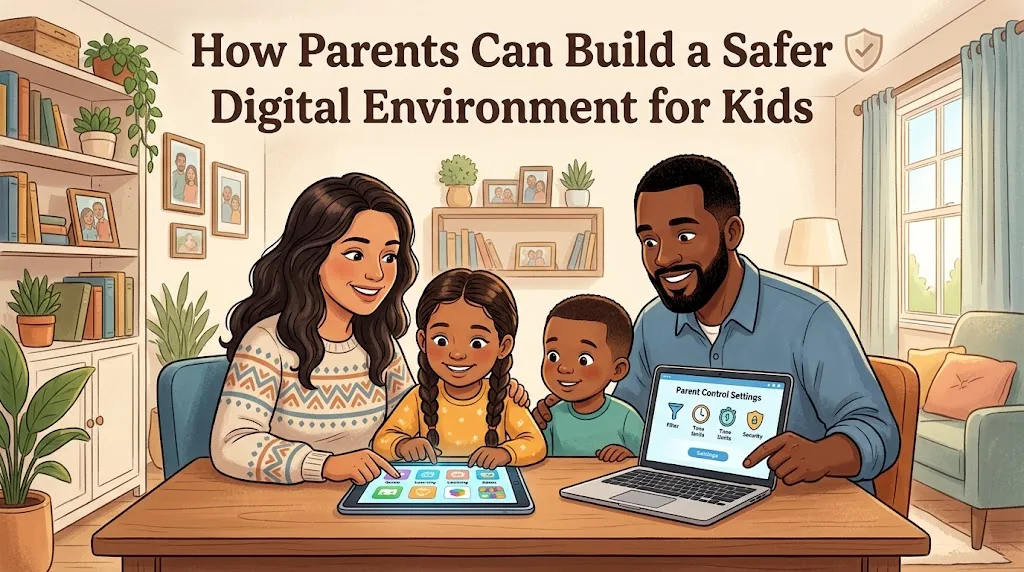
How Parents Can Build a Safer Digital Environment for Kids in 2026
Children are growing up with smartphones, tablets, gaming platforms, and social media all around them. Technology can help kids learn, communicate, and have fun, but it can also expose them to cyberbullying, inappropriate content, online strangers, scams, and excessive screen time.
For parents, the goal should not be to control every part of a child's digital life. Instead, it should be about creating healthy boundaries, teaching good online habits, and knowing when additional parental tools may be useful.
Start With Open Communication
The first step toward digital safety is a conversation.
Parents should explain why online safety matters and encourage children to talk about anything that makes them uncomfortable. Children should know that they can report suspicious messages, strange friend requests, bullying, or inappropriate content without being punished for speaking up.
It is also useful to create simple family rules. For example, children can agree not to share their home address, school details, passwords, or private photographs with people they only know online.
Set Reasonable Screen-Time Rules
Too much screen time can interfere with sleep, schoolwork, exercise, and family activities. Rather than banning devices completely, parents can create a balanced schedule.
A family might set device-free periods during meals, homework, and bedtime. Parents can also encourage children to take regular breaks and spend time on offline activities.
Some parental-control tools can make these rules easier to manage. Features such as screen-time limits, app restrictions, and website filters can help parents maintain boundaries without constantly checking the device manually.
Pay Attention to Social Media Risks
Social media can be one of the most difficult areas for parents to manage. Children may encounter strangers, cyberbullies, inappropriate conversations, fake profiles, or harmful content.
Parents should know which platforms their children use and understand their privacy settings. They can also teach children how to block and report suspicious accounts.
Monitoring should always be appropriate for the child's age and circumstances. Older teenagers generally need more privacy and independence, while younger children may require closer guidance.
Use Parental Monitoring Tools Responsibly
When normal conversations and built-in device controls are not enough, some parents choose dedicated parental monitoring software.
TheOneSpy, for example, publishes educational resources about parental monitoring, screen-time management, online safety, and digital parenting. Its guide on parental monitoring software features explains how different monitoring features can be matched to a child's age and needs.
Another option parents may research is FonSee. Its blog covers topics related to children's internet safety, including practical advice for protecting children from online predators. Its guide How to Protect Your Child from Online Predators discusses common risks and safety steps parents can take.
OgyMogy also focuses on parental controls and digital safety. Its article How to Prevent Cyberbullying discusses ways parents can recognize online bullying and use parental-control strategies to create a safer digital environment.
These tools should be used responsibly and only where parents or guardians have the legal right to manage the device. Parents should also understand what information is collected and how it is protected.
Teach Children About Online Privacy
Children should understand that anything shared online can potentially be copied or saved.
Parents can teach simple privacy habits:
- Never share passwords with online friends.
- Avoid posting personal addresses or school information.
- Be careful when accepting new friend requests.
- Do not click unknown links or download suspicious files.
- Use strong and unique passwords.
- Enable two-factor authentication where available.
- Tell a trusted adult about suspicious or threatening messages.
These habits can protect children even when parents are not around.
Create a Digital Safety Plan Together
A family digital safety plan does not need to be complicated. Parents can sit with their children and agree on which apps are allowed, how much screen time is reasonable, what information should remain private, and what to do when something goes wrong.
The most important part is consistency. Rules should be clear, age-appropriate, and reviewed as children become more independent.
Final Thoughts
Keeping children safe online requires more than installing an app. Good digital parenting combines communication, education, privacy awareness, reasonable screen-time limits, and appropriate technology.
Parents can explore resources from companies such as TheOneSpy, FonSee, and OgyMogy to understand different approaches to parental monitoring and online safety. The right solution depends on the child's age, family needs, and the level of supervision required.
Technology should support parenting rather than replace it. When children understand online risks and know that they can talk openly with their parents, they are better prepared to navigate the digital world safely.